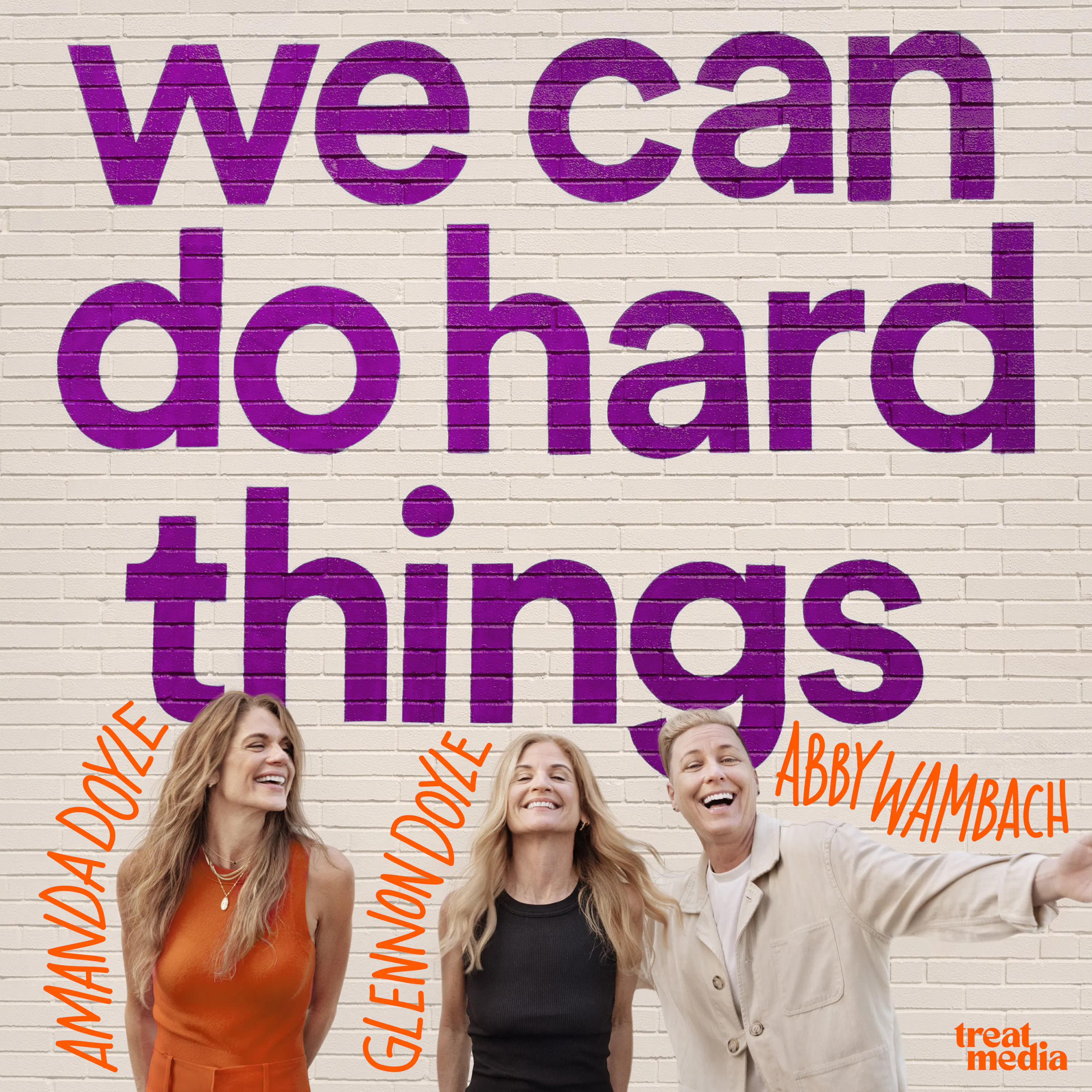
Overview of We Can Do Hard Things with Carson Tueller
This “Best Of” episode centers on body freedom: how so much of our suffering comes not from our bodies themselves, but from the stories culture, religion, beauty standards, and ableism tell us about our bodies. Glennon Doyle and Abby Wambach talk with Carson Tueller—a queer, disabled coach and activist—about coming out, becoming paralyzed at 23, reframing grief, and learning to trust the “capital-S Self” that never says we are broken. The conversation moves from disability and anti-ableism to sex, pleasure, masculinity, and the radical act of living without postponing life until your body becomes “better.”
Carson Tueller’s Story
Coming out, religion, and the first “haunted house”
- Carson grew up Mormon and queer in a rigid religious environment that taught him he could either be himself or belong.
- He spent years trying to reconcile his identity with the church, even considering marrying a woman to stay inside the system.
- His language for emotional states—moving between the “haunted house” of pain and the “castle” of wholeness—captures how he experiences body grief as something he still revisits, not something he has permanently escaped.
The accident that changed everything
- At 23, Carson broke his neck in a trampoline accident and became paralyzed from the chest down.
- Initially, he called it his “death day,” but later, after his younger sister suggested “day of rebirth,” he realized he could choose the meaning of the event.
- That shift became foundational: the accident did not make him broken; it changed his body, and then culture attached the brokenness story.
Main Themes and Takeaways
1. Your body is not the problem; the story around it often is
- Carson argues that much suffering is socially constructed through ableism, homophobia, and shame.
- The message “you are broken” is never from the deepest self—it comes from outside.
“I know that the capital-S Self will never tell me that I’m broken.”
2. Freedom comes from refusing to believe harmful narratives
- Carson’s process of coming out prepared him to question ableist assumptions later.
- He learned to treat internalized shame like an old story, not a truth.
3. Disability is about bodies, but ableism is what creates unnecessary suffering
- He distinguishes between:
- actual physical pain or limitation
- and the added suffering caused by rejection, inaccessibility, and stigma
- The episode emphasizes the social model of disability: disability is shaped by environment and access, not just body function.
4. A fully accessible world would change everything
- Carson describes how New York City could feel more disabling than Utah because of inaccessible transit, restaurants, and public spaces.
- The point: many “limitations” are produced by design choices, not bodies.
5. Pleasure and sex require honesty, not performance
- Carson says disability gave him a chance to approach sex without inherited scripts or expectations.
- He describes sexual exploration as slow, communicative, and discovery-based rather than performative.
- The result: more pleasure, more intimacy, and more freedom.
Sex, Pleasure, and Communication
Why Carson says disabled sex can be better
- No pre-written script meant more room for experimentation.
- He and his partners had to communicate directly about what felt good, what didn’t, and what needed to change.
- This created more honest, responsive sex than performance-based sex.
The bigger lesson for everyone
- Abby and Glennon connect Carson’s approach to a broader truth: sex gets ruined when people chase a “supposed to” instead of telling the truth.
- Carson’s model is simple and powerful:
- name what you want
- name what you don’t want
- let the encounter be collaborative rather than scripted
Masculinity, Identity, and Internalized Ableism
The pressure to be “man enough”
- Carson shares that disability complicated his relationship to masculinity, especially in queer male dating spaces where sexual roles and physical capability are often heavily coded.
- He struggles with internalized ableism and homophobia, especially the fear that he is not “a real man.”
Reclaiming identity
- His response is not to force certainty, but to pause and ask what parts of these beliefs came from him and what parts were absorbed from culture.
- He repeatedly returns to the idea that he gets to choose who to be.
Inspiration Porn and Common Mistakes People Make
What “inspiration porn” means
- Carson explains the term, coined by Stella Young, as when disabled people are used to inspire nondisabled people.
- It often sounds flattering, but it reduces disabled people to symbols rather than full human beings.
What to avoid
- Don’t lead with, “What happened to you?”
- Don’t assume suffering is automatically tragic or noble.
- Don’t project your own story onto someone else’s body.
What to do instead
- Treat disabled people as people first.
- Ask normal, relevant questions.
- Follow the other person’s lead if they want to discuss disability.
The Next Right Thing
Carson’s core invitation to listeners:
- Notice when you hear the voice telling you that you are broken.
- Recognize that this voice is not your deepest self.
- Explore what your self actually says through therapy, coaching, journaling, reflection, or other practices that help you hear your own knowing.
“There is a you that is present and always speaking.”
Final Message
This episode is ultimately about more than disability—it’s about body freedom for everyone. Carson’s story shows that healing is not about becoming a different body; it’s about refusing the lie that your current body is unworthy of love, sex, joy, or a full life. The conversation leaves listeners with a radical but grounding truth: you do not need to be fixed before your life begins.