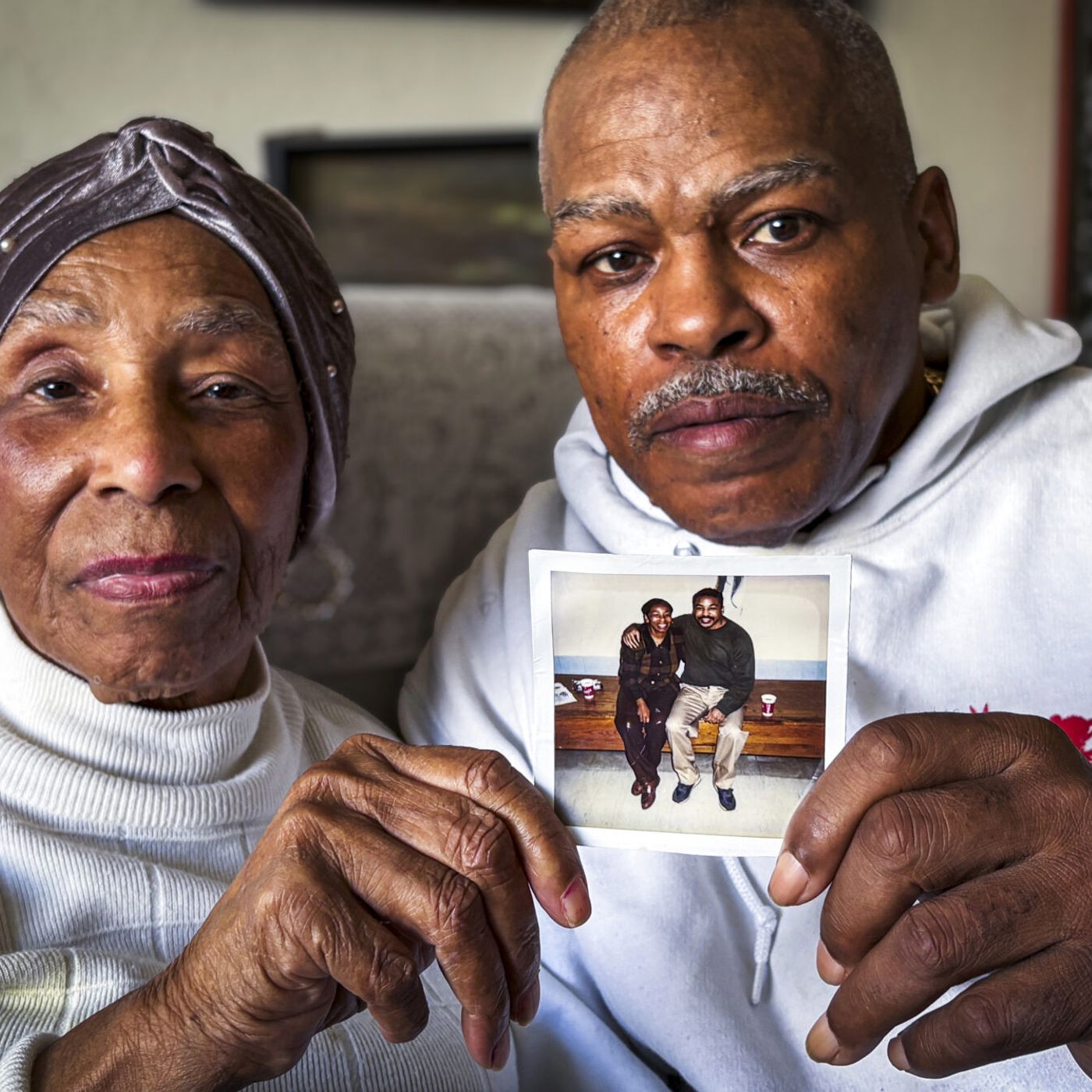
Overview of TJ Weekly - Darren Boykins (Undisclosed, Toward Justice)
This episode recounts the 1981 Newark murder of Milton LaFure at LaFure Carpet Works, the arrest and 1981 conviction of 19‑year‑old Darren Boykins for that killing, and the decades‑long fight to clear his name. Hosts Rabia Chaudhry and Colin Miller review the facts, alibi evidence, police investigation flaws (including an undisclosed anonymous tip and a jailhouse informant), and recent legal developments that led to a commutation and renewed efforts to secure discovery and appellate relief 45 years after the crime.
Key takeaways
- Milton LaFure was shot and killed on May 22, 1981, inside his Newark carpet shop; his brother Harry and an insurance agent were eyewitnesses.
- Darren Boykins was identified in a police lineup on June 30, 1981, and later convicted largely on (1) Harry’s lineup ID and (2) testimony from jailhouse informant Alvin Holt claiming a confession.
- Multiple independent alibi witnesses place Darren at his mother’s Rutgers graduation that afternoon (attendance and photos corroborated), which conflicts with the timing of the shooting as reported by witnesses.
- An anonymous tip naming Darren and another teen, Dennis Brown, preceded Darren’s placement in the lineup but was not disclosed to the defense at trial — a potential Brady issue.
- The anonymous tip raised Dennis Brown as a suspect; records later indicate Brown matched the eyewitness description (about 5'4"–5'5", slender), whereas Darren was about 5'10" and heavier.
- The jailhouse informant later recanted, claiming police coached him and that charges against him were reduced contemporaneously — undermining his credibility.
- After decades in prison, Darren’s sentence was commuted to time‑served by Gov. Phil Murphy; Darren was released but transferred to a forensic hospital rather than community parole services.
- New legal efforts (discovery motions, appellate briefing) are underway to challenge the conviction based on nondisclosure of the tip and the constitutionality of compelling a lineup without judicial review (relying on a 1976 NJ precedent).
Timeline (concise)
- May 22, 1981: Milton LaFure shot in Newark carpet shop; witnesses place robbery/shooting roughly 1:15–1:30 p.m.
- June 29, 1981: Anonymous tip names Darren Boykins and Dennis Brown; Detective Yutze allegedly uses a mirror exercise with Darren that day.
- June 30, 1981: Darren placed in lineup for Harry LaFure; Harry identifies him.
- July 1, 1981: Darren charged with Milton’s murder.
- 1981–ongoing: Conviction and long incarceration; appeals unsuccessful at the time.
- August 1981: Alvin Holt (jailhouse informant) jailed with Darren; later testifies; subsequently recants claiming police coaching.
- January (year unspecified, near governor’s term end): Governor Phil Murphy commutes Darren’s sentence to time served; Darren released to forensic hospital.
- Recent: John Creighton (NJIP) files discovery request and new appellate motion seeking records and relief based on nondisclosure and lineup legality.
Witnesses, alibis, and identification issues
- Eyewitnesses at crime scene: Harry LaFure (brother) and insurance agent James Robitello. Harry provided a contemporaneous description to the Newark Star‑Ledger: two slender teens ~5'4"–5'5".
- Alibi witnesses for Darren:
- Carmela Bowers (mother): Darren arrived at her house ~1:00 p.m., changed, and attended her 2 p.m. Rutgers graduation; photo evidence exists.
- Minnie Hamlet (grandmother): Darren arrived ~1:00–1:10 p.m.; left for graduation with others.
- NYPD Officer Leon Scott (cousin): Arrived at noon, saw Darren upstairs changing around 1:50–1:55 p.m.
- Dolores Maybank (friend): Arrived 12:30 p.m.; Darren arrived just after she did and left for graduation with others.
- Collins Hagler (youth counselor): Saw Darren at graduation plaza ~1:30–1:45 p.m., spoke with him for several minutes.
- Physical mismatch: Corrections records later showed Darren at ~5'10", 185 lbs — not “slender” or 5'4"/5'5" as the eyewitness described. Records indicate Dennis Brown matched the slimmer, shorter description.
- Suggestive lineup practice: Darren reports being made to stand in front of a glass/mirror before lineup — potentially suggestive and used to prime identification.
Problems in the investigation and prosecution
- Failure to disclose an anonymous tip identifying Dennis Brown (and Darren) to defense counsel — potential Brady violation because it was exculpatory or could have suggested alternative suspects.
- Use of a jailhouse informant (Alvin Holt) whose credibility is deeply compromised: recanted claim that police wrote his statement and that charges against him were reduced soon after his sworn statement.
- Lineup procedures: Darren was compelled into a lineup while detained on an unrelated charge (aggravated assault), raising constitutional concerns about compulsion and the requirement for judicial review of reasonable suspicion before using someone in a lineup for an unrelated crime.
- Defense decisions: A written letter from a cousin (Veronica Hendricks) estimating a slightly later arrival (1:30 p.m.) was admitted at trial via stipulation, despite its potential to confuse the alibi timeline; defense did not call her as live witness.
- Appellate courts previously found informant testimony credible enough to uphold conviction; new discovery may shift the record.
Legal issues and precedent
- Brady nondisclosure: The anonymous tip (June 29) that led to the lineup was not disclosed; if material and exculpatory, nondisclosure could warrant reversal.
- Lineup constitutional claim: Citing a 1976 NJ appellate decision (Andrew Foy), the episode explains that placing someone in a lineup for an unrelated crime requires (1) well‑grounded suspicion and (2) testing of that suspicion by a neutral, detached magistrate — not solely by police or prosecutor affidavit. John Creighton is pressing this argument on appeal.
- Reliability of jailhouse informant testimony and resulting appellate deference: Recantations and prosecutorial inducements are common problems; previous appellate courts found the informant untrustworthy but still did not overturn conviction.
Recent developments and current status
- Discovery motion filed by John Creighton (NJ Innocence Project / pro bono) seeking files related to Dennis Brown and other withheld documents; potential Brady material.
- Appellate strategy includes arguing the lineup was unconstitutional because there was no judicial review of reasonable suspicion (Foy precedent).
- Governor Phil Murphy commuted Darren Boykins’s sentence to time served in the final hours of his term; Boykins was released from prison but placed in a state forensic hospital rather than parole supervision.
- Efforts continue to obtain official acknowledgment of wrongful conviction and full exoneration; further updates expected as discovery and appeals proceed.
Notable quotes / human elements
- Darren’s mother, Carmela: “I know he didn't do that.” She emphasized the emotional toll of 45 years of incarceration for her son.
- Alvin Holt (recantation claim): Alleged that detective James Gold “gave him the paper, told him to memorize what he had to fetch.”
- Attorney John Creighton: “This is not a happy ending. It's just the next step.” (on commutation and ongoing work toward exoneration)
What to watch for next
- Court rulings on the discovery motion regarding Dennis Brown and any juvenile/correctional records that tie Brown to the description.
- Appellate briefing on the constitutionality of the compelled lineup and whether the Foy precedent requires reversal.
- Any further evidence that Dennis Brown was investigated, polygraphed, or otherwise identified as a suspect (records have been referenced but not disclosed historically).
- Whether the state will move to formally exonerate or to retry/settle; whether official acknowledgment of misconduct or investigative failures will be made.
Practical summary for listeners / researchers
- The episode demonstrates a classic, multi‑layered wrongful conviction pattern: weak eyewitness ID, suggestive police procedures, incentivized jailhouse testimony, suppression of alternative-suspect information, and inadequate defense presentation.
- The strongest legal levers now are discovery of previously withheld investigative records (Brady) and the constitutional argument that the lineup was improper without judicial sign‑off (Foy).
- Commutation secured immediate liberty; full exoneration and official remediation remain pending and depend largely on newly obtained records and appellate rulings.
(Ads and sponsor reads appear interspersed in the episode but do not affect the factual narrative summarized above.)