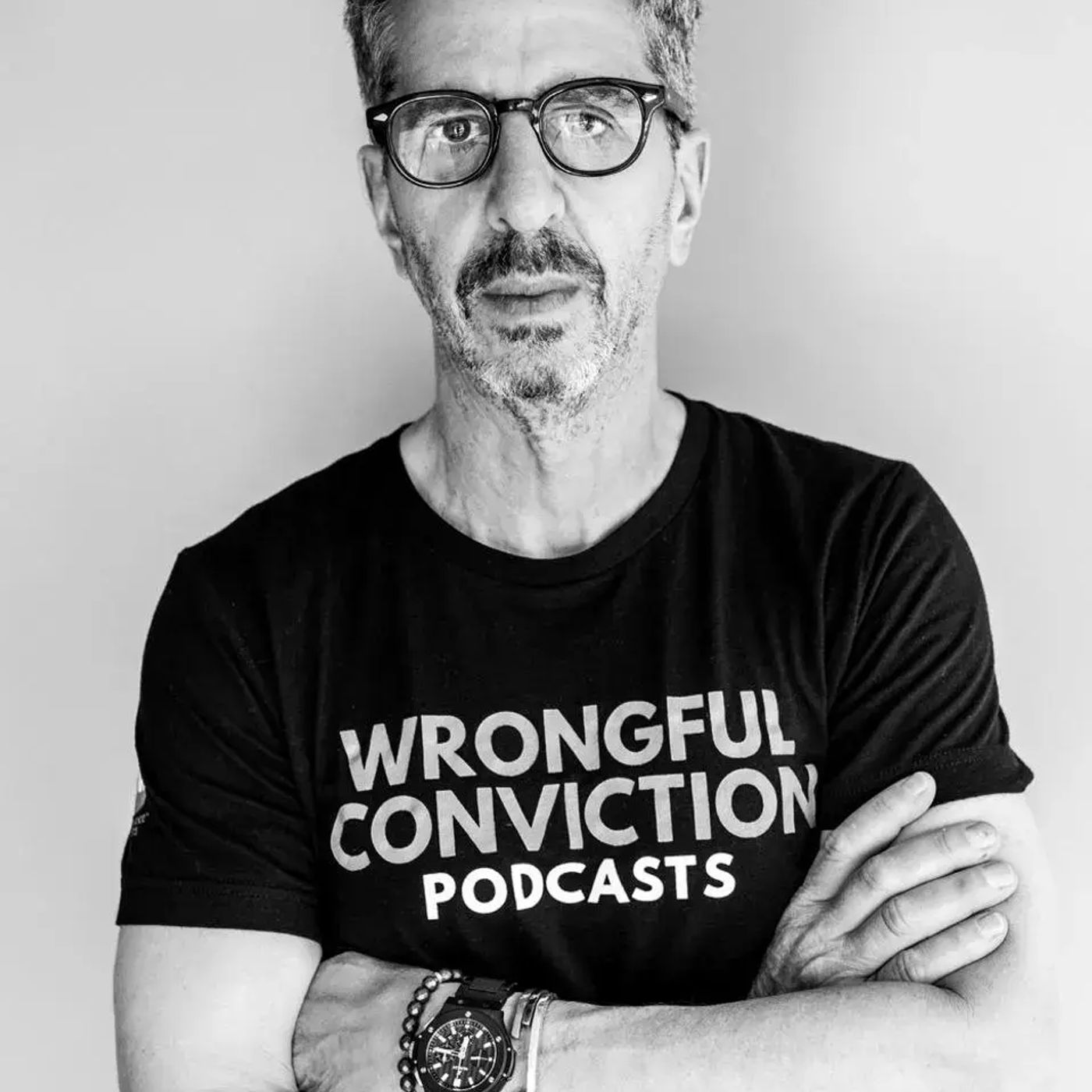
Overview of TJ Weekly - Jason Flom
This episode features an in-depth conversation with Jason Flom about how he went from being a major music executive to one of the most influential advocates in the wrongful conviction and innocence space. He explains how a single newspaper article about a man serving 15-to-life for a nonviolent cocaine possession charge changed the course of his life, and how that moment eventually led to his decades-long work through Wrongful Conviction, Lava for Good, Bone Valley, and Junk Science. The discussion also covers the growing problem of prosecutors using rap lyrics as trial evidence, the dangers of junk forensic science, and the emotional reality of working with exonerees and families impacted by wrongful convictions.
Jason Flom’s Path Into Innocence Work
The turning point
- Flom says his advocacy began when, at age 32, he saw a newspaper story about Stephen Leonard, who was serving 15 years to life for a nonviolent, first-offense cocaine possession charge.
- The article mentioned that Leonard’s mother had been denied clemency despite support from the warden, sentencing judge, and Geraldine Ferraro.
- Because Flom had been sober for years and had his own close calls with the criminal legal system, he felt personally connected and decided to help.
First major win
- With the help of the only defense lawyer he knew, Bob Colina, Flom got involved pro bono.
- In court, the motion to free Leonard was granted, and Flom says that was the moment he knew:
- this was the work he wanted to do for the rest of his life.
Personal connection to the system
- Flom describes coming close to arrest himself through drug use and bad decisions.
- He emphasizes that he could easily have ended up in the same system he now fights.
Why Lyrics Should Not Be Used as Criminal Evidence
Strong criticism of lyric evidence
- Flom argues that music lyrics are not evidence of criminal conduct.
- He compares using lyrics in court to treating:
- a novel as proof someone committed a murder,
- or a movie script as evidence of real violence.
- His view: lyrics may reflect creativity, persona, exaggeration, or storytelling — but not guilt.
Maryland’s PACE Act
- He praised Maryland’s new law, the PACE Act (Protecting Artist Creative Expression Act), which limits the use of lyrics against defendants at trial.
- He also noted that one of his colleagues, Dina LaPolpe, was involved in the effort.
Texas execution of James Broadnax
- Flom pointed to the execution of James Broadnax in Texas as a tragic example of how damaging lyric evidence can be.
- He believes Broadnax was likely innocent, and that lyrics written as a kid played a major role in his conviction.
- His reaction was blunt: allowing that kind of evidence in capital cases is deeply sinister.
The Impact of Wrongful Conviction and Podcast Advocacy
How the podcast started
- Flom says he was a late-ish listener to Serial, but it helped open the door to podcast-based advocacy.
- In 2016, someone told him he should start a podcast, and he eventually did.
Scale and influence
- Wrongful Conviction has grown to 570+ episodes and roughly 60 million downloads.
- Flom says the show has had real-world impact:
- helping free wrongfully convicted people,
- influencing clemency and pardon efforts,
- and even inspiring legislation in at least three states:
- Illinois
- Indiana
- Washington State
A memorable anecdote
- Flom tells a story about speaking with a governor’s office counsel who casually recommended a podcast she liked — only for Flom to realize she was talking about his own show.
- He sees moments like that as evidence that storytelling can reach people inside the system who actually have power to help.
Bone Valley and the New Season, Devil’s Quarry
How Bone Valley began
- Bone Valley originated when Gilbert King approached Flom about adapting the Leo Schofield case into a podcast.
- Flom immediately agreed because of his admiration for King, who won a Pulitzer for Devil in the Grove.
Why the series matters
- Flom praised Bone Valley for getting “to the chorus” quickly and for peeling back layer after layer of systemic failure.
- He stressed that wrongful convictions in violent cases do more than imprison innocent people — they also allow the real perpetrator to remain free and potentially harm others.
Season 5: Devil’s Quarry
- The new season, Bone Valley: Devil’s Quarry, is based on a Paul Solotaroff article about the case of Josette Wright, a young girl brutally assaulted and murdered in Carmel, New York.
- Two men, Anthony DePippo and Andrew Krivak, were wrongfully convicted and later exonerated.
- Flom says the episode explores:
- how authorities ignored the obvious suspect,
- how high-profile cases can drive arrests over accuracy,
- and how the system can continue to fail both victims and the wrongly convicted.
Release note
- He said the season was set to release around June 10 and is also tied to Rolling Stone and Tribeca attention.
Junk Science, Shaken Baby Syndrome, and Faulty Forensics
Junk Science as a major project
- Flom highlighted Junk Science, hosted with Josh Dempin, which is now 400+ episodes deep.
- The show examines forensic methods that have been misused in court, including:
- arson evidence
- bite marks
- blood spatter
- bootprints
- tool marks
- shaken baby syndrome
- hair microscopy
- fingerprint analysis
Shaken baby syndrome concerns
- Flom was especially forceful about shaken baby syndrome, saying:
- there is no documented video or eyewitness proof of a baby being “shaken to death” in the way the diagnosis is often presented,
- many other medical causes can mimic the same symptoms,
- and the diagnosis often defaults too quickly to abuse.
- He connected this directly to Robert Roberson’s death row case in Texas, calling him a “beautiful soul” and a prime example of the dangers of junk science.
Hair comparison and fingerprint errors
- Flom cited a major study showing that in most cases reviewed, FBI hair analysis testimony was either mistaken or false.
- He also discussed how fingerprint evidence, which many people assume is foolproof, can be misapplied or overclaimed.
- A striking example involved the Madrid train bombings, where a wrongful fingerprint identification almost led to a disastrous outcome.
Why Exonerees Often Inspire Others
What Flom has learned from exonerees
- Flom says one of the most surprising things he’s learned is that many exonerees:
- come out incredibly humble,
- remain deeply grateful,
- and spend their time helping others who are still incarcerated.
- He points to people like:
- Leo Schofield
- Lorenzo Johnson
- Nick Yarris
- Tysheem Crocker
His theory
- Flom suggests there may be a kind of self-selection at work:
- some innocent prisoners are broken by the system,
- while the ones who survive and return often do so with extraordinary grace and resilience.
Other Projects Mentioned
Erased
- Flom recommended Erased, a podcast about the first murder trial in American history.
- It features:
- Alexander Hamilton as part of the defense,
- Aaron Burr,
- and voice talent including Alison Williams, Tony Goldwyn, and Barry Scheck.
- Flom himself plays Judge John Lansing.
Wrongful Conviction on YouTube
- He said the show is launching a more fully produced YouTube version.
- One upcoming featured guest is Michelle Murphy, the only female DNA exoneree from Oklahoma, whose case remains central to the show’s mission.
Key Takeaways
- Jason Flom’s move from the music industry to innocence work began with one shocking case that made the issue feel personal.
- He sees podcasts as a powerful tool for public education, legal reform, and case advocacy.
- He strongly opposes the use of lyrics as criminal evidence, calling it both illogical and dangerous.
- He believes junk science still plays a major role in wrongful convictions, especially in arson, hair analysis, fingerprinting, and shaken baby syndrome cases.
- His work is driven by a belief that storytelling can help shift law, public opinion, and even real-world outcomes.
Listener Notes and Community Links
- The episode closes with the show’s standard announcements:
- join the Facebook group
- leave a voice note via SpeakPipe
- support via Patreon
- follow the hosts and show on social media and YouTube
- Jason Flom also encouraged listeners to:
- check out Bone Valley: Devil’s Quarry
- listen to Junk Science
- and subscribe to the new Wrongful Conviction video version.