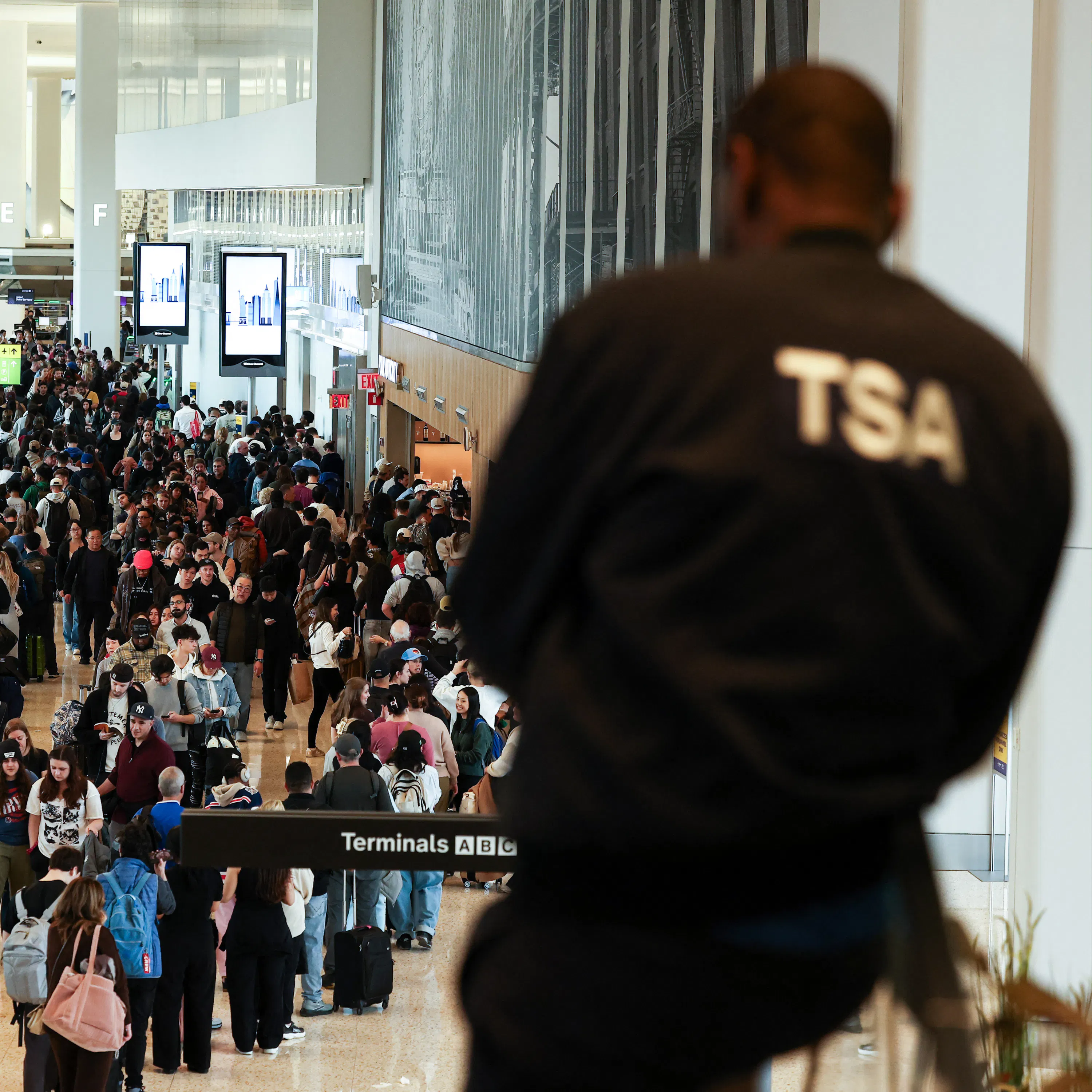
Overview of "Should we privatize TSA?" (Vox — Today, Explained)
This episode examines the renewed debate over privatizing airport security amid the longest US government shutdown in history and the resulting chaos at airports. Vox interviews a veteran TSA officer and union representative (Tatiana Finley) about frontline impacts, and Daryl Campbell (The Verge) about the mechanics, history, and risks of privatizing TSA functions through the Screening Partnership Program and policy proposals like Project 2025.
Key takeaways
- Privatization of airport screening already exists in limited form: roughly 20 U.S. airports participate in the Screening Partnership Program (SPP), where private contractors perform screening to TSA standards.
- The political moment (high-profile shutdowns, public frustration with airport delays) has increased momentum for privatization as a proposed fix — but it’s not a simple or guaranteed solution.
- Major concerns about large-scale privatization: underbidding contractors, understaffing, reduced vetting, lower pay/benefits, weakened oversight, and potential cronyism in contract awards.
- TSA frontline staff face repeated pay uncertainty from shutdowns, high callout rates, and significant mental and household stress — driving retention issues and making privatization a more attractive option for some airports or workers.
- Alternatives to wholesale privatization include protecting TSA funding during shutdowns, improving management and staffing, stronger oversight, and targeted pilots — all likely cheaper and lower-risk than immediate nationwide privatization.
Who’s speaking / sources
- Tatiana Finley — AFGE Local 556 Fair Practice Coordinator and TSA officer with ~22 years’ experience. Provides firsthand perspectives on shutdown impacts, morale, and privatization concerns.
- Daryl Campbell — Aviation reporter for The Verge, author and commentator on privatization, Screening Partnership Program, and Project 2025 proposals.
What is the Screening Partnership Program (SPP)?
- A voluntary program where airport authorities can hire private security firms to perform passenger and baggage screening, but those firms must follow TSA standards and procedures.
- Participation is decided at the airport/municipal level; examples include airports such as San Francisco and Kansas City.
- SPP shows privatization can work in some places, but outcomes vary based on contract terms, management, and oversight.
Pros and cons of privatizing TSA functions
Pros
- Potential for innovation, different management practices, and local control for airports that want it.
- Some airports under SPP function well and report improved experiences.
Cons / Risks
- Contractors compete on price, which can incentivize cutting wages, staffing levels, training, vetting, or breaks — potentially reducing security quality and worker conditions.
- Red-team test results publicized show high failure rates (reportedly 80–95% in recent publicized tests), which raises questions about current effectiveness and the ability of private firms to improve it.
- Examples of failure: Calgary (Paladin Security) faced staffing problems, poor working conditions, and long lines (30–40 minutes vs typical 10–15).
- Political risks: Project 2025 and some proposals call for privatization plus de-unionization, and a federal shift could be vulnerable to cronyism and poor contracting under politicized administrations.
Frontline perspective (Tatiana Finley)
- Joined TSA after 9/11 seeking to serve without joining the military; values being public-service focused and proud of the work.
- Shutdown impacts: recurring pay uncertainty, officers facing eviction, lack of medication, lost utilities — high personal and family stress among colleagues.
- Mental toll and morale: repeated shutdowns cause helplessness and burnout; some officers report considering leaving if instability continues.
- On privatization: skeptical — believes contractors will bid low to turn profit and cut vital elements (background checks, staffing, pay, benefits) that could compromise safety and worker well-being.
- Blames all political actors for using the workforce as a bargaining chip; stresses need for elected officials to fix funding and stop politicizing workers’ livelihoods.
Notable quotes
- Tatiana: “They are using our workforce as a bargaining chip.”
- Tatiana (on her role and attitude): “I am T.S. motherfucking A. We handle shit. That's what we do.”
- Daryl Campbell: “The devil is in the details” — meaning privatization outcomes depend heavily on contract design, oversight, and implementation.
Practical recommendations and policy options discussed
- Short-term: protect TSA funding during shutdowns so officers receive pay and airports can function (TSA could be funded similarly to how Congress has occasionally protected other agencies).
- If pursuing privatization:
- Require transparent, competitive bidding and strong oversight mechanisms.
- Maintain strict staffing, training, vetting, and break/water standards in contracts.
- Protect worker wages/benefits or provide equivalent labor protections to prevent a race to the bottom.
- Pilot and evaluate changes with clear security performance metrics before scaling.
- Broader: address personnel retention, management issues, and political incentives that let funding/use of frontline workers be leveraged in budget fights.
Bottom line
Privatizing TSA screening is not a novel idea — it already happens at some airports — but scaling it nationwide is not a straightforward fix and carries substantial operational, security, labor, and political risks. Many problems driving the current crisis (funding instability, morale, staffing) could be addressed by funding and management fixes without wholesale privatization. Any change should prioritize transparent contracting, rigorous oversight, and protections for security and workers.