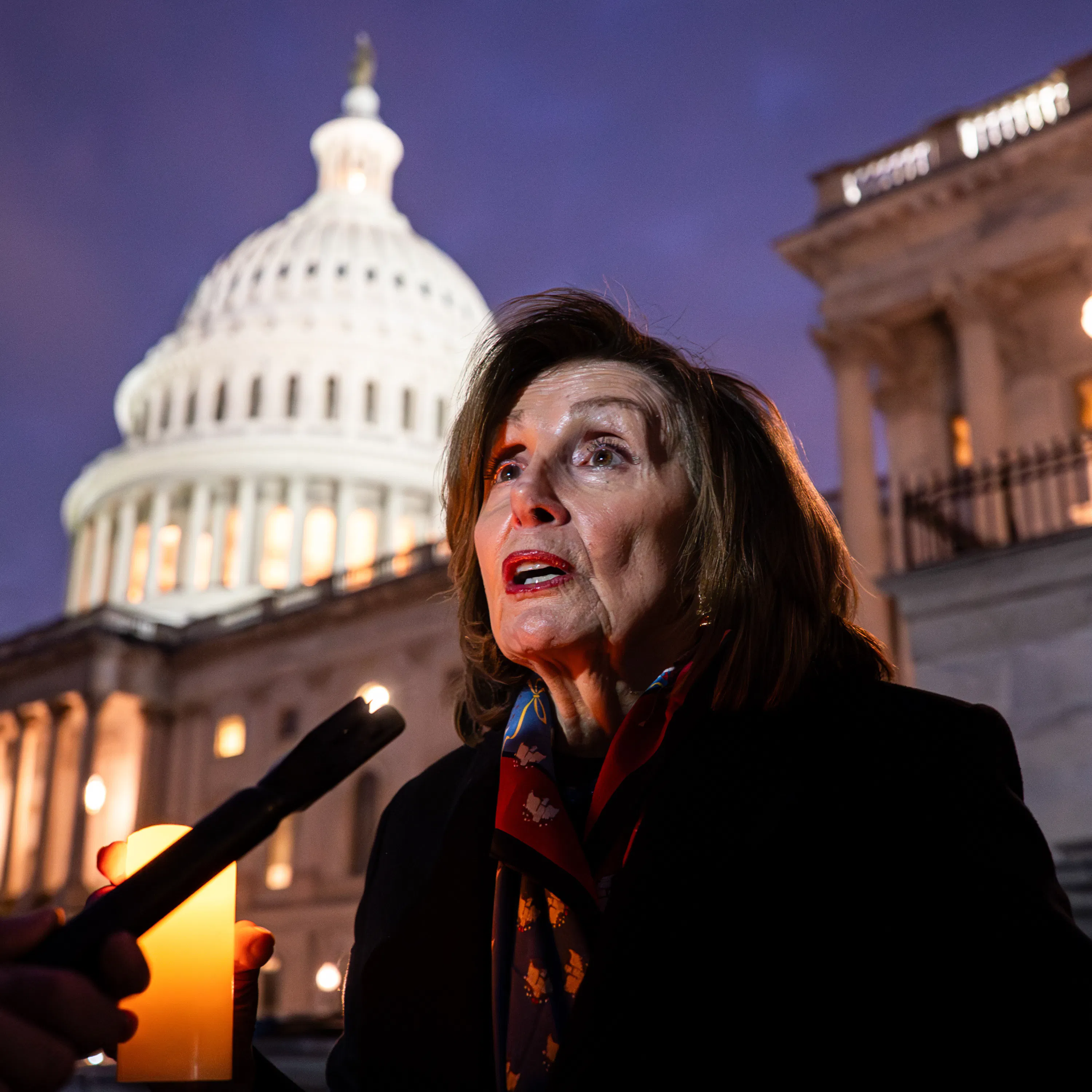
Overview of Nancy Pelosi explains her optimism (Vox / Today Explained)
Vox’s Today Explained interviewed former House Speaker Nancy Pelosi at South by Southwest about her long career in Congress, why she remains optimistic about American democracy, what made her an effective leader, and the political strategy she believes will return Democrats to power in the midterms. The conversation mixes personal anecdotes (why she first ran, family reactions), reflections on legislative accomplishments, critiques of Donald Trump and Republican tactics, and concrete political lessons for winning and rebuilding public trust.
Key topics discussed
- Pelosi’s personal path to Congress and leadership (ran at 47; consulted her daughter before running).
- What made her an effective Speaker: decisiveness, inside maneuver + outside mobilization, and building public sentiment.
- Major legislative legacy: American Recovery Act, Dodd‑Frank, Affordable Care Act, and other consequential laws.
- Faith in the American electorate and constitutional institutions despite attacks like January 6.
- Political strategy to win elections: the “three M’s” — message, mobilization, money.
- Opposition to the Save America (SAVE) Act as voter suppression (passport/birth certificate requirements; restrictions on mail voting).
- The need to recruit and elect women; growth of Democratic women in Congress.
- Criticisms of the Trump presidency: erosion of separation of powers, attacks on institutions, environmental rollbacks, and corruption.
Main takeaways
- Pelosi’s optimism rests on a principled faith in the “inherent goodness of the American people” and in the founders’ design that empowers public sentiment to restore democracy when informed.
- Effective leadership combines quick, confident decision-making with coordinated “inside maneuver, outside mobilization” to shape public sentiment and get things done.
- For Democrats to win midterms Pelosi emphasizes focusing on kitchen‑table issues (costs of health care, groceries, education), strong messaging, grassroots mobilization, and sufficient fundraising.
- She views recent political violence and the January 6 insurrection as aberrations incited by the president, not a permanent break with democratic norms.
- She strongly opposes the SAVE Act, characterizing provisions as deliberate voter suppression that would disproportionately burden seniors, rural voters, and overseas/military voters.
- Pelosi is confident Democrats will retake the House (and possibly the Senate) and expects Hakeem Jeffries to become Speaker.
Notable quotes and lines
- “Know your why.” (Advice to prospective public servants and activists.)
- “Public sentiment is everything.” (Quoting Lincoln to underline the need for outside mobilization.)
- “It’s not a glass ceiling. It’s a marble ceiling.” (On entrenched gender barriers in leadership.)
- “We have to prove by our involvement that the flag is still there.” (Invoking the national anthem as a call to civic participation.)
- On the SAVE Act: calling it “a disgraceful insult to our founders” and a measure that would “take away the right to vote of people.”
- On Trump: referred to him as a “vile creature” (and noted that was a euphemism for how she truly feels).
Anecdotes & personal background
- She had no early ambition for office while raising five children; she asked her daughter Alexandra for permission before running. Alexandra humorously replied, “Mother, get a wife,” meaning she welcomed the chance for her mother to be out more.
- Pelosi credits much of her approach to her early political work (party chair) and family/faith-rooted values.
Political strategy & recommendations (practical)
- Three Ms to win: Message (clear, kitchen‑table focus), Mobilize (grassroots, ground game), Money (fundraising to compete with well-funded opponents).
- Emphasize issues that directly impact voters’ daily lives to rebuild trust in democratic institutions.
- Recruit and support more women candidates; representation matters for voter confidence.
- Be strategic, know your purpose, and act decisively when in leadership roles.
Context & production notes
- Interview recorded at South by Southwest; part of Vox’s Today Explained Saturday interview series.
- Pelosi is expected to retire following the midterm election cycle (she stated she is set to retire after this midterm).
Who should read/watch this
- Political organizers and campaign staff looking for strategy cues and messaging priorities.
- Voters interested in Pelosi’s defense of democratic institutions and her critique of Republican voting laws.
- Students of leadership and legislative strategy wanting concrete examples of what Pelosi credits for effectiveness.
If you want, I can produce a 90‑second spoken summary or pull out 8–10 short quotable soundbites from the transcript for social sharing.