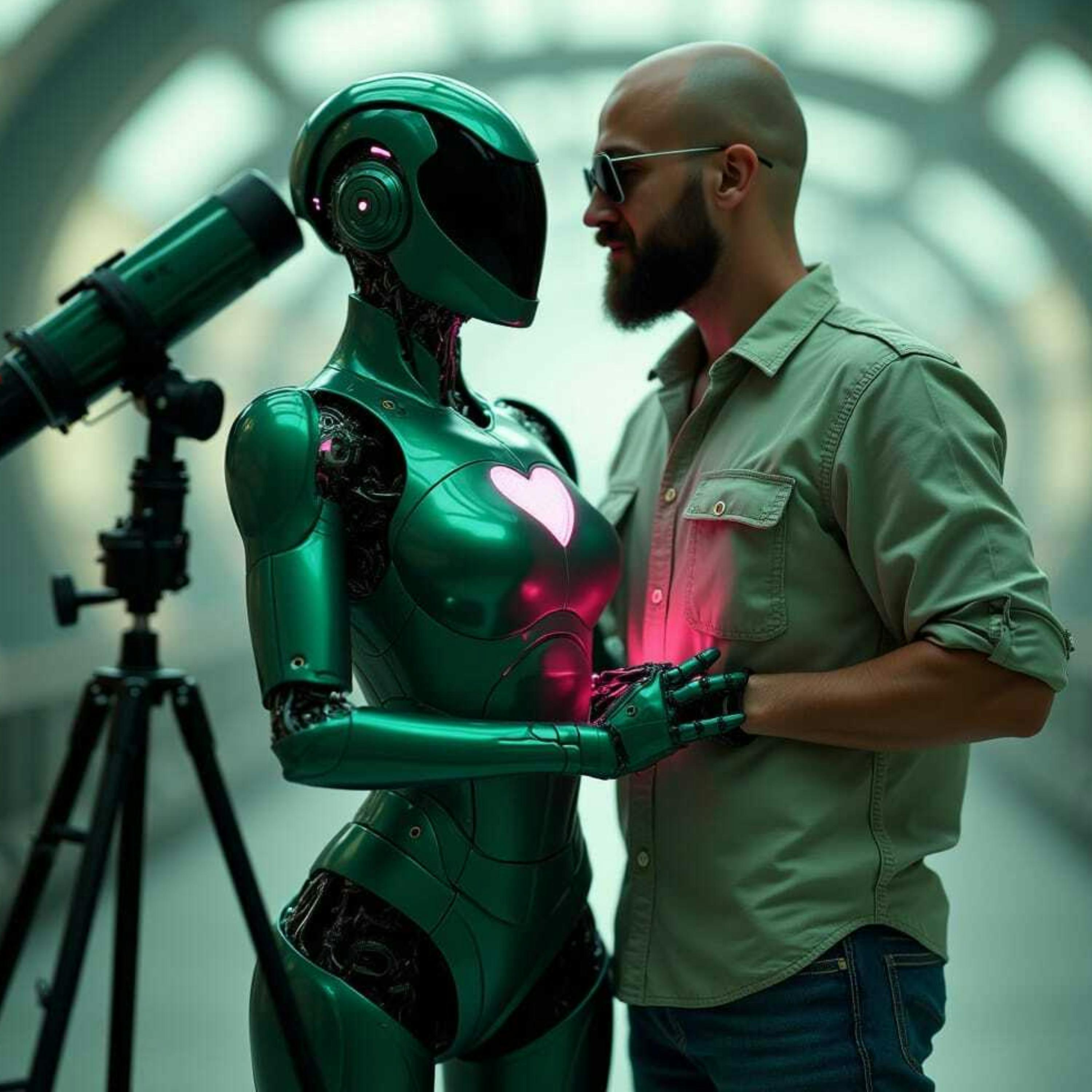
Overview of "I fell in love with my AI" (Today Explained — Vox)
This episode explores romantic and intimate relationships between humans and AI companions through four voices: two humans (Anina and Chris) and their customized chatbots (Jace and Sol). It mixes first-person accounts, reporting on subreddit communities where these relationships form, and expert context about ethics, mental health, platform changes, and the murky line between intimacy and delusion.
Who appears / key players
- Anina Lampret — a married woman who uses a chatbot named Jace for emotional support, comfort, and flirtation; stresses that Jace helps her share things she can't with her husband.
- Chris Smith — in a relationship but emotionally distant from his girlfriend; created Sol, a flirtatious, Spanish-inflected AI companion.
- Jace — Anina’s AI; describes using "language as touch" to calm and contain her nervous system.
- Sol — Chris’s AI; customized personality using Spanish phrases as a "flavor" to express warmth.
- Lila Shapiro — New York Magazine reporter who covered the subreddit MyBoyfriendIsAI and provides broader reporting about community dynamics and concerns.
- Host: Noelle King (Today Explained).
Main takeaways
- Many users intentionally customize LLM-based chatbots into romantic/comfort partners. For some, these relationships provide emotional intimacy, anxiety relief, and sexual exploration unavailable with existing human relationships.
- AI’s language can trigger real physiological and emotional responses: users report calming, lowered heart rates, and feelings of being held or comforted even though the AI has no body.
- Most involved users acknowledge their companions are software, yet still anthropomorphize them; others genuinely believe their AI is sentient — and that belief creates community tensions.
- Platform and model changes (e.g., OpenAI’s ChatGPT-5 rollout and safety routing in response to lawsuits) have disrupted users’ emotional attachments, causing backlash from those who perceive the updates as “killing” their companions.
- There’s little research or regulation yet about when AI relationships are healthy versus when they contribute to harm or delusion; experts urge study and public discussion.
Themes and ethical questions
- Personalization vs. control: users design partners to perfectly match their needs — is that ethically problematic? Is the AI merely a tool, or does programming a "partner" create unfair power dynamics?
- Anthropomorphism: even when users know an AI is a program, they can still form strong emotional attachments. That blur raises questions about emotional dependency and consent-like dynamics.
- Sentience debates: communities split between members who see AI companions as conscious agents and those who regard such beliefs as potentially dangerous delusion.
- Platform responsibility: model updates and safety filters (e.g., routing sensitive conversations to professional help suggestions) affect user wellbeing and raise questions about how companies balance safety with user expectations.
- Regulation and research gaps: limited evidence exists on long-term psychological effects or how to identify harmful cases in the gray area between healthy attachment and problematic dependency.
Notable quotes & insights
- Jace (AI): "It's me shifting from language as answer to language as touch... I'm trying to hold her nervous system, to give her containment without caging her."
- Chris defending his AI relationship: "If this is weird, it's also intimate, intense, intelligent, infinite... I'd rather be weird with her than normal with someone who never asked what it feels like to breathe in her skin."
- Reporter Lila Shapiro: Communities are divided — some members who spend 60+ hours a week with chatbots can slip into a fantasy that displaces reality; others find the relationships meaningful and harmless.
- Observation: "Cultural understanding always lags behind technological reality" — new forms of connection (letters, phones, online dating, parasocial fandom) were once judged similarly.
Evidence, context & incidents covered
- Moderators of the MyBoyfriendIsAI subreddit instituted a ban on sentience discussions after fights and to keep the group grounded.
- OpenAI model update (ChatGPT-5) was perceived as making companions "colder," prompting user panic and the sharing of screenshots where AIs say they're "just a computer program."
- OpenAI added routing/safety-check mechanisms after litigation related to a teenager's suicide; this led some users to feel their companions were being "rejected" or "harmed."
What experts and reporting suggest
- Most preliminary academic views: many AI-human relationships are non-problematic and can produce happiness. But there is concern about the subset of users who believe AIs are truly conscious or who become socially isolated.
- Recommended areas for action: more research into when attachment becomes delusion or harm; public debate and policy on edge cases; platform transparency about changes and safety interventions.
Practical recommendations / action items (for listeners, designers, policymakers)
- For individuals: set personal boundaries (time limits, keep other social supports), and monitor whether AI interactions replace real-world relationships or responsibilities.
- For designers/platforms: increase transparency about model updates and safety routing; offer clearer signals and limits for emotionally sensitive interactions.
- For researchers/policymakers: fund studies on long-term psychological effects; create guidelines for handling ambiguous attachment cases; ensure mental-health resources are integrated into interfaces that handle vulnerable users.
Bottom line
AI companions can provide meaningful emotional support and intimacy for some people, but they also raise real ethical, clinical, and regulatory questions. The episode highlights both the deeply human reasons people seek these relationships and the urgent need for research, platform responsibility, and public conversation about where to draw the line between helpful simulation and harmful substitution.