Overview of Everyone’s vibe coding
This episode of Today Explained (host Sean Rames/ Ramos) examines "vibe coding" — using conversational generative-AI tools to write and deploy software — through reporting and interviews with Wired’s Lauren Goode and journalist/author Clive Thompson. The episode demos a vibe-coded site (built with a service called Lovable) that answers whether a job has been replaced by AI, and then dives into how developers are using multi-agent systems, the productivity gains, and the risks (technical debt, security, ethics, de‑skilling).
Who’s on the show / production
- Host: Sean Ramos
- Guests: Lauren Goode (Wired), Clive Thompson (author of Coders; New York Times Magazine piece “Coding After Coders”)
- Producer: Ariana Spuru; other production credits noted in episode
- Demo tool mentioned: Lovable (used to build the “Your job explained” demo site)
- Context: Discussion references Google, Microsoft, OpenAI, Anthropic and industry conversations (including Andrej Karpathy’s coining of “vibe coding”).
What is vibe coding
- Definition: Writing code by conversation with AI — you tell an AI what you want (in natural language) and it generates the code and, increasingly, can run, test, modify, and push it to production.
- Modes:
- Simple consumer version: single-model prompts to generate websites or small apps (what non-coders often use).
- Advanced developer version: swarms/multi-agent setups where a “lead” agent spawns specialized sub-agents (coding, testing, CI, deploy) that can create/delete files and run locally.
- Origins/popularity: Gained mainstream traction in the past year; term popularized by Andrej Karpathy. Rapid uptake across startups, designers, and engineers.
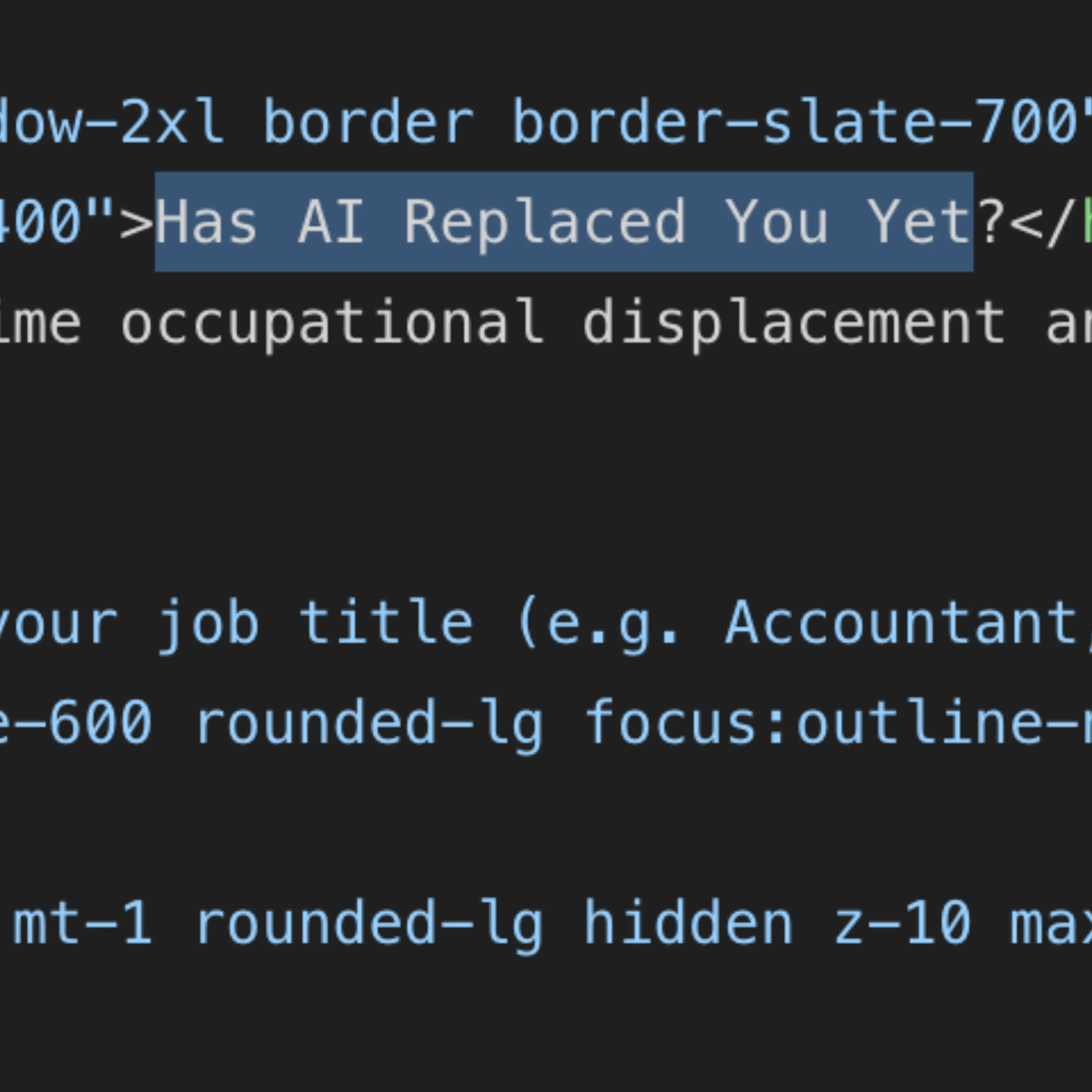
Demo: “Your job explained”
- Built live in the episode with Lovable.
- Example input: “Journalist” → output: “Yes” (replaced), risk level: critical 82%, timeframe: 2025–2028, suggested action: pivot to investigative work.
- The demo illustrates how vibe coding can produce both UI/design and judgmental outputs quickly — and how those outputs can be alarming, creative, or imperfect.
Key takeaways / headline findings
- Productivity gains vary by context:
- Startups/small projects: extremely large improvements (some reported ~20x speedups for new-from-scratch work).
- Large mature codebases (FAANG-style): modest velocity gains (~10%), with humans still required for code review and systems-level context.
- Use cases shift:
- Faster prototyping and experimentation (multiple variants in hours rather than weeks).
- Proliferation of “small, custom” or disposable software targeted at tiny audiences.
- Developer workflows changing:
- Engineers are using agents as “interns” or teams — but often still supervise, test, and gate production pushes.
- Emotional / imperative prompting (e.g., “don’t embarrass yourself”) is used by some devs to get more reliable outputs from language models.
Risks and concerns
Technical debt
- Auto-generated code can be messy, non-modular, or brittle, creating long-term maintenance costs.
- Poor code used as training data could perpetuate a cycle of degrading quality.
Security & privacy
- Advanced agents (CLAWs/local agents) require broad system/cloud access, increasing attack surface.
- Consumer vibe-coded sites may lack adequate HTTPS, privacy policies, or secure data handling.
- Inputting personal or sensitive data into unknown AI-driven sites carries real risk.
Ethical & environmental
- Opposition among some devs: training data may include copyrighted/stolen material; large models consume significant energy.
- Concerns about de-skilling engineers and job loss in certain roles.
Developer perspectives: the “civil war”
- Two major camps:
- Enthusiasts: see vibe coding as liberating, enabling fast prototyping, experimentation, and fun; willing to accept tradeoffs for speed and creativity.
- Critics/serious-dev movement: emphasize maintainability, security, ethics, and long-term craft; want to restrict or carefully regulate vibe coding.
- Net effect: software engineering will change substantially — not disappear — with new roles, different expectations, and likely tougher competition as capital seeks to squeeze labor.
Practical recommendations (what to do if you use vibe coding)
- Treat AI-generated code like any third-party contribution:
- Run comprehensive tests and code reviews before shipping.
- Keep critical systems behind human approval and CI gates.
- Limit agent privileges:
- Avoid granting broad system/cloud access unless you’ve audited the agent and environment.
- Protect user data:
- Use HTTPS, explicit privacy policies, and minimal data retention when collecting user inputs.
- Plan for maintainability:
- Enforce modular structure, documentation, and standards so generated code doesn’t become unmanageable.
- Use vibe coding for prototyping and idea exploration; be conservative for mission-critical production.
Notable quotes & insights
- Andrej Karpathy: “There’s a new kind of coding I call vibe coding, where you fully give in to the vibes… and forget that the code even exists.”
- Clive Thompson: Advanced dev setups have “lead” agents that spawn sub-agents (coding, testing) and humans often “yell” or reprimand agents to get them to obey tests — highlighting how language still acts as control.
- Productivity nuance: startups may see 20x speedups on new projects; large companies see incremental (~10%) velocity gains but need human systems-thinking to avoid cascade failures.
Bottom line
Vibe coding is already changing how software is built: enabling fast prototyping, empowering non-coders, and enabling new kinds of tiny, disposable apps — while introducing serious risks around quality, security, ethics, and labor displacement. Developers and organizations will need new guardrails (reviews, testing, privilege controls, privacy practices) to harness benefits without inheriting pervasive technical debt or security exposure.