Overview of How the Right Embraced Psychedelics
This episode of Today Explained examines how psychedelics—especially ibogaine—have moved from counterculture to conservative and even Trump-world interest. The central argument is that a mix of veteran advocacy, Joe Rogan’s influence, and growing skepticism toward the war on drugs has helped push the Trump administration toward supporting psychedelic research and possible legalization.
Why Ibogaine Is Suddenly a Political Issue
- Ibogaine is a powerful psychedelic derived from a West African shrub.
- It is still a Schedule I drug in the U.S., meaning it is federally illegal and considered to have no accepted medical use.
- Advocates say it can:
- reduce or eliminate opioid withdrawal symptoms
- help with PTSD
- possibly aid treatment of traumatic brain injury
- The drug has gained attention because Trump and allies have begun talking publicly about it, signaling a major shift in drug policy politics.
How the Right Got Interested in Psychedelics
- Psychedelics were historically associated with the left, counterculture, and anti-establishment movements.
- The newer right-wing interest comes from a different place:
- veterans
- former special forces and military personnel
- conservative, religious, and anti-establishment figures
- Many of these people say conventional treatments have failed them, while psychedelics have provided meaningful relief.
Joe Rogan’s Role as a Gatekeeper
- The episode portrays Joe Rogan as a key political influencer on this issue.
- Rogan has repeatedly hosted guests who support psychedelic therapy, including:
- Rick Doblin of MAPS
- Aubrey Marcus
- Rick Perry
- Brian Hubbard
- According to the segment, Rogan even texted Trump about ibogaine, and Trump reportedly responded favorably.
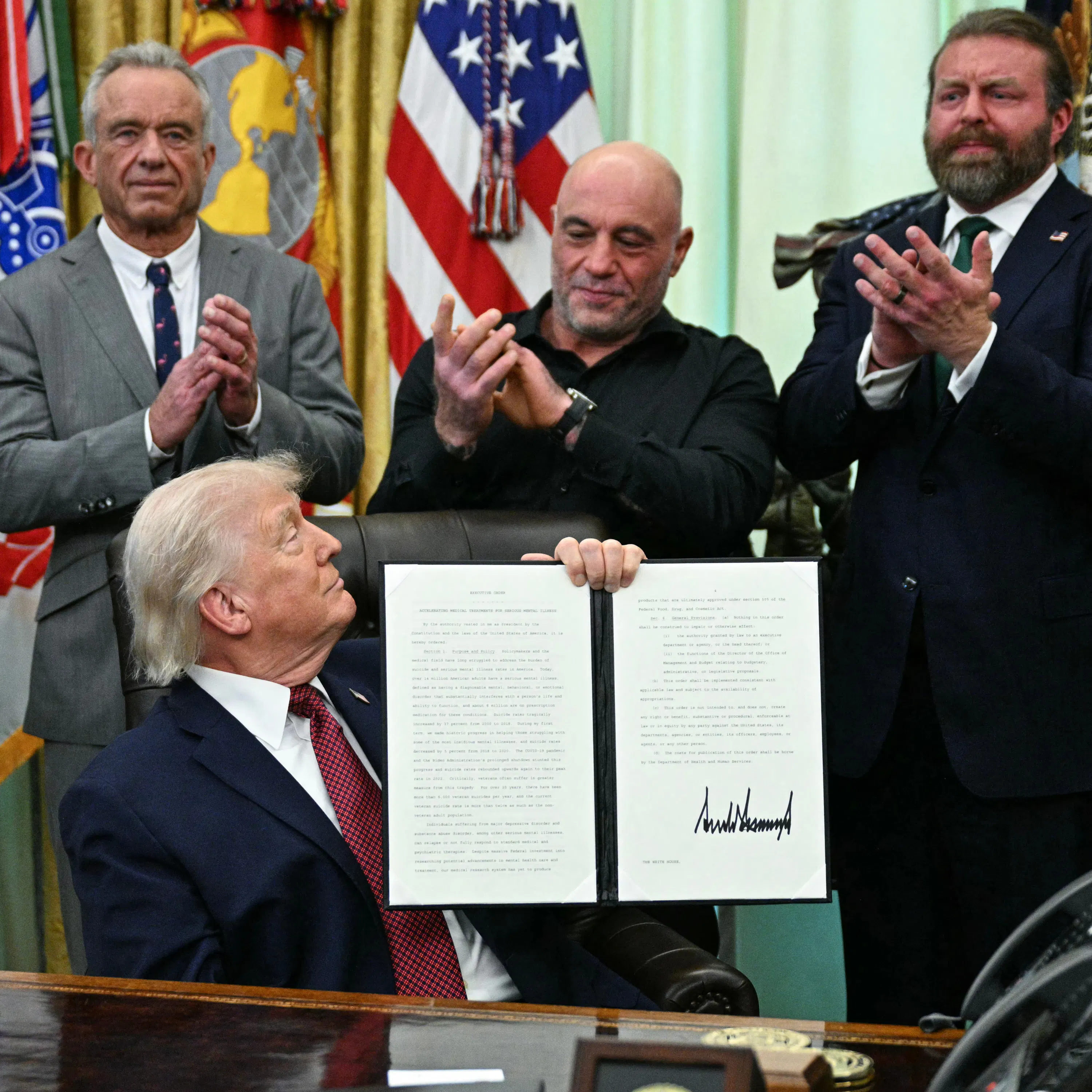
- Rogan later attended the White House event where an executive order on psychedelics was signed.
What Trump’s Executive Order Does
The executive order is presented as a major symbolic and practical step, even if executive orders alone don’t equal full legalization.
Key effects mentioned:
- Expands access for terminally ill patients under existing experimental-drug pathways.
- Allocates $50 million for psychedelic research.
- Prioritizes state-led research initiatives, including ibogaine studies.
- Helps fast-track review for some psychedelic drug applications.
- Potentially opens the door to FDA approvals for psychedelic therapies.
Why Veterans Are Central to the Push
- Veterans’ testimony has been politically powerful because it is hard to dismiss.
- The episode highlights:
- high rates of PTSD
- traumatic brain injury
- veteran suicide
- Trump referenced veteran suicide numbers when promoting the policy.
- A Stanford study of former special forces personnel is cited as evidence that ibogaine may significantly reduce TBI symptoms.
Risks and Limits of Ibogaine
The piece is careful to note that ibogaine is not a miracle cure.
Major risks
- It can be dangerous when used improperly
- It may affect the heart’s QT interval, which can lead to fatal cardiac arrest
- Deaths may be underreported
- It is especially risky because many users are already in fragile physical or mental states
Scientific uncertainty
- Research is still early-stage
- Existing evidence is mostly:
- observational studies
- anecdotal reports
- small trials
- Ibogaine has lagged behind other psychedelics in research because of safety concerns and regulatory hurdles
Personal Experience: The Journalist’s Ibogaine Trip
The episode includes a first-person account from Maytha Busby, who took ibogaine in Cancun while reporting.
He describes:
- a 12-hour trip
- strong dissociation
- intense visions and emotional effects
- feeling more connected to his parents and life
- a deeply physical experience that left him unable to stand for hours
He also recounts a sobering detail: another patient at the same clinic later died after an ibogaine trip, reinforcing the drug’s danger.
Bigger Cultural and Political Takeaway
The episode argues that psychedelics are crossing the political divide:
- The war on drugs is losing its grip, even if rhetoric remains harsh in some areas.
- The Republican Party is now showing openness to a drug class it once treated as an enemy.
- Democrats have also contributed to drug-war policy historically, so this is framed as a bipartisan evolution, not just a right-wing flip.
The broader takeaway is that psychedelics are being reimagined less as recreational drugs and more as tools for treating severe suffering—especially among people who feel conventional medicine has failed them.
Key Takeaways
- Ibogaine is the centerpiece of a new conservative embrace of psychedelics.
- Veterans and Joe Rogan are major drivers of the shift.
- Trump’s executive order could accelerate research and eventual approval.
- The promise is real, but so are the medical and ethical risks.
- Psychedelic policy in the U.S. may be entering a new threshold moment.