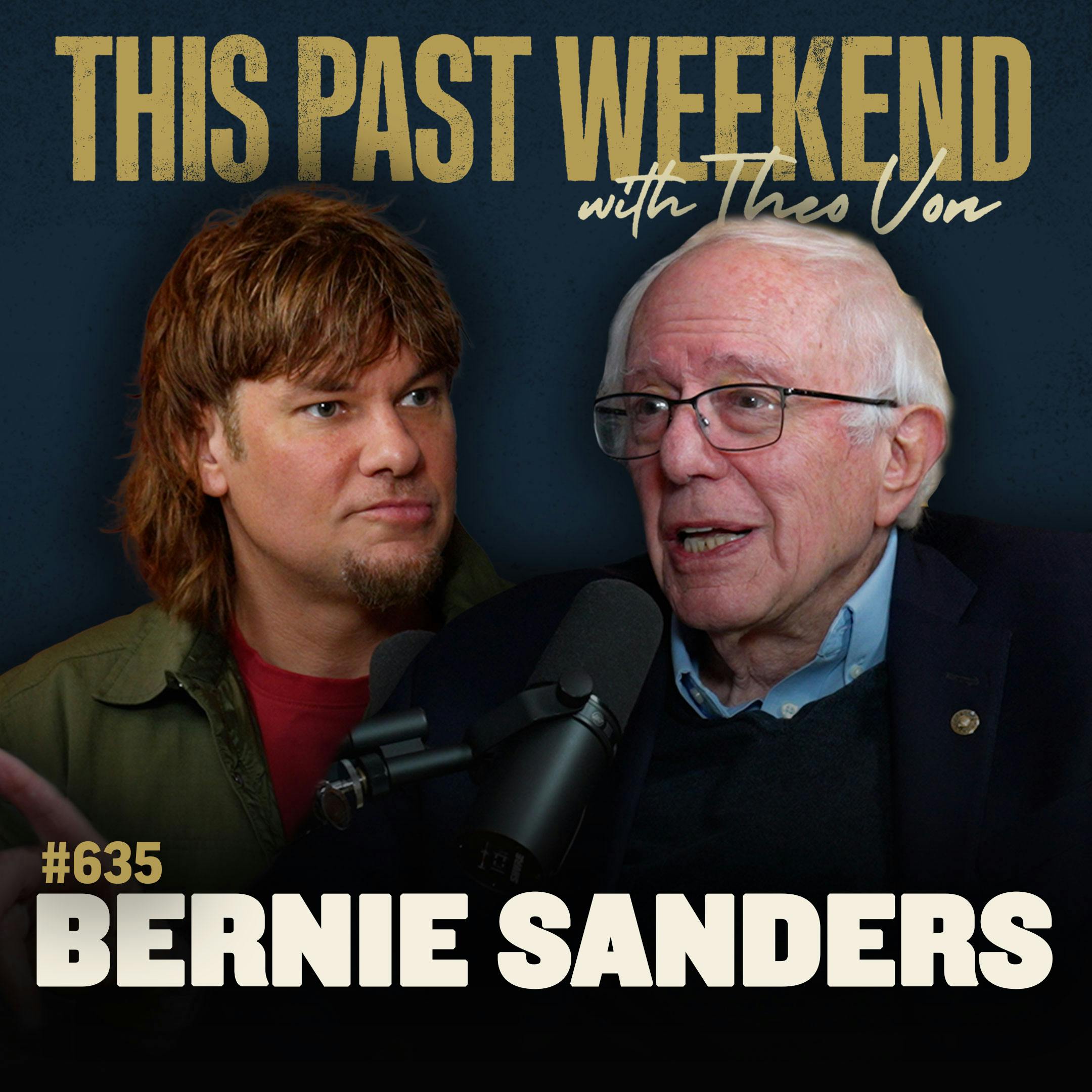
Overview of #635 - Sen. Bernie Sanders
Theo Von hosts Senator Bernie Sanders (I‑Vermont) for a wide‑ranging conversation recorded in New York City. The discussion centers on U.S. domestic policy (healthcare, inequality, campaign finance), the political climate and grassroots organizing, the rapid rise of AI/robotics and proposed policy responses, and foreign policy (Israel/Gaza, Saudi Arabia). Sanders connects these topics to broader concerns about oligarchy, democratic decline, and how ordinary people can organize for change.
Guest context
- Bernie Sanders — U.S. Senator from Vermont; former congressman and mayor of Burlington. Independent who caucuses with Democrats; leader of a progressive movement allied with figures like AOC.
- Host Theo Von — comedian/podcaster, attended the interview in New York where both joined nurses on the picket line earlier that day.
Key topics discussed
Healthcare and nurses' strikes
- Sanders highlighted nurses’ calls for safe nurse‑to‑patient staffing ratios, protection of their benefits, and concerns about AI/robotic substitution in care delivery.
- He argued the U.S. spends roughly $15,000 per person on healthcare (far more than other developed countries) while leaving many uninsured/underinsured (he cited ~85M, rising if Medicaid cuts occur).
- Sanders reiterated support for Medicare for All (expand Medicare to every person with no out‑of‑pocket costs) and claimed it could be implemented without increasing total national health spending.
Money, power, and democracy
- Campaign finance and Citizens United were flagged as core problems: billionaires and special interests buy political influence and block reforms that threaten their profits (insurance, drug companies, defense contractors).
- Sanders framed current U.S. governance as heavily influenced by concentrated wealth — “government of the billionaires, by the billionaires, for the billionaires” (paraphrase of his Lincoln comparison).
- He emphasized grassroots organizing and a “political revolution” to elect working‑class representatives (citing Zoran Mamdani’s NYC mayoral victory and an AOC tour).
Economic inequality and purpose
- Sanders stressed extreme wealth concentration (top 1% vs. bottom 93%; single individuals holding wealth greater than many households) and noted many Americans live paycheck‑to‑paycheck.
- He argued the rich do not need “hundreds of billions” and called for tax/structural changes to redistribute power and resources.
AI, robotics, and data centers
- Sanders expressed deep concern about AI/robotics: job displacement, corporate concentration, resource impacts of data centers (water/electricity), psychological effects (people turning to AI for companionship), and long‑term existential risk.
- He quoted tech leaders’ warnings (e.g., Musk, Gates, AI researchers) that automation could dramatically reduce the need for human labor.
- Policy proposals Sanders mentioned: moratorium on new data centers, national conversation and regulation, and asking who benefits from automation (workers vs. billionaires).
Foreign policy and human rights
- On Israel/Gaza: Sanders condemned the October 7 Hamas attacks but argued Israel’s response—especially large civilian casualties, blocking humanitarian aid, and destruction of infrastructure—constitutes violations and war‑crimes concerns. He urged withholding U.S. support for Netanyahu’s government.
- On Saudi Arabia: he criticized U.S. deference to Mohammed bin Salman (citing Khashoggi’s murder and authoritarian repression) and questioned the policy of cozy relations with dictators for geopolitical/financial reasons.
- He linked foreign policy choices to the influence of money and special interests in Washington.
Immigration, ICE, and border policy
- Sanders supports strong borders and a functioning immigration system, but also a comprehensive reform with a path to citizenship for undocumented people who obey laws and work.
- He criticized expanded ICE raids and what he called the weaponization of immigration enforcement for intimidation.
Corruption, fraud, and accountability
- Acknowledged fraud exists (child nutrition fraud in Minnesota, defense contractor fraud, other abuses) and called for enforcement and accountability, while urging context (most government programs work properly).
- On Jeffrey Epstein files and allegations about elites, Sanders called for transparency: “release all the files” and let people judge.
Main takeaways
- Sanders connects failures in healthcare, inequality, foreign policy, and tech governance to concentrated economic and political power.
- He argues structural reforms are needed: Medicare for All, campaign finance reform/ending Citizens United, new regulation for AI/data centers, and strengthening democracy via grassroots organizing.
- He is cautiously optimistic because of organizing successes (local progressive wins), but deeply concerned about anti‑democratic trends, automation, and authoritarian tendencies domestically and abroad.
Notable quotes & paraphrases
- “Healthcare is a human right.”
- On concentrated power: comparing today’s situation to Lincoln’s fear of losing “government of the people”: “We’re becoming a government of the billionaires.” (paraphrase)
- On AI (quoting tech leaders): “AI and robots will replace all jobs. Working will be optional.” (Sanders cites Musk/Bill Gates/AI researchers to underline the scale of change and risk)
Action items and recommendations (what Sanders urges)
- Support nurses and frontline healthcare workers (e.g., attend picket lines, donate to hardship funds like NYSNA).
- Push for Medicare for All — expand Medicare over a multi‑year period to cover everyone with no out‑of‑pocket costs.
- Demand campaign finance reform and overturning Citizens United to reduce billionaire influence.
- Advocate for regulation of AI and a moratorium on data centers until impacts on communities and employment are assessed.
- Call for transparency on high‑profile investigations (e.g., Epstein files) and accountability for fraud.
- Vote and organize locally: elect more officials like Mamdani; build grassroots movements rather than relying solely on top‑down party elites.
Useful context / quick facts mentioned
- Sanders asserted U.S. per‑capita health spending ≈ $15,000/year and argued the U.S. spends roughly double comparable countries while delivering worse outcomes.
- He cited large numbers of uninsured/underinsured Americans (≈85M, could rise if Medicaid is cut).
- He noted the rapid investment in AI by a handful of the richest people (Musk, Bezos, Gates, Ellison) and the potential for mass job disruption.
Closing impression
The episode pairs Theo Von’s conversational style with Sanders’ sustained critique of U.S. political economy and his policy prescriptions. It’s a mix of immediate, concrete topics (nurses’ strikes, local elections) and broad systemic concerns (oligarchy, AI risk, foreign policy). Sanders emphasizes grassroots organizing as the practical path forward while urging urgent policy responses to automation and financialized political influence.