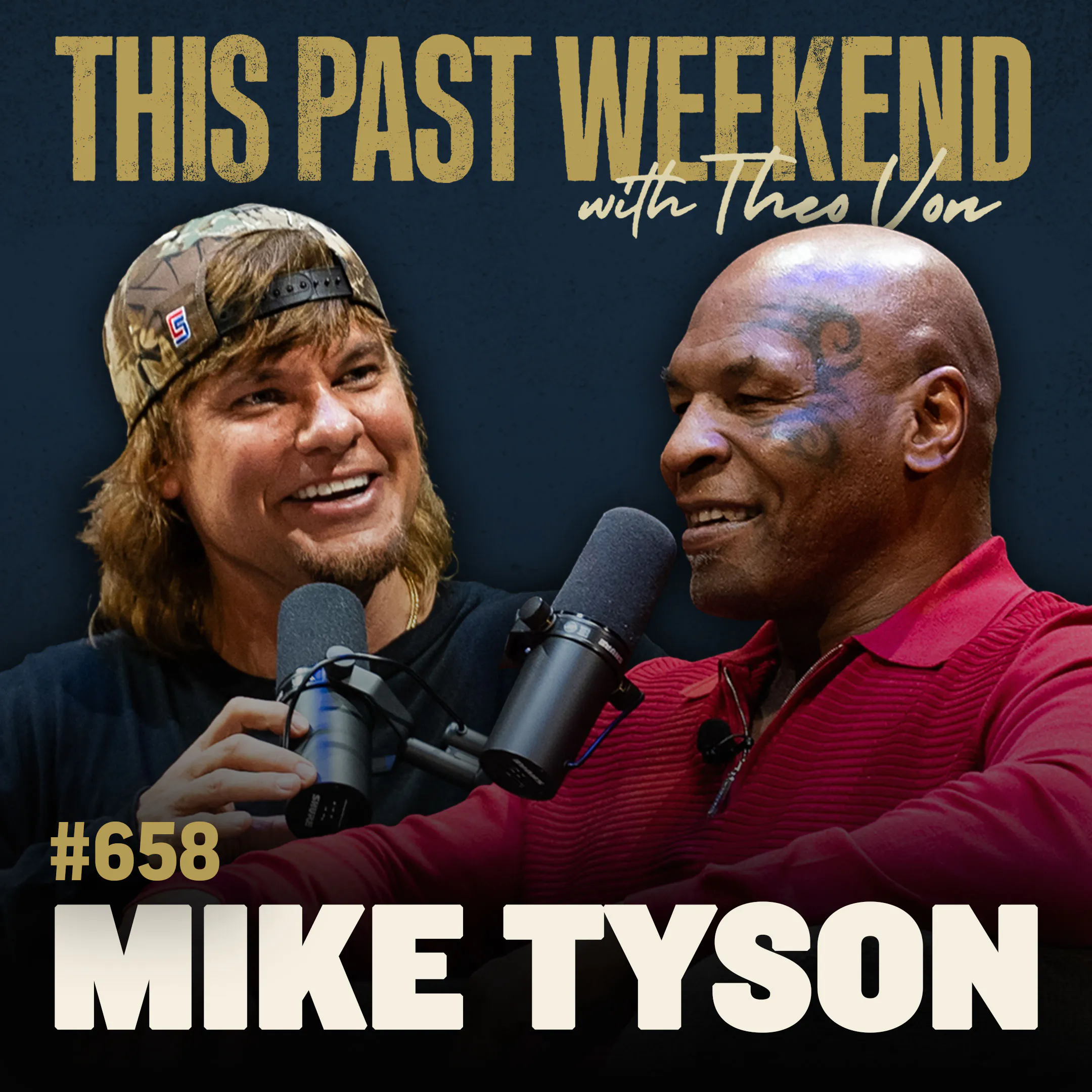
Overview of #658 - Mike Tyson (Live at the Wiltern)
In this live Theo Von episode, Theo sits down with Mike Tyson for a wide-ranging, funny, and often unexpectedly heartfelt conversation about Tyson’s childhood, boxing career, addiction, faith, marriage, and the people who shaped him. The interview mixes big laughs, raw honesty, and reflective moments as Tyson talks about discipline, suffering, mentorship, and how fame changed—and didn’t change—his sense of self.
Main Topics Discussed
Tyson’s childhood and early identity
- Tyson reflects on growing up in poverty and chaos, including a difficult home life and early exposure to crime.
- He shares how humiliation and survival shaped him, especially an early story about pigeons, being laughed at, and deciding to “dress sharp” and carry himself differently.
- He describes becoming emotionally and mentally independent very young, saying he felt like an adult early in life.
Cus D’Amato and discipline
- Tyson repeatedly credits his mentor and adoptive father figure, Cus D’Amato, as the most important influence in his life.
- He says Cus:
- believed in him at a young age,
- taught him to speak positively about himself,
- gave him structure through chores, discipline, and training,
- and loved/protected him deeply.
- Tyson says that if he could have a documentary crew film any moment of his life, it would be the period when he first met Cus and began boxing seriously.
Boxing, fame, and public perception
- Tyson talks about how his career was built on fighting, discipline, and the need to be seen and heard.
- He says he never saw himself as “big,” despite being one of the most recognizable people in the world.
- He reflects on how public perception of him has often been different from his own reality, especially in documentaries and interviews.
- He describes the physical toll of years of fighting, noting that scars and wear build up over time.
Addiction, rehab, and recovery
- Tyson speaks openly about alcohol and drugs, especially cocaine.
- He says he has been sober for nine years and emphasizes that recovery is an ongoing battle.
- He shares several stories from his drug-using years, including:
- staying up for days,
- trying to quit,
- and even a bizarre rehab anecdote where a staff member allegedly asked for his cocaine.
- He frames addiction as part of a larger struggle with self-discipline and identity.
Faith, suffering, and death
- Tyson returns often to God and spirituality.
- He says God “broke” him before “crowning” him, and that suffering was part of his formation.
- He argues that hardship can be a teacher and that death is just another part of life we haven’t experienced yet.
- He suggests that losing people, youth, hair, and strength is part of a natural preparation for death.
Marriage, children, and family life
- Tyson praises his wife, Kiki, calling her a great mother, wife, and protector.
- He says she takes care of him and that their relationship is strong, grounded, and loving.
- He also talks about his children, saying they have good opportunities and that his main joy now comes from them.
- Tyson makes it clear he doesn’t want his children to suffer the way he did.
Celebrity stories and old acquaintances
- The conversation includes many stories about celebrities Tyson has known or met, including:
- Michael Jackson
- Whitney Houston
- Hulk Hogan
- Jim McMahon
- Cam Newton
- Tyson shares a memorable Michael Jackson story where he felt slighted after Jackson acted like he didn’t recognize him.
- He also talks about visiting Whitney Houston when she came to see him in prison.
- The Hulk Hogan funeral anecdote stands out as a reflection on wrestling, childhood nostalgia, and larger-than-life personalities.
Tyson’s views on women and relationships
- Tyson repeatedly says women are powerful, special, and essential.
- He credits his wife with being both nurturing and strong, calling her his “defender.”
- The tone here is admiring and traditional, with Tyson emphasizing how much he values feminine strength and care.
Key Takeaways
- Cus D’Amato was Tyson’s defining influence: Tyson frames his mentor as the person who gave him structure, purpose, and belief.
- Suffering shaped Tyson’s life: He sees hardship not as a detour, but as the thing that made him who he is.
- Recovery is lifelong: Tyson is candid that sobriety and self-management require constant effort.
- Fame did not erase his past: He still sees himself as someone who came from poverty, pain, and discipline—not just celebrity.
- Family is the center of his present life: Tyson says his children and wife are what matter most now.
- He remains deeply philosophical: Even in a chaotic live interview, Tyson keeps returning to identity, mortality, God, and self-respect.
Notable Moments and Quotes
- “God broke me before he crowned me.”
- “Anything that got me out of me, I liked.”
- “I walk with poverty and I sit with presence.”
- “I love to suffer.”
- “The best way to receive discipline is to do what you hate to do, but do it like you love it.”
Overall Tone
- Funny and unfiltered: The episode is packed with jokes, audience energy, and spontaneous banter.
- Reflective and emotional: Tyson opens up about trauma, mentorship, addiction, and family.
- Chaotic but revealing: The live setting leads to some wild tangents, but it also produces genuine insight into Tyson’s worldview and life journey.
Episode in One Sentence
A live, wildly entertaining Theo Von conversation where Mike Tyson reflects on the pain, discipline, faith, and mentorship that shaped him into a champion—and the family and sobriety that keep him grounded today.