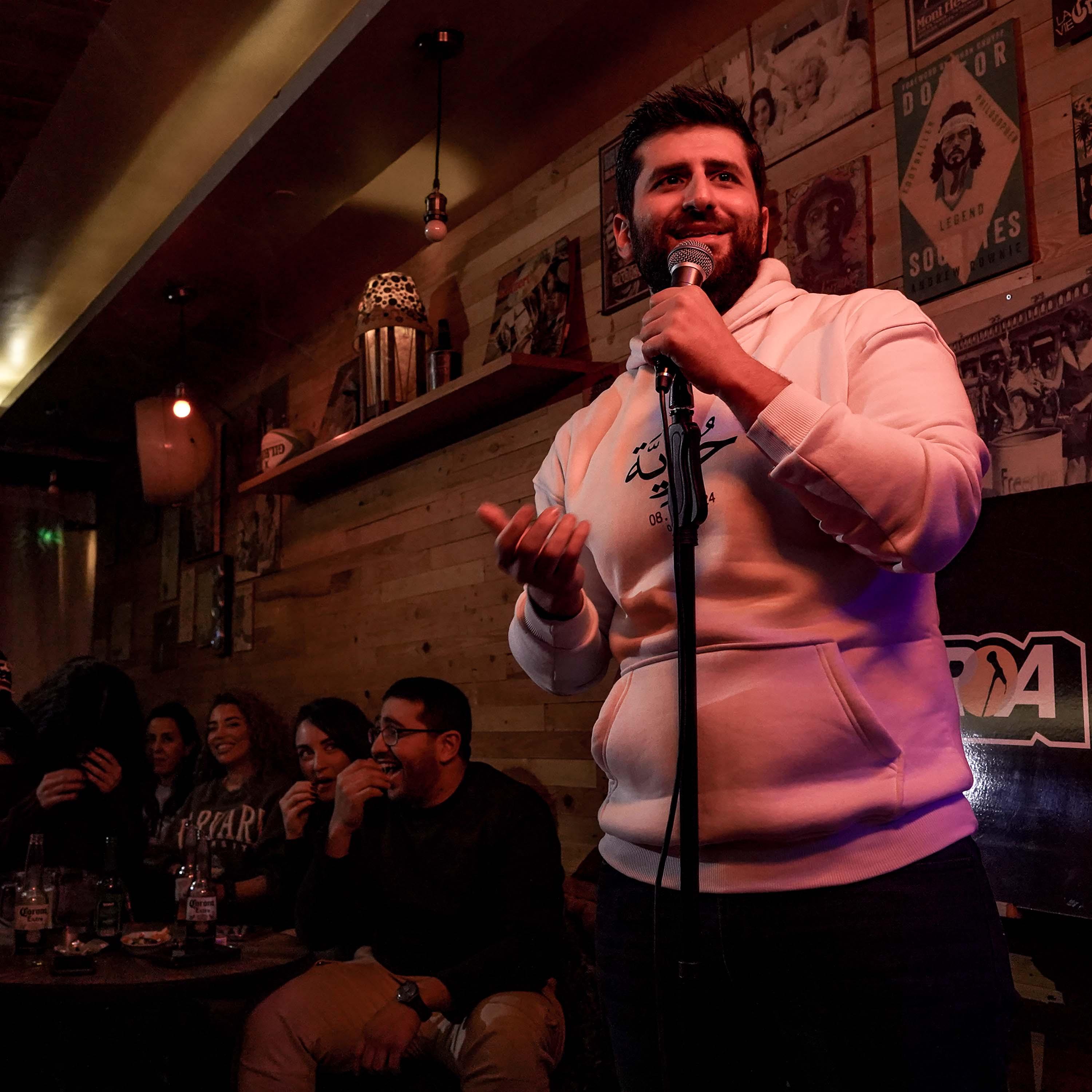
Overview of 879: A Christian and a Muslim Walk Into a Bar (This American Life)
This episode follows a Syrian stand‑up troupe called Styria as they attempt a risky nationwide comedy tour in the year after Bashar al‑Assad’s regime fell. Reporter Eamon O’Gana rides with the group from Damascus through conservative and contested provinces — Latakia, Hama, Maharda, Salamia, Aleppo — and documents how newly felt freedoms collide with local politics, religion, social mores, and the lingering dangers of a country coming out of 13 years of war.
Story arc — Acts 1–3
Act 1 — Getting on the road
- Background: Assad family ruled Syria for decades; the regime collapsed unexpectedly and Islamist group HTS (Hayat Tahrir al‑Sham) took control of parts of the country, promising elections. Syrians experienced a kind of sudden, partial freedom.
- Styria, a 20‑person comedy collective (two women, many still holding day jobs), plans a 16‑city, 21‑day tour across diverse and sometimes dangerous regions.
- Early shows go well in liberal areas. The comedians test their material, but they’re uncertain what’s permissible: jokes about the previous regime land; jokes about religion or sexuality could be risky.
- Latakia show: sold out, big laughs — even bra jokes about Asma al‑Assad — and audiences revel in newly possible satire.
Act 2 — The drama in Hama
- Hama is symbolically sensitive (1982 massacre under Hafez al‑Assad). The group sells out a Hama show but receives death threats and runs into local censorship.
- A local “Sheikh” (a powerful cultural/political official) and Hama political affairs signal the show is unwelcome, first claiming the group promotes “gay rights,” then saying their comedy threatens family values.
- Styria fights back publicly on social media, encouraging Hama fans to attend nearby shows; one comedian (Abu Aziz) posts an incendiary Instagram rant comparing current authorities to the old regime, provoking officials.
Act 3 — Maharda, negotiations, and outcomes
- The troupe tries to relocate Hama patrons to a show in Maharda (a Christian town), but Maharda authorities are pressured to block the show unless Hama grants permission.
- Officials meet with the comedians. The tone is markedly different from old Assad repression: the men are summoned, admonished, and demand apologies; the state aims to assert control without resorting to disappearances.
- Result: Hama and Maharda shows are cancelled; the group faces bureaucratic and social obstacles. Nevertheless, shows in Aleppo sell out and go forward, showing both the fragility and reach of the new freedom.
Key takeaways / main points
- The collapse of the Assad regime created a brief window of expressive freedom; Syrians and artists are experimenting with those limits in real time.
- Authority is now fragmented: rebel/Islamist coalitions, local political affairs offices, ministries, and community leaders each wield influence — often inconsistently.
- Social media can protect and empower performers (mobilizing audiences, broadcasting cancellations) but also inflames officials and can be used to pressure artists into submission.
- The new environment is not simply “freedom” vs “repression” — it’s a negotiation in which public opinion, religion, local history, and political insecurity determine what gets said and where.
- Comedy becomes a test-case for broader social change: who gets to define acceptable speech, and how are “family values” or religious sensibilities used to limit expression?
Notable moments & quotes
- Maliki: “Nobody cares about us. Who the fuck we are?” — a wry expression of the comedians’ sense of vulnerability and low-profile survival strategy.
- A local official (as relayed to the troupe): their jokes “threaten family values” — this becomes the official pretext used to cancel shows.
- Sharif’s bra joke about Asma al‑Assad: a stark example of material that would have been unthinkable under the old regime but which now plays to roaring crowds.
- Abu Aziz’s Instagram post comparing new authorities to Assad-era repression — a turning point that provokes direct government response and forces a public apology.
People and groups to know
- Styria — the comedy collective (founders/high-profile members: Sharif Homsi and Maliki Mardanali).
- Sharif Homsi — lead comic, former prisoner in Dubai, influential voice in the troupe.
- Maliki Mardanali — organizer/driver, Christian, pragmatic and anxious about logistics and safety.
- Abu Aziz — outspoken comedian whose social post escalated the conflict.
- Reporter: Eamon O’Gana (This American Life).
- Local power players: the “Sheikh” / Hama political affairs office, ministries of tourism/culture, and the HTS leader Ahmad al‑Shara (contextual).
- National actors: Bashar al‑Assad and Asma al‑Assad (recently ousted).
Context and background points
- Syria’s conflict: 13 years of civil war, >300,000 civilians killed, mass displacement; the Assad family’s 53‑year rule ended abruptly just a year earlier in this account.
- HTS (Hayat Tahrir al‑Sham), an Islamist group, led the ouster in parts of the country and presents itself as interim authority.
- The country remains fragmented: areas controlled by various factions, ongoing violence in some regions (e.g., Aleppo, Swaida), and a complex patchwork of local power brokers.
Themes and implications
- Freedom of expression as a fragile, negotiated commodity rather than a binary state.
- Art and comedy as vehicles for social reckoning, catharsis, and political testing.
- The role of social media: mobilizing, exposing, but also escalating conflicts and inviting official backlash.
- New authorities are cautious: they often prefer public correction and containment (apologies, cancellations) over the old regime’s disappearances — yet the result can still be chilling.
Practical notes for listeners
- The episode includes some unbeeped curse words; a bleeped version is available on thisamericanlife.org.
- If you want to follow the story further: search for Styria (Syrian comedians), and look up reporting by Eamon O’Gana and This American Life for updates and additional context.
Final thought
The episode shows a country mid‑transition: people taste freedoms and push boundaries, while emergent powers and local authorities scramble to reclaim control. Comedy — intimate, risky, and immediate — becomes a frontline in defining the limits of the new Syria.