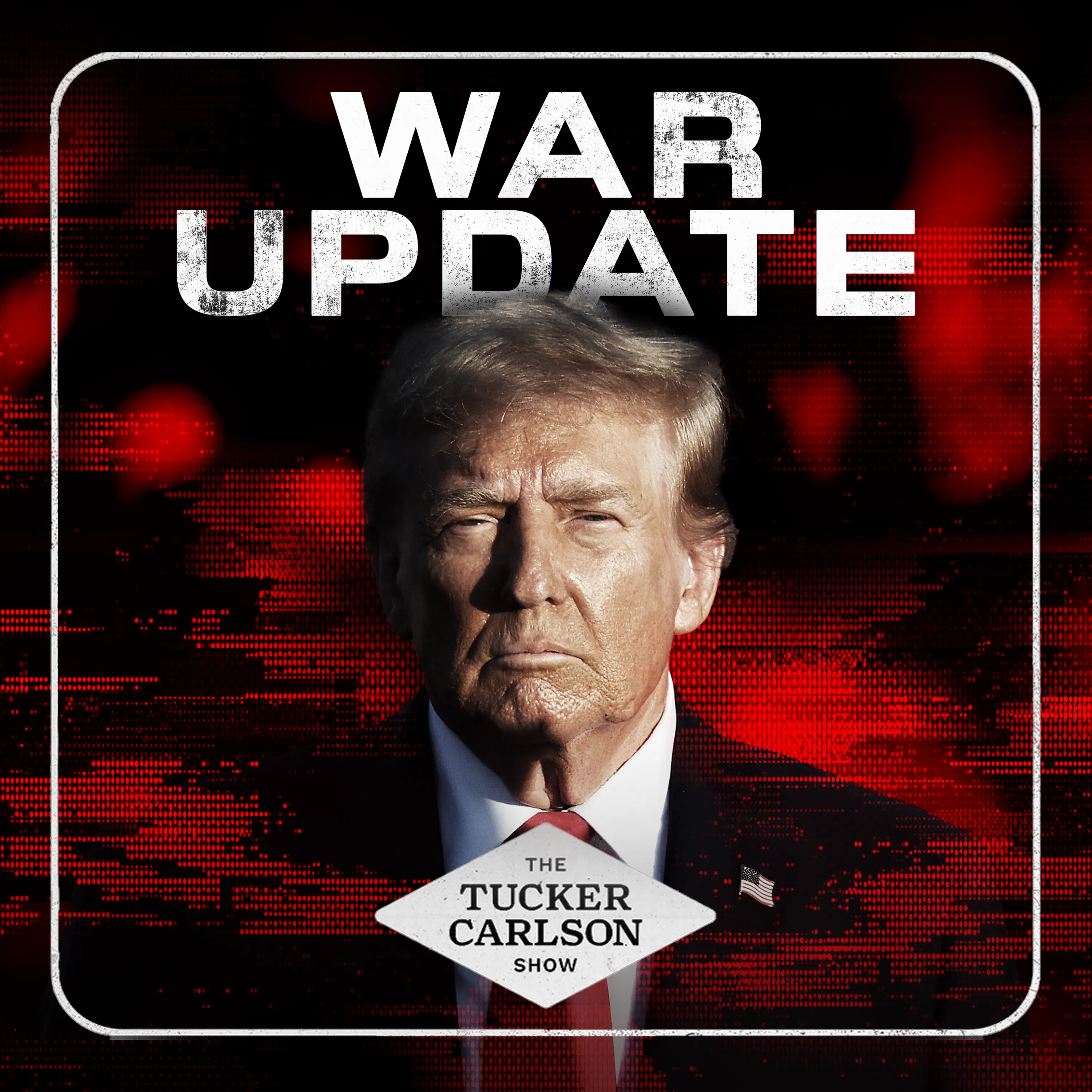
Overview of WAR UPDATE: Harvard Professor on Iran, Russia, China, and Trump’s Dangerous Moves in the Middle East
In this wide-ranging conversation, Harvard professor Stephen Walt argues that the world is becoming more dangerous, not less, as U.S. foreign policy, great-power rivalry, and the erosion of norms around war and assassination combine to make global politics more volatile. He criticizes Donald Trump’s approach to Iran and Ukraine as overconfident and strategically sloppy, warns that China’s rise has not been adequately handled, and says the United States should focus on balancing power rather than trying to remake regions like the Middle East.
The World Is Moving Toward a More Dangerous Order
Tripolar competition is replacing the post-Cold War moment
- Walt says the world is settling into a rough tripolar structure: the U.S., China, and Russia.
- He expects continued tension among major powers, especially as:
- Russia remains mistrustful of the U.S.
- China keeps growing economically and militarily
- regional powers become more active and destabilizing
War is eroding norms, not just borders
- He argues that recent conflicts have weakened the norm against assassination and other forms of targeted political violence.
- Once states accept killing leaders as a tool of policy, he says, trust and diplomatic off-ramps become much harder.
- He also notes:
- global defense spending has surged
- protectionism and “weaponized interdependence” are growing
- the optimistic globalization of the 1990s is fading
China: The U.S. Misread the Long-Term Consequences
American hubris and corporate incentives helped create the problem
- Walt says U.S. policymakers assumed China would liberalize as it got richer.
- That assumption proved wrong because the Chinese Communist Party prioritized control over liberalization.
- He also blames American corporations for:
- offshoring production
- sharing technology too freely
- helping China rise faster than many expected
China wants a sphere of influence in Asia
- He argues China’s goals are not necessarily conquest, but regional deference.
- In his view, China would prefer a relationship with Asian neighbors similar to the U.S. relationship with Latin America: no rival great-power presence nearby.
- He says the U.S. should prevent Chinese domination of Asia, but has repeatedly failed to stay focused on that goal because of distractions in the Middle East.
Trump, Iran, and the Logic of Escalation
The Iran war was a major strategic mistake
- Walt says the conflict with Iran was not driven by an imminent Iranian nuclear threat.
- He points to:
- long-standing hostility between Washington and Tehran
- the political influence of pro-Israel forces
- Netanyahu’s pressure on Trump
- Trump’s belief that he could win quickly and cheaply
Why the war is hard to end
- For the U.S., the war is optional.
- For Iran, it is existential.
- That asymmetry makes negotiations much harder because Iran has a stronger incentive to endure pain and respond with escalation.
Iran still has leverage
- Walt argues Iran can threaten:
- the Strait of Hormuz
- U.S. military facilities in the region
- regional partners like Saudi Arabia and Israel
- He says Trump has backed down when Iran signaled retaliation, because further escalation would be too costly.
The likely exit is political, not military
- Walt thinks the war will likely end only when Trump decides to declare victory and move on.
- He suggests Trump is unusually good at changing the subject and framing retreats as wins, but says this conflict may be too obvious to spin easily.
Ukraine and Russia: A Negotiated Settlement Would Be Painful
Trump’s “24-hour peace” promise was fantasy
- Walt says Trump badly overestimated his ability to broker a deal between Russia and Ukraine.
- The conflict involves too many hard issues:
- territory
- security guarantees
- NATO membership
- political survival for Zelensky
His preferred settlement
- Walt suggests a realistic deal would likely require:
- Ukraine becoming neutral
- no NATO membership
- some territorial concessions, at least for now
- a security arrangement that gives Ukraine real defensive capacity without becoming de facto NATO
Europe’s fear of a Russian invasion is overstated
- He says a Russian attack on NATO countries is highly implausible.
- At the same time, he acknowledges Europeans have reasons to worry because of:
- sabotage
- gray-zone operations
- hybrid warfare
- His broader point: even if an invasion is unlikely, the growing level of friction is still dangerous.
The Middle East: Balance of Power, Not Endless Intervention
The U.S. should stay selective, not dominant
- Walt says America does not need to micromanage the Middle East.
- He supports:
- preventing one power from dominating the region
- intervening only in major balance-of-power emergencies, like Iraq’s invasion of Kuwait in 1991
- But he rejects:
- regime change
- permanent military entanglement
- attempts to reshape local politics
Why U.S. presence became a trap
- He traces the buildup of American military involvement to:
- post-WWII oil concerns
- Cold War competition
- the 1991 Gulf War
- dual containment in the 1990s
- the Iraq War and the war on terror
- In his view, the result is that the U.S. got pulled deeper and deeper into regional politics without ever fully extracting itself.
Relations with Iran are uniquely abnormal
- Walt notes the U.S. maintains special relationships with Israel, Saudi Arabia, and others, but essentially no direct relationship with Iran.
- He says that is unusual and unhealthy, especially for a power as globally connected as the U.S.
Democracy, Public Opinion, and Accountability
The public is more anti-war than the political system
- He argues that Americans consistently prefer leaders who promise less foreign intervention and more focus at home.
- But donor influence, lobbying, institutional inertia, and the defense industry make foreign policy hard to redirect.
A key problem: no accountability for failed foreign policy
- Walt says the same officials often keep making the same mistakes and still get promoted, hired, or reappointed.
- He believes the system rewards:
- confidence without results
- punditry over judgment
- repeated failure without consequences
His broader warning
- The combination of:
- wealth inequality
- media fragmentation
- public anger
- unchecked foreign policy failures
- elite impunity
- could eventually create serious instability.
Main Takeaways
- The U.S. is entering a more dangerous era of great-power rivalry.
- China’s rise was underestimated, and the U.S. has struggled to adapt.
- Trump’s Iran policy was a major escalation based on overconfidence and bad assumptions.
- Ukraine can likely only be settled through compromise, not total victory.
- The U.S. should maintain a balance-of-power approach in the Middle East, not endless intervention.
- The biggest systemic problem is the absence of accountability for foreign policy failure.
Bottom Line
Walt’s core message is that American power is no longer unchallenged, U.S. credibility has been weakened by recent wars, and the world is becoming more unstable because leaders keep overreaching. His preferred strategy is realism: lower ambitions, avoid regime-change wars, preserve balance of power, and stop pretending the U.S. can reshape the world at will.