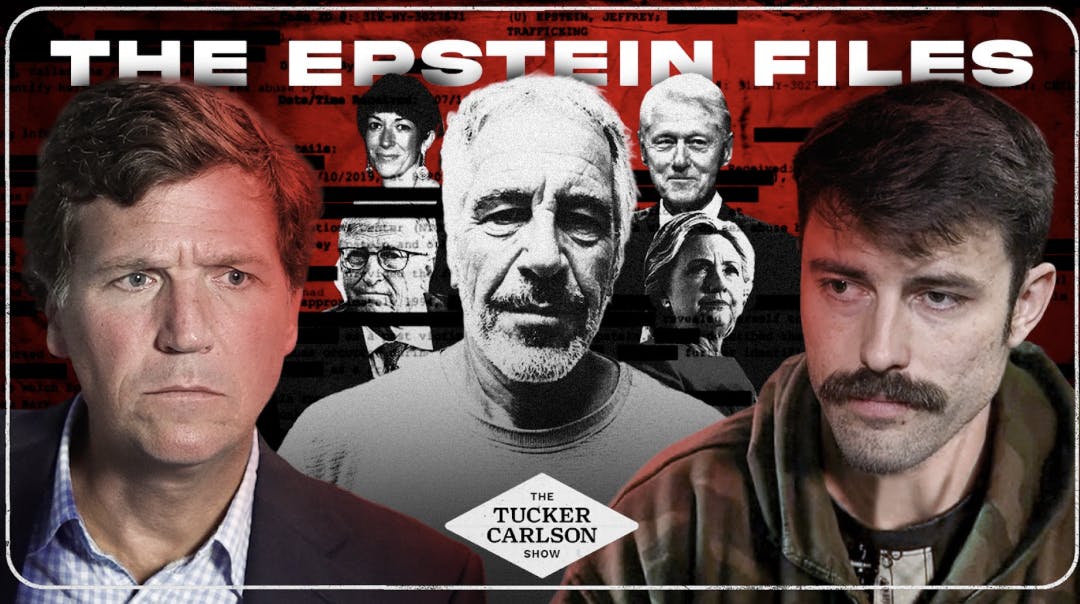
Overview of Tucker Responds to the Epstein Files, Pizzagate & the Demonic Global Crime Network with Ian Carroll
Tucker Carlson (Tucker Carlson Network) interviews investigative researcher Ian Carroll about the recent DOJ release of millions of Jeffrey Epstein–related files. The episode narrows in on one striking theme in the dump — repeated references to “pizza” (and oddly, “grape soda”) — and revisits the old “Pizzagate” controversies in light of new material. The conversation mixes documented excerpts from DOJ-published files, interpretations and historical context (Podesta/WikiLeaks, Comet Ping Pong), and broad claims about institutional failures, possible cover-ups, and Epstein’s role as a financial and criminal node. The hosts repeatedly caution that many entries are unverified, that the file set mixes credible records with rumors/anonymous tips, and that careful, primary-source verification is required.
Key points and main takeaways
- The DOJ release (millions of items) contains a mixture of emails, texts, photos, tip-line statements and other materials — some credibly sourced, some anonymous, some likely false. Sorting truth from noise will take time.
- A surprising number of documents reference “pizza” (reportedly ~800+ hits), and some exchanges pair “pizza” with “grape soda.” Tucker and Carroll highlight one text exchange attributed to Jeffrey Epstein and urologist Dr. Harry Fisch in 2018, where after prescribing an ED drug the doctor texts: “after you use them… wash your hands and let go get pizza and grape soda.” The hosts present this as a concrete example that reopens questions raised by Pizzagate-era email oddities.
- Pizzagate (2016) began with John Podesta email dumps (WikiLeaks) containing odd food/party references and suspicious Instagram posts tied to Comet Ping Pong in DC. The media response framed Pizzagate as baseless conspiracy; Tucker and Carroll argue many questions there were never properly investigated.
- Carroll argues Epstein was not merely a rich man with weird tastes but a professional money-launderer and a central node linking finance, politics, and human trafficking — citing Liquid Funding Limited, Bear Stearns ties, CDO activity tied to the 2008 crisis, and referrals of high-net-worth clients to major banks.
- The guests argue law-enforcement and political institutions failed to do basic follow-ups (interviews, subpoenas) with people named in the files; that pattern is characterized as underwhelming and possibly part of a larger cover-up.
- Carroll flags two threads he’s pursuing: Epstein’s interest in genetics/biotech and his Hollywood/media connections (e.g., Peggy S.), both of which he says have been underexplored.
- Caveats emphasized repeatedly: some images and lines in the dump are likely fake or tampered with; social-media amplification often lacks primary-source checking; not every odd phrase equals criminal conduct.
Topics discussed (concise list)
- Recent DOJ Epstein file release: nature of materials and scale.
- “Pizza” references and Pizzagate’s history (Podesta emails, Comet Ping Pong).
- Specific exchanged text: Epstein — Dr. Harry Fisch (ED drug + “pizza and grape soda”).
- Institutional failures: FBI, DOJ handling of Epstein evidence and raids; Maxwell trial revelations about mishandled evidence.
- High-profile names appearing in the files (discussed as questions to be asked): Bill Barr, Mike Pompeo, Bill Gates, Peter Thiel, Elon Musk, Howard Lutnick, Leslie Wexner, Ehud Barak, Ghislaine Maxwell, plus pilots and assistants allegedly linked to Epstein’s operations.
- Financial ties: Epstein’s Liquid Funding Limited, Bear Stearns, CDOs, alleged money-laundering role.
- WikiLeaks, Seth Rich mention, and Julian Assange’s persecution (contextualized within the 2016 email release debate).
- Broader cultural/political consequences: erosion of trust in institutions and potential societal ramifications.
- Carroll’s investigative plans and a tool (“Web,” named for Gary Webb) to make the documents searchable and AI-summarized.
Notable quotes / insights
- Tucker: on the pizza text, “After you use the erectile dysfunction drugs… wash your hands and let go get pizza and grape soda.” (Used as an example — he emphasizes he’s not alleging but asking questions.)
- Ian Carroll: “Epstein was a professional money launderer.” (Used to explain why Epstein was a node connecting powerful people and criminal networks.)
- Ian Carroll (advice): “Always go to the primary source — justice.gov/epstein — and search exact phrases to verify viral claims.”
- Tucker (broader concern): “Is every citizen treated the same under the law?” — framing the leak as a test of equal justice and institutional legitimacy.
Questions raised / investigative follow-ups the hosts urge
- Has anyone in federal law enforcement interviewed participants in explicit exchanges (e.g., Dr. Harry Fisch) about texts that look suspicious?
- Why were key pieces of evidence (binders, drives) initially left behind or handled poorly when Epstein’s properties were searched?
- What is the provenance and authenticity of the most disturbing images and messages in the files (which may be tampered or staged)?
- Who were the listed co-conspirators identified in older investigation notes (Carroll says a document listed ~10 co-conspirators including Leslie Wexner) and why were they not prosecuted?
- What are the specifics of Epstein’s financial operations (Liquid Funding Limited, Bear Stearns ties) and how did they intersect with major global events?
- What do items in the files reveal about Epstein’s alleged interest in genetics/biotech and any associated actors or projects?
- Where are the additional millions of documents the DOJ reportedly holds, and why were they released in partial tranches?
Where to check primary sources (practical how-to)
- Primary repository recommended by Carroll: justice.gov/epstein — use the search bar on that site.
- Practical verification tip: copy a short, unique phrase (3–5 words) from a viral post or clip and paste it into the DOJ site search; that will pull the exact document if it’s in the release.
- Be cautious: social media clips often omit context and can misrepresent documents; cross-check with the DOJ file and look for the whole thread/email.
Carroll’s ongoing work & resources he’s building
- Carroll is building a research tool (working name “Web,” after Gary Webb) that:
- Aggregates the documents
- Provides AI-powered summaries and cross-references
- Keeps primary-source files linked to the summaries for verification
- He’s prioritizing threads on genetics/biotech, Hollywood/media connections (Peggy S./contacts), and financial documentation linking Epstein to major financial institutions.
Recommendations & responsible consumption guidance
- Verify before amplifying: cite primary DOJ documents rather than reposting snippets or memes.
- Expect noise: millions of records include gossip, anonymous tips and possible forgeries alongside truthful material — treat each claim skeptically until corroborated.
- Focus on investigatory basics: interviews, subpoenas, and forensic verification of devices and metadata are the logical next steps; public pressure to demand real institutional follow-up is a recurring theme of the episode.
- If researching, start with justice.gov/epstein, use exact-phrase searches, and prefer full-document screenshots and context.
Final assessment (concise)
This episode reframes parts of the Epstein corpus through the lens of Pizzagate-style food references, arguing those references deserve renewed scrutiny. It combines concrete document excerpts, investigative hypotheses (financial laundering, biotech interest, media nodes), and political criticism of law-enforcement responses. The hosts repeatedly emphasize that much is unverified and call for systematic, primary-source-driven inquiry rather than immediate online hysteria. For anyone wanting to dig deeper: start at the DOJ release, verify alleged quotes, and follow investigators like Ian Carroll who are building tools to parse the dataset.