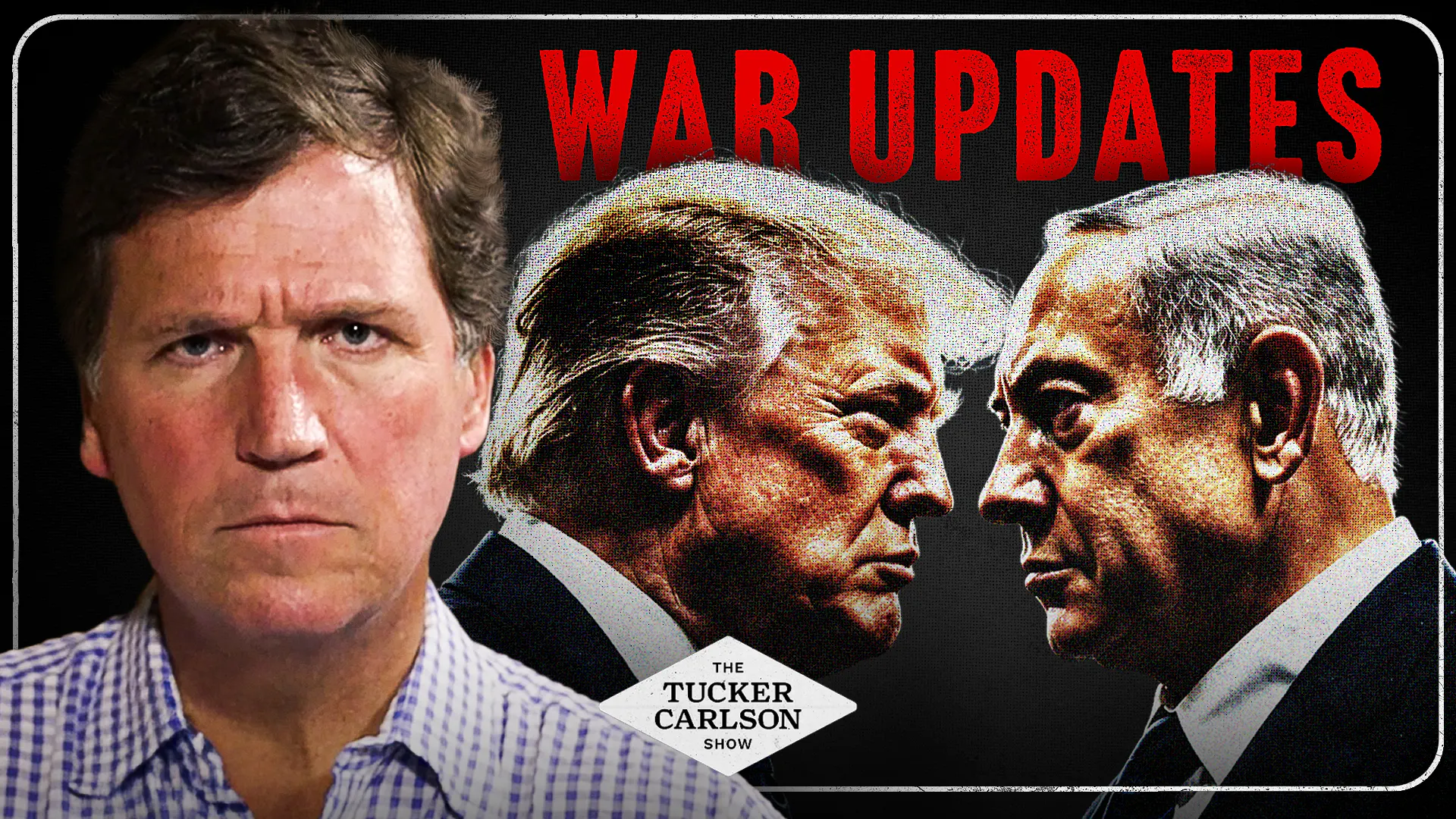
Overview of "Former Interim President of Israel Avraham Burg Speaks Out on Netanyahu’s Killing Spree"
This Tucker Carlson Network interview presents Avraham (Avraham) Burg — former Speaker of the Knesset and interim President of Israel — giving a dissenting, insider critique of Benjamin Netanyahu’s leadership and Israel’s conduct in the wars following October 7 and the subsequent campaign against Iran. Burg frames Israel’s recent decisions as opportunistic, strategic-less, morally corrosive and increasingly shaped by religious-nationalist forces. He calls for renewed diplomacy, warns about escalation risks (including regional proliferation), and argues that conflating criticism of Israel with antisemitism is mistaken and damaging.
Key points and main takeaways
- Burg’s credibility: former senior Israeli official (Speaker of the Knesset, interim president), long-time public intellectual from a prominent Zionist family — not a fringe voice.
- Criticism ≠ antisemitism: Burg condemns the claim that all criticism of Netanyahu (or Israel) is antisemitic; he says this conflation silences legitimate dissent and misrepresents Jews worldwide.
- No coherent strategy: Burg repeatedly argues that Netanyahu’s government pursues tactics without a clear, achievable strategic endgame — launching wars opportunistically rather than with a defined plan.
- Moral collapse over Gaza: Burg calls Israel’s conduct in Gaza a “moral abyss,” insisting Hamas atrocities do not justify possible Israeli crimes against Gazans; both must be confronted separately.
- Rise of religious-nationalist politics: He warns Israel has shifted from a more secular, European-influenced state toward a more religious, settler-influenced polity, increasing radicalization in politics, parts of the security services, and society.
- Temple Mount danger: Burg identifies plots and fanaticism aimed at Al-Aqsa / Dome of the Rock as a fast-moving, highly explosive risk that could trigger a far larger regional conflagration.
- Nuclear proliferation risk: He stresses the danger of a regional arms race if states develop or acquire WMDs — advocates a negotiated outcome that ends WMD proliferation (including Israel’s) in the Middle East.
- Role of the U.S. and world order: Restoring American credibility is central to preventing a chaotic power vacuum; if the U.S. withdraws, other powers (China, Europe or emergent coalitions) may fill the role unpredictably.
- Burg’s personal stance: Despite being in a minority politically, he embraces dissent as part of Jewish intellectual tradition and continues to speak publicly, accepting social costs.
Burg’s background and why his voice matters
- Former Speaker of the Knesset and interim President of Israel; decades in mainstream Israeli politics.
- Comes from a prominent Zionist family and is a widely published public intellectual.
- His position is not a fringe critique but a principled insider’s warning from the center-left tradition.
On Netanyahu — motivations and strategy
- Opportunistic trigger: Burg believes recent escalations began opportunistically rather than from a clear strategic plan.
- Psychological drivers: He attributes Netanyahu’s worldview to a blend of ingrained historical paranoia (fear of universal hostility toward Jews) and militant conservative/neoconservative ideology portraying Israel as “light” against “darkness.”
- Relationship with Trump: Burg describes a chemistry and mutual utility between Netanyahu and Trump (or like-minded U.S. leaders), with Netanyahu skilled at influencing presidents for political gains and legacy framing.
- Political survival over ideology: Burg criticizes Netanyahu for prioritizing personal/political survival over coherent national strategy.
Israeli society, media, and international perception
- Information vacuum: Burg says Israeli media and society often live in an information environment shaped by political narratives; many citizens lack direct exposure to Palestinian civilians and humanitarian realities.
- Weaponizing antisemitism: He warns that labeling legitimate criticism as antisemitic functions as a defensive filter that undermines self-reflection.
- Demographic and cultural shift: Israel’s internal composition changed (more Jews from Muslim-majority countries, larger Orthodox and settler influence), weakening shared cultural ties with the West and complicating Israel’s identity as “European-like.”
- Global standing: Burg says Israel has gone from being widely sympathized with to internationally disliked after Gaza policies; this diplomatic isolation is an existential reputational threat.
Gaza, Palestinians, and moral responsibility
- Two crime scenes: Burg insists Israel must simultaneously condemn Hamas’s October 7 atrocities and face its own possible moral/criminal actions in Gaza; one does not excuse the other.
- Moral blindness: He argues Israeli reporting and public perception dehumanize Gazans, denying any innocence and enabling harsh policies.
- Public ignorance: Many Israelis reportedly do not engage with Gaza as a human community; the crisis has exposed deep moral and informational gaps.
Religion, settlers, and the Temple Mount risk
- Religious-nationalist momentum: Burg sees the conflict’s politicization into religious terms (Jewish and Muslim fundamentalism) as accelerating since October 7, with visible support among some ministers, rabbis, and settlers.
- Temple Mount danger: He warns the ongoing fanaticism and previous plots (e.g., 1980s Jewish Underground) make any attack or attempt to replace the mosques catastrophic — likely to trigger massive regional upheaval.
- Settler violence and impunity: Burg describes daily abuses by settlers in the West Bank, often ignored or tacitly supported by state actors, and laments the silence or complicity of religious leaders.
Iran, war escalation, and nuclear concerns
- No clear endgame: Burg regards the campaign against Iran as lacking a final strategic design; Israelis want the Iranian threat reduced but lack a realistic plan against a much larger country.
- Risk of arms race: He stresses that any move toward nuclearization in the Middle East will provoke widespread proliferation and instability; his preferred outcome is a Middle East free of WMDs — including Israel’s.
- Role for diplomacy and the U.S.: Burg argues the U.S. must restore credibility and lead negotiations that prevent proliferation and guarantee regional security; otherwise other global powers may step in.
International consequences and alternatives
- Europe and China: If the U.S. declines its stabilizing role, China or Europe (after internal recalculation) could attempt to fill the void — with unpredictable results.
- Two-state solution re-emerges: Burg believes the two-state framework has returned to the table as an unavoidable option despite political resistance and hopes internal and external pressures may force a return to pragmatic solutions.
- Need for a negotiated regional architecture: He calls for creative diplomacy that addresses security (including WMDs), political rights, and regional integration.
Notable quotes
- “Labeling all criticism of Israel as antisemitism is itself a kind of antisemitism.”
- “We are in a moral abyss in which Israel collapsed into [regarding Gaza].”
- “Netanyahu knows how to take the disadvantage and make it his prime advantage… he picked his pocket.”
- “October 7 was the first round of the full-scale religious war.”
Implications and recommended outcomes Burg suggests
- Reject the automatic conflation of Israel criticism with antisemitism; allow internal and external critique.
- Prioritize diplomacy to prevent nuclear proliferation — pursue a Middle East free of weapons of mass destruction (including constraints on Israel).
- Reopen political space for two-state or negotiated solutions once active hostilities subside.
- Attend urgently to Temple Mount dynamics to avoid triggering wider regional war.
- Restore international trust (especially in the U.S.) as a stabilizing element in the region.
Closing observations
Burg’s message is both moral and strategic: Israel’s recent conduct damages its international standing and moral foundations, while domestic political trends (religious-nationalist influence, settler activism) are reshaping institutions and the security establishment. He offers a warnings-based case for diplomacy, de-escalation, and re-centering Israeli politics on democratic and humane principles — even if those views are currently minority positions within Israel.