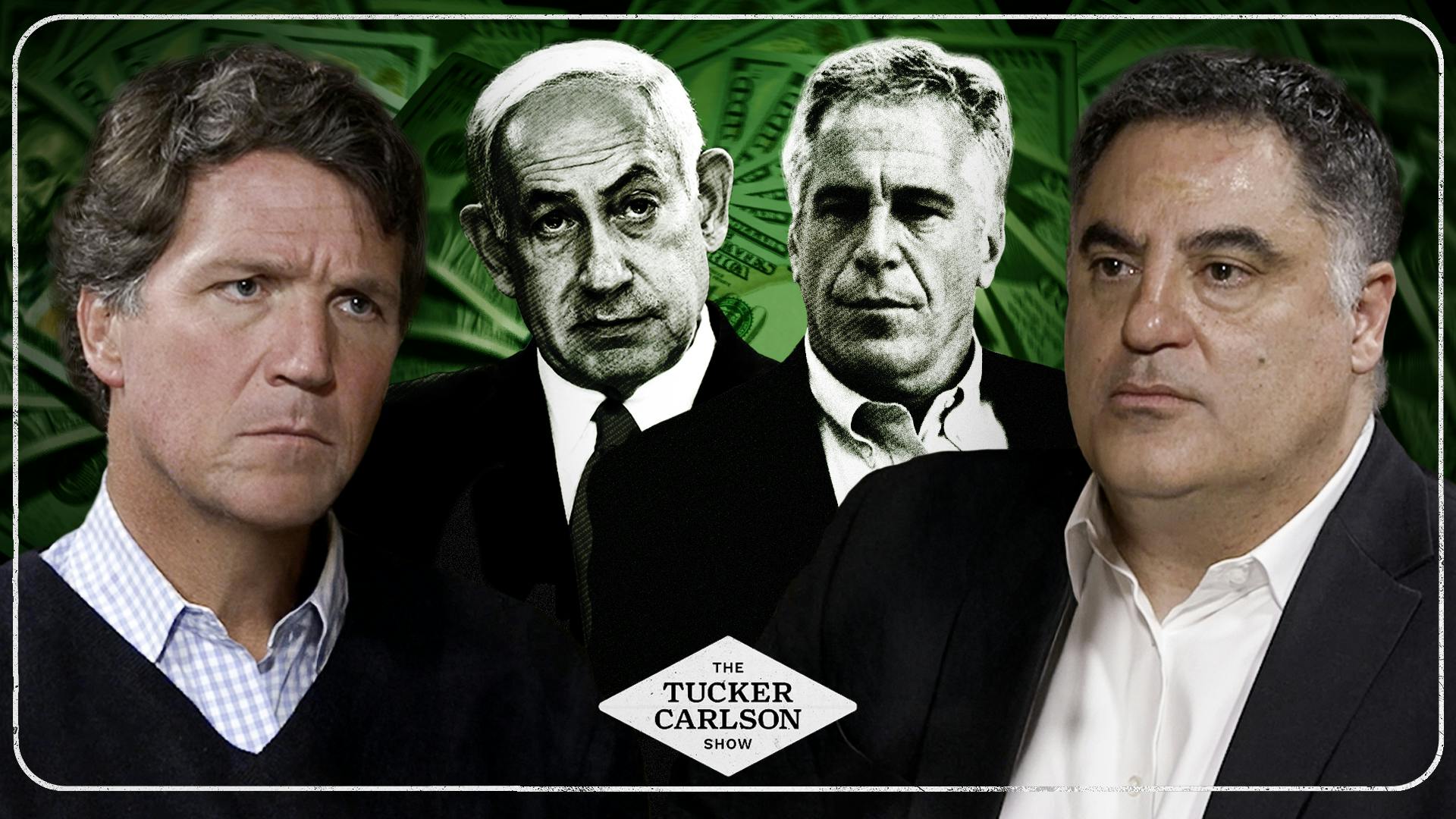
Overview of Cenk Uygur: Tucker Carlson Network interview
This episode features Cenk Uygur (host of The Young Turks) in conversation with Tucker Carlson. The discussion centers on Uygur’s critique of U.S. policy toward Israel, the power of money in U.S. politics, mainstream media “gaslighting,” and related controversies (Jeffrey Epstein, JFK files, 9/11 records). Uygur argues that concentrated donor influence—especially pro‑Israel lobbying—distorts American democracy, finances foreign wars, silences dissent, and produces real social harms. He outlines nonviolent political responses (primaries, pledges, public polling) and repeatedly frames Israel as a symbolic case of larger problems: money in politics, media capture, and erosion of American sovereignty.
Key topics discussed
- U.S.–Israel relationship: funding, memorandums of understanding, political influence of pro‑Israel lobbies (AIPAC and others).
- Casualty reporting and Gaza: Uygur cites high civilian death/injury counts and argues these constitute genocide (he references numbers and genocide scholars).
- Media and “gaslighting”: how mainstream outlets, advertisers and elite institutions shape narratives to protect donors.
- Money in politics: examples of donations (lobbying, super PACs) affecting elections and policy.
- Epstein, intelligence ties, and elite protection: discussion of Jeffrey Epstein’s alleged intelligence connections and how elite networks insulate wrongdoing.
- Redacted historic records: JFK, MLK, RFK files and alleged redactions related to Israel and other foreign involvement.
- 9/11 and Saudi/foreign redactions: claims about withheld documents and foreign intelligence activity.
- Domestic consequences: laws against BDS in U.S. states, attacks on dissenters, personal/career consequences for public figures.
- Nonviolent responses: voter pledges, OperationConsequences.com, NotAnotherDollar.com, polling challenge about whether America “owes” Israel more money.
Main arguments & claims (attributed)
- Money buys policy: Uygur repeatedly claims donor money—especially from pro‑Israel interests—controls Congress and drives U.S. foreign policy toward Israel’s preferences. He cites a Guardian analysis claiming pro‑Israel contributions to 94% of Congress and an 82% congressional voting alignment, with per‑member average donations in recent cycles.
- Gaza civilian tolls are extraordinarily high: Uygur cites tens of thousands killed and large numbers injured (numbers given in the interview), and says many genocide scholars call the campaign genocide; he frames U.S. funding as complicity.
- Media protects the donor class: mainstream outlets function as “getaway car,” covering up or reframing inconvenient facts (e.g., character assassinations, omission of key context).
- Epstein and elite intelligence links: DropSite News reporting, in Uygur’s telling, connects Epstein to intelligence work (allegedly for Mossad) and shows how elite networks served foreign and private interests with impunity.
- Redactions and secrecy: continued redactions in JFK/other files are presented as evidence of governmental deference to foreign actors (he specifically notes Israeli references being redacted).
- Free speech and consequences: he argues many Americans lose jobs or are punished for expressing pro‑Palestinian or critical views (emails/pressures on employers, state anti‑BDS laws).
- Nonviolent political accountability: propose voting consequences for members of Congress who accept money from pro‑Israel lobbies or who vote to fund Israel; use primaries and public pledges.
Note: these are summaries of Uygur’s claims as stated in the interview. Many are controversial and contested; mainstream outlets, scholars, and officials may dispute some of the factual premises and interpretations.
Evidence & examples cited by Uygur
- Financial figures and policies:
- $21.7 billion referenced as recently approved aid to Israel (on top of prior funding).
- References to proposed long‑term memoranda of understanding (10–20 year deals and suggested $3.8–5 billion/year figures).
- Political influence examples:
- Larry Ellison alleged emails about vetting/supporting Marco Rubio on Israel’s behalf and funneling funds to super PACs.
- AIPAC/Democratic Majority for Israel ads against Nina Turner (claimed $4 million) and other races (Jamal Bowman, Cori Bush, Andy Levin) as examples of targeted political influence.
- Historical/espionage claims:
- Jonathan Pollard (U.S. citizen convicted of spying for Israel) — lobbying by Adelsons for his return to Israel.
- Robert Maxwell’s ties to intelligence and alleged theft of nuclear secrets.
- Epstein’s alleged intelligence activity and links to Israeli officials (DropSite News reporting).
- Civilian casualty ratios:
- Uygur cites an “83% civilian kill ratio” for Israeli forces in Gaza (he says this figure originates in Israeli press reporting).
- Media and industry examples:
- Pharmaceutical industry influence: “no‑negotiation” drug pricing protections, Big Pharma lobbying and advertising.
- CHIPS Act subsidies to semiconductors (examples of corporate subsidy lacking guardrails; Intel layoffs after funding).
- Institutional intimidation & workplace pressure:
- Private/employer pressure when employees display Palestinian flags or criticize Israel.
- State anti‑BDS laws that prohibit boycotts and can lead to financial penalties for businesses.
Notable quotes & lines (paraphrased/quoted)
- “Mainstream media is the getaway car.” — characterizing media’s role protecting the donor class.
- “They got 94% of Congress.” — about pro‑Israel lobbying reach (as Uygur cited Guardian reporting).
- “If you vote with Israel to give them another dollar, we’re going to vote against you.” — Uygur’s proposed political consequence pledge.
- “We were taught to fight one another while the ruling class loots the place.” — describing the strategic function of polarized identity politics.
- “Don’t allow people to force you to lie.” — a moral admonition about personal integrity under pressure.
Action items & recommendations Uygur proposes
- Political accountability:
- NotAnotherDollar.com and OperationConsequences.com — voter pledges to oppose members of Congress who accept funding from pro‑Israel lobbies or who vote for more Israeli aid.
- Use primaries to replace incumbents who accept such money.
- Public polling challenge:
- Commission or challenge mainstream pollsters (CNN, NYT, Gallup) to ask Americans whether the U.S. should give more money to Israel.
- Demand transparency:
- Pressure for release and investigation of JFK/9‑11/Epstein‑related files and emails.
- Defend free speech:
- Oppose state anti‑BDS laws and employer coercion of private citizens for expressing pro‑Palestinian positions.
- Maintain nonviolence:
- Uygur explicitly frames his proposals as peaceful, nonviolent political action.
Context, caveats, and credibility notes
- The interview is highly opinionated and advocacy‑driven. Uygur presents numerous assertions and interpretations—some are factual claims, others are political inferences.
- Many claims (Epstein intelligence ties, precise casualty tallies and legal characterizations such as “genocide,” contribution statistics and their interpretation) are disputed or politically charged. The accuracy of each specific factual assertion should be checked against primary sources and independent reporting.
- Uygur frequently cites investigative outlets such as DropSite News and Guardian reporting; he frames those as breakthroughs not being followed by mainstream media.
- The conversation mixes empirical claims (funding numbers, donations, casualty counts) with interpretive claims (motives, “control” of Congress, media intent). The summary records the content of the interview—listeners should distinguish between cited evidence and opinion.
Takeaways
- Central thesis: Uygur says concentrated donor influence—especially pro‑Israel lobbying—has purchased policy outcomes, silenced dissent, and eroded American sovereignty; Israel is the emblematic current example of the broader problem of money in politics and media capture.
- He urges nonviolent democratic remedies: voter pressure in primaries, public pledges to vote against officials who accept foreign‑aligned lobbying money, and public polling to reveal popular opinion on aid.
- The interview raises several contested but consequential claims (financial ties, intelligence connections, redacted historic files). These claims are framed as urgent calls for transparency and accountability.
- The episode is an expansion of populist, anti‑war arguments that cross conventional left/right divisions; Uygur emphasizes unity against elite capture rather than partisan tribalism.
Recommended next steps for listeners who want to follow up
- Evaluate primary sources for the specific claims mentioned: Guardian AIPAC/donation analyses; DropSite News reporting; official aid appropriations and memoranda of understanding; casualty/NGO reports for Gaza.
- Consider the concrete actions Uygur recommends: visit NotAnotherDollar.com and OperationConsequences.com; find/commission independent polls about public opinion on U.S. aid to Israel; engage in primary campaigns or local organizing if concerned about donor influence.
- If researching further, compare multiple reputable sources and fact‑checks to separate verified facts from contested interpretations.
Conclusion The interview is a forceful critique of elite influence—centered on Israel as a symbol—combining policy complaints (aid, subsidies, secrecy), media criticism, and calls for democratic, nonviolent pushback. It is provocative and contains many contested claims; listeners seeking to act on or evaluate those claims should consult primary documents and independent investigative reporting.