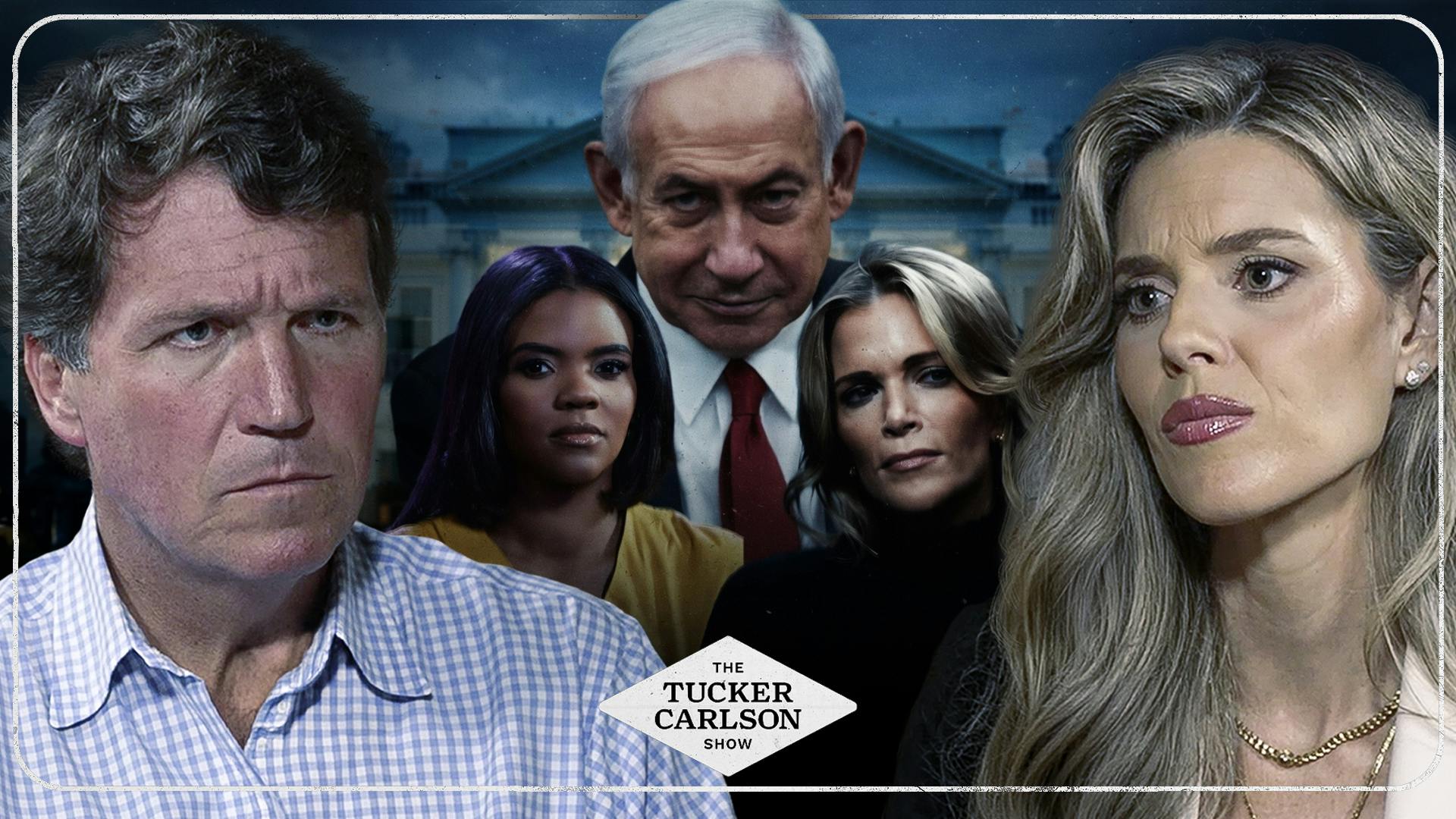
Overview of "Are Christians Required to Pledge Loyalty to Bibi Netanyahu? Carrie Prejean Boller & Tucker Respond."
This episode (Tucker Carlson Network) features Carrie Prejean Boller recounting her appointment to — and removal from — the White House Religious Liberty Commission. She describes sustained pressure from other commissioners (notably Lt. Gov. Dan Patrick and pastor Paula White) to adopt and police a pro‑Zionist line, attempts to censor her social media and testimony, the rejection of several non‑Zionist Jewish and Palestinian witnesses, her defiant questioning at an anti‑Semitism hearing, and her subsequent removal. The conversation frames the episode as a clash between religious liberty and enforced political faith‑commitments tied to support for the modern State of Israel and its government.
Key takeaways
- Carrie Prejean Boller was appointed to the Religious Liberty Commission (April/May, per her account) after a high‑profile conversion and long association with conservative circles; she says she was asked to resign or censored beginning in August.
- She alleges Dan Patrick and Paula White pressured her to stop posting about Gaza/Israel, to run social posts by Paula White, and to adopt a Zionist position as a condition of service.
- Carrie claims several witnesses she recommended (non‑Zionist Jewish scholars/activists and Palestinian Christian groups, e.g., Norm Finkelstein, Miko Peled) were rejected from testimony — she interprets that as deliberate exclusion of dissenting views.
- At a February anti‑Semitism hearing she says she publicly challenged panelists and commissioners on whether anti‑Zionism equals anti‑Semitism and whether Catholics/Christians must affirm the 1948 Israeli state as a doctrinal requirement.
- After the hearing Dan Patrick texted that she was removed; Carrie contends only the president can remove her and that she did not get a direct explanation. A White House official later emailed a removal notice on behalf of the president (Carrie says she only discovered this email later).
- Carrie frames the dispute as not theological nitpicking but a substantive religious‑liberty issue: if you must adopt a political creed (support for Netanyahu/modern Israel) to be a “proper” Christian commissioner, religious freedom collapses into political conformity.
- Many commissioners reportedly stayed silent or later attacked her publicly; Carrie says few senior Catholic leaders publicly defended her despite private support.
Timeline of main events (as Carrie presents it)
- April/May (appointment): Carrie is invited to the Religious Liberty Commission; she attends the National Day of Prayer session where an executive order is signed.
- August (first pressure): White House staff (Mary Sproul/Mary Margaret) contact Carrie, warn about posts and allegations of antisemitism, and ask for resignation; Carrie refuses.
- Summer → pre‑hearing: She says she was pressured to have social posts pre‑approved by Paula White; requested witnesses were rejected; she was denied stay at the Museum of the Bible for safety concerns.
- Early February (anti‑Semitism hearing): Carrie challenges witnesses and commission members on the conflation of anti‑Zionism with anti‑Semitism and on the exclusion of non‑Zionist voices.
- Immediately post‑hearing: Dan Patrick texts/calls informing her of removal; a White House official later emailed an official removal notice (Carrie says she found it much later).
Principal people mentioned
- Carrie Prejean Boller — former Miss California, appointee and later removed commissioner; Catholic convert and outspoken critic of Israel policy.
- Dan Patrick — Lieutenant Governor of Texas; chair of the commission according to Carrie’s account; she accuses him of orchestrating pressure and firing her.
- Paula White — pastor/faith advisor in Trump orbit; accused by Carrie of insisting on content review and of defending Israel’s actions.
- Mary Sproul / Mary Margaret (Presidential Personnel Office / designated federal officer) — alleged to have relayed calls asking Carrie to resign and later to have emailed a removal notice.
- Other commissioners/advisors mentioned: Bishop Robert Barron, Cardinal Timothy Dolan, Kelly Shackelford (religious-liberty lawyer), Ben Carson, Eric Metaxas, Brittany Baldwin (ex‑Ted Cruz staffer), Samira (Muslim advisory‑board member).
- External figures referenced: Norm Finkelstein, Miko Peled (rejected witness examples), Seth Dillon (Babylon Bee), Charlie Kirk, Candace Owens, Ted Cruz, Benjamin “Bibi” Netanyahu.
Note: some witness and staff names in the transcript have variant spellings; the summary uses the common renderings where possible.
Core arguments and themes
- Religious liberty vs. political litmus test: Carrie’s central claim is that the commission ceased to defend religious freedom broadly and instead enforced political loyalty (pro‑Zionism / support for Israel’s government) as a de facto religious requirement.
- Censorship and vetting: She alleges Paula White and allies tried to censor her social media and required prior approval of posts, which she views as incompatible with being on a commission tasked with protecting speech and conscience.
- Exclusion of dissenting voices: Carrie contends the commission rejected non‑Zionist Jewish and Palestinian Christian witnesses, skewing the hearing toward a single political narrative and undermining credibility.
- Theology: Carrie (a Catholic convert) rejects the dispensationalist/dominionist idea that modern Israel’s 1948 statehood is a required fulfillment of prophecy; she defends classical Catholic “fulfillment” (or “new Israel”) theology as distinct from Christian Zionism.
- Fear and enforcement tactics: She argues that powerful figures used labels like “anti‑Semite” to silence and ostracize dissenters; she characterizes this as a punishment that shuts down theological disagreement and threatens personal safety and reputation.
Notable quotes / moments
- Carrie recounts a line she was told in a meeting: “Your job on this commission is protect the president and his reputation.” (attrib. to Dan Patrick)
- Carrie’s early public stance: “I’d rather be biblically correct than politically correct.” (recounting her Miss USA answer and how she stood firm)
- On removal: Carrie’s response to Dan Patrick’s text — “You have no authority to remove me, Dan” (she says only the president can remove her).
- Characterization of doctrines: Carrie distinguishes “replacement/fulfillment theology” (the Church as the new Israel) from modern political Zionism; she insists the latter is not required Christian doctrine.
What Carrie says she attempted (and was rebuffed) to do on the commission
- Recommend and secure testimony from non‑Zionist Jewish scholars and Palestinian Christian organizations to make hearings balanced.
- Raise religious‑liberty complaints (e.g., parents opposing vaccine mandates, a U.S. child detained in Israel, Christian schools affected by conflict) and seek the commission’s help.
- Defend broad religious‑freedom principles for Catholics, Jews, Muslims and others — not just one political interest group.
Responses, pushback, and aftermath
- Carrie says many commissioners privately supported her but publicly remained silent, fearing the “anti‑Semite” label.
- She reports that some commissioners (Eric Metaxas among those named) later attacked her publicly and called her derogatory names.
- A number of Catholic grassroots organizations and clergy rallied to her support, planned awards and events, and also faced backlash for doing so.
- Carrie frames the episode as evidence of a broader problem: political identity requirements being enforced within religious institutions and government forums.
Why it matters
- The dispute sits at the intersection of free‑speech/religious‑freedom norms, foreign‑policy advocacy, and intra‑Christian theological disagreement.
- If Carrie’s account is broadly accurate, it raises questions about how White House advisory bodies set witness lists, define mission scope, and handle internal dissent.
- The episode surfaces tensions between evangelical Christian Zionism and traditional Catholic/early‑church theological positions — with real consequences for public participation, appointments, and civic debate.
Caveats and uncertainties
- This summary reports Carrie Prejean Boller’s account as presented on the show. Some names and details in the transcript are inconsistently spelled or presented (e.g., Mary Sproul vs. Mary Margaret, witness name spellings). Independent confirmation of timeline, emails, and internal White House communications would be needed for a full factual verification.
- Several high‑profile figures are referenced (commissioners, White House staff, outside actors). The episode reflects Carrie’s perspective on motivations and actions; other participants may offer different accounts.
Bottom line
Carrie Prejean Boller presents her removal from the Religious Liberty Commission as the predictable result of refusing to adopt a compulsory pro‑Israel, pro‑Netanyahu posture enforced by certain members and White House staff. She frames the episode as a religious‑liberty crisis: when political loyalty to a foreign government becomes a litmus test for religious identity and participation in a government religious‑liberty body, the separations between faith, conscience, and political power break down.