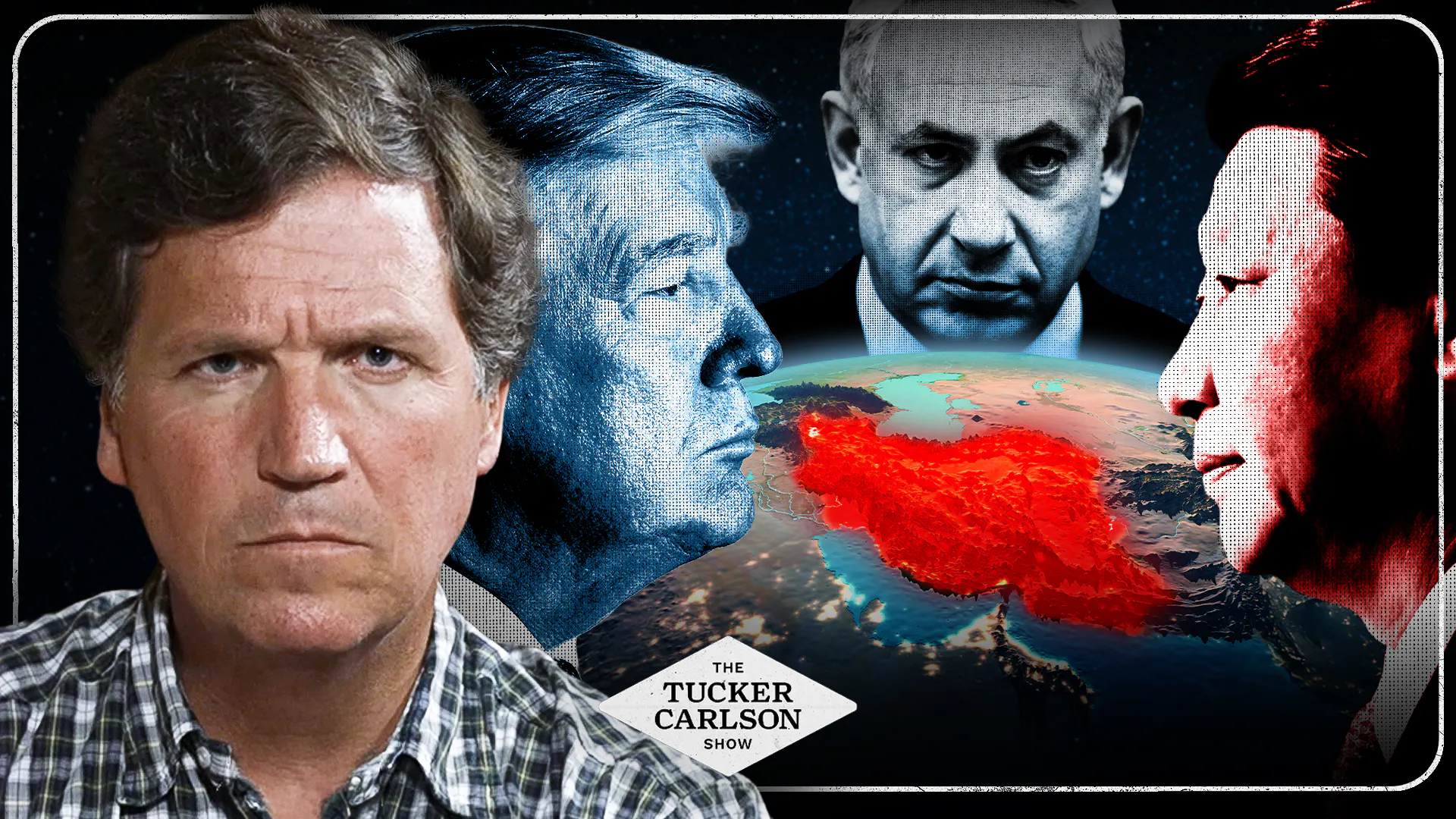
Overview of Iran Update: Israel’s Newest Bombing Campaign, the Oncoming War With China and How to Avoid It
This interview with retired Colonel Lawrence Wilkerson argues that the Iran conflict is part of a much larger geostrategic struggle involving China, U.S. empire, sanctions power, and the future of the global financial order. The conversation moves from Chinese rail infrastructure and the Belt and Road Initiative to U.S.-Israel military actions in Iran and Lebanon, then widens into a critique of American imperial behavior, historical assassinations, AI, and the politicization of Christianity in the military.
China’s Role in the Iran Conflict
Belt and Road infrastructure as a strategic target
Wilkerson says China is being “forced” into the conflict because U.S. and Israeli attacks on infrastructure in Iran are seen as direct blows to Chinese interests. He focuses especially on rail links tied to the Belt and Road Initiative, arguing that:
- Chinese overland trade routes are designed to reduce dependence on maritime chokepoints.
- The Iran-linked corridor into the Caucasus and eventually Europe is strategically crucial.
- Bombing these lines sends a message to Beijing that the U.S. understands the route’s importance and opposes it.
Why the rail lines matter
He frames these railroads as a “game changer” because they can move goods from China into Europe in roughly 16 hours, bypassing major sea lanes and choke points such as:
- Strait of Hormuz
- Bab el-Mandeb
- Suez Canal
- potentially even the Panama Canal in some trade scenarios
His larger point is that land-based commerce could weaken U.S. maritime dominance.
Sanctions, the Dollar, and Financial Power
China’s long-term goal
Wilkerson argues that China’s real strategic objective is not military war with the U.S. but financial independence and eventual dominance. In his telling, Beijing’s priorities are to:
- expand use of the renminbi in global trade
- reduce reliance on the U.S. dollar
- weaken the Bretton Woods system
- bypass SWIFT and U.S. sanctions leverage
Sanctions as a moral and strategic liability
He strongly criticizes U.S. sanctions policy, claiming they have caused massive civilian harm abroad and created resentment toward the United States. He suggests China sees sanctions as a form of global coercion the U.S. uses to maintain empire.
A warning about domestic blowback
One of his main warnings is that the same coercive tools used overseas could eventually be turned inward, especially through programmable digital currency and other financial controls over Americans.
Israel, Iran, and Lebanon
Israel’s bombing campaign
Wilkerson argues that Israel, with U.S. support, is intentionally striking not just military targets but economic and infrastructural assets in the region. He says this is meant to:
- degrade Iran’s capacity
- deter China-linked projects
- maintain Israeli regional leverage
Lebanon as a recurring target
He says Israel’s historical approach to Lebanon has been to repeatedly destroy its economic base rather than simply fight military enemies. According to him:
- Beirut and Lebanon once had a strong regional economy and cultural prestige
- bombing campaigns have repeatedly set Lebanon back economically
- the current strikes are part of a long-term strategy of weakening the country
Iran and the risk of escalation
Wilkerson warns that if the war drags on and global shipping collapses, Iran could emerge stronger politically and strategically. He suggests Israel may not be able to tolerate that outcome.
U.S. Empire, Cold War Logic, and Internal Control
The need for an external enemy
A major theme is that empires need constant external threats to stay unified and politically manageable. He argues:
- the Cold War helped stabilize the U.S. empire
- without a major external enemy, internal contradictions become harder to control
- foreign threats also help justify domestic obedience and taxation
“Empire” as a self-destructive model
He suggests the U.S. has become more like a decaying Roman Empire than a republic, especially after the Cold War ended and no comparable global adversary remained.
Historical framing
Wilkerson repeatedly invokes historical analogies:
- Roman emperors and imperial decay
- the “Report from Iron Mountain” as a provocative model of state dependency on threat
- the idea that modern empires may require permanent conflict to function
JFK, Assassinations, and Political Violence
Kennedy’s death
Asked directly about JFK, Wilkerson says he does not believe Lee Harvey Oswald acted alone or could have carried out the assassination as officially described. He speculates that dissenters from the CIA, mafia, and parts of the Pentagon may have been involved.
Broader pattern of political violence
He extends this skepticism to other assassinations and political killings, suggesting that “lone gunman” narratives often obscure more complex power struggles. He links this to a broader American pattern of violence around entrenched power.
Charlie Kirk reference
He also expresses skepticism about the official account of Charlie Kirk’s assassination, saying it does not sound credible to him based on his weapons knowledge.
AI and the Future
AI as a civilizational risk
Wilkerson says he is deeply worried about artificial intelligence, especially because it may:
- eliminate jobs
- erode human autonomy
- outpace society’s ability to control it
A generational concern
He says younger people he stays in contact with are especially anxious about AI because they see it as a threat to their future and independence.
Bigger fear: loss of human control
His deepest concern is that AI could become something humanity cannot govern, potentially leading to catastrophic conflict or even human extinction when combined with nuclear weapons and other advanced technologies.
Religion, the Military, and American Identity
Concerns about politicized Christianity
Wilkerson sharply criticizes what he sees as growing religious nationalism in the military under Pete Hegseth. He objects to:
- prayer services restricted to senior officers
- the blending of military identity and Christian identity
- the suggestion that service should be framed as allegiance to Jesus rather than the Constitution
Franklin Graham and Pentagon religion
He says a Franklin Graham sermon in the Pentagon amounted to blasphemy in his view, because it appeared to justify killing through biblical language.
An American Catholic Church?
He also discusses a longstanding effort among some American Catholics to create a more independent “American Catholic Church” less subject to Rome, which he interprets as another example of power politics dressed up as religion.
Main Takeaways
- The Iran war is about much more than Iran: Wilkerson sees it as part of a larger contest with China over infrastructure, trade routes, and global power.
- China’s biggest goal is financial de-dollarization: He believes Beijing wants to replace U.S. monetary dominance with the renminbi.
- U.S. sanctions are a source of global resentment and instability: He views them as a major tool of empire that will eventually be turned inward.
- Israel and the U.S. are, in his view, destroying regional economic capacity: especially in Lebanon and Iran.
- Empires depend on enemies: He argues the U.S. needs external threats to preserve internal control.
- He is deeply pessimistic about the future: especially regarding AI, nuclear risk, and the erosion of democratic restraint.
Bottom Line
The interview is a sweeping, highly critical critique of U.S. power, Israeli military strategy, and Chinese-American rivalry. Wilkerson argues that today’s conflicts are tied together by infrastructure, finance, imperial stability, and the search for a new global order. His central warning is that if the U.S. continues escalating abroad while weakening its own institutions, it risks both geopolitical backlash and domestic decay.