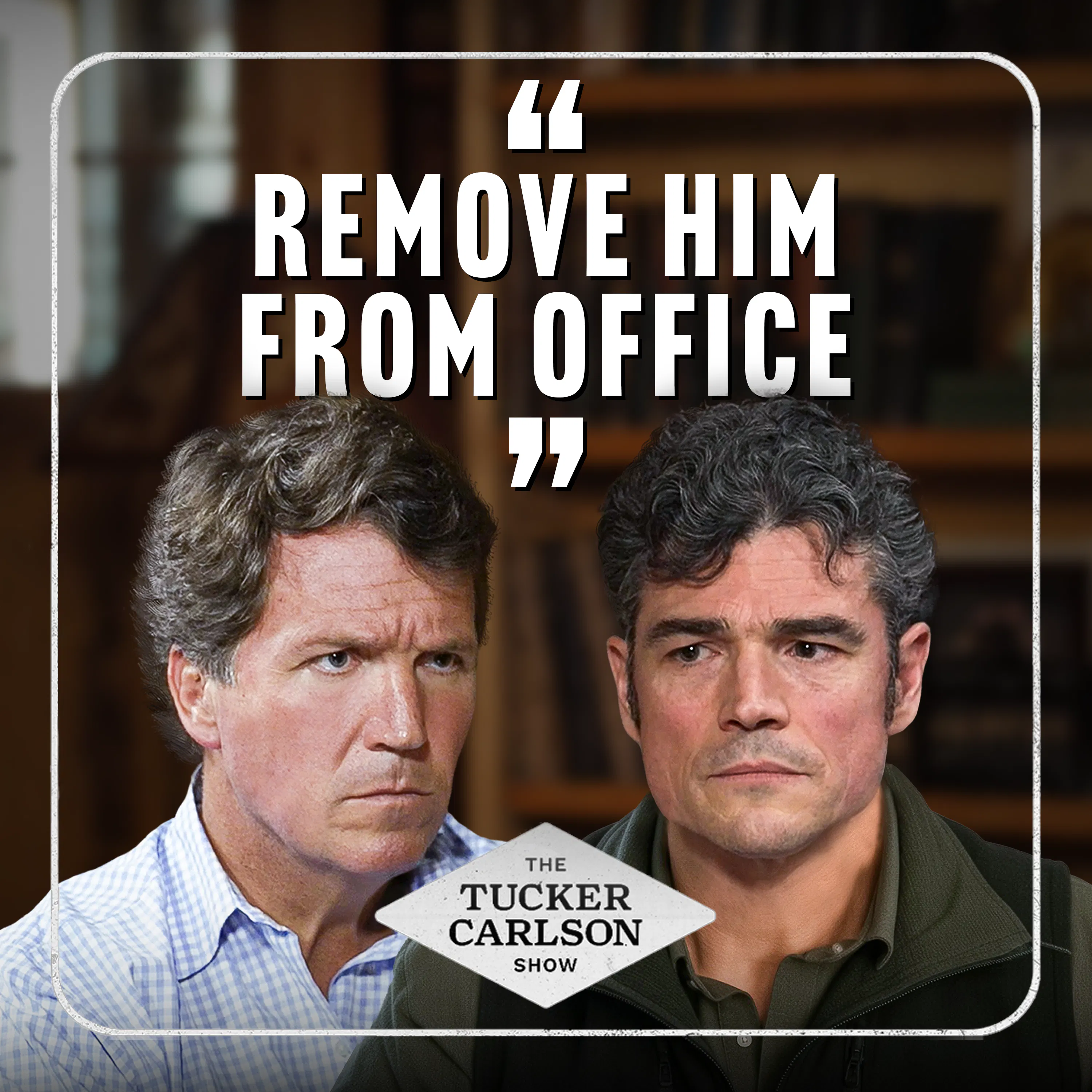
Overview of Impeachment Looms Over Trump After the Pentagon’s Leaked Nuclear Plans. Joe Kent on What Comes Next.
This episode is a long-form, alarmist discussion about the risk of nuclear escalation in two active conflicts: the war with Iran and the war in Ukraine/Russia. Tucker Carlson argues that the U.S. government — especially the Trump administration — is drifting toward unacceptable and potentially catastrophic policy choices, including the possible first use of nuclear weapons. Joe Kent largely agrees that the administration’s goals are unclear, the strategy is incoherent, and the current path could lead to a wider war or even nuclear use.
Main Themes
Nuclear escalation as a real policy discussion
- Carlson claims it is now a fact that first-use nuclear weapons have been discussed in Pentagon meetings and even included in slide decks.
- He argues that any leader entertaining offensive nuclear use should be removed from office immediately.
- Kent says that if the administration’s goal is total regime collapse or total surrender from adversaries, the logic of escalation can quickly lead to weapons of mass destruction.
Iran as the immediate flashpoint
- The conversation centers heavily on the U.S.-Israel-Iran conflict.
- Carlson argues the U.S. has no conventional way to force Iran into unconditional surrender, and that the administration may be tempted to escalate.
- Kent says a ground invasion of Iran is unrealistic, sanctions are insufficient, and a limited air campaign has not achieved strategic objectives — making nuclear options more likely to be considered in a desperate scenario.
Russia/Ukraine as a parallel danger
- Carlson says the U.S. is effectively at war with Russia through Ukraine, NATO support, and intelligence assistance.
- He warns that continued attacks on Russian territory increase the chance of Russian retaliation and possibly nuclear escalation.
- Kent says the U.S. has never truly stopped backing Ukraine offensively, which made Trump’s promise of a quick peace settlement unrealistic.
Israeli influence and U.S. policy
- Both men repeatedly argue that Israeli interests and pressure from the pro-Israel lobby are driving U.S. decisions.
- Kent says Israel wants regime decapitation in Iran and has been able to keep the U.S. locked into the conflict.
- Carlson argues the U.S. has subordinated its own interests to Israel’s regional goals, with dangerous consequences for American security.
Key Takeaways from Joe Kent
The administration lacks a coherent end state
- Kent says Trump’s stated goals have shifted repeatedly:
- total surrender
- regime collapse
- preventing Iran from getting nuclear capability
- reopening the Strait of Hormuz
- Because the objectives are unclear, the Pentagon is left trying to find military solutions to impossible political goals.
Tactical nuclear use becomes thinkable when conventional options fail
- Kent argues that if the U.S. wants an outcome that conventional force cannot deliver, planners may eventually reach for a tactical nuclear option.
- He compares the logic to Hiroshima and Nagasaki: when a ground campaign is too costly, leaders may choose a nuclear strike to force a result.
Trump may have lost control of the process
- Kent suggests Trump may not fully control the intelligence community, military bureaucracy, or pro-war factions.
- He says the CIA, military-industrial interests, and internal Washington incentives keep the wars going regardless of Trump’s stated preferences.
- Carlson agrees that Trump seemed reluctant at first but was pulled into decisions he did not originally want.
The U.S. should disengage before escalation worsens
- Kent says a practical off-ramp still exists:
- pull back from the Middle East
- reduce support for Israel’s war aims
- stop fueling escalation in Ukraine
- negotiate around concrete issues like the Strait of Hormuz
- He argues these steps would lower the chance of nuclear war, even if they are politically difficult.
Notable Arguments and Claims
“Impeachment” as a moral line
- Carlson says the moment a president seriously contemplates first-use nuclear weapons, impeachment or immediate removal becomes necessary.
- He frames this as a nonpartisan threshold: not about Trump, politics, or loyalty, but about the survival of humanity.
Ukraine is treated as a proxy war
- Carlson argues Ukraine has little sovereignty and is being used by the West to weaken Russia.
- Kent says Ukrainian manpower is being exhausted and that Washington is effectively using Ukrainians as cannon fodder.
The intelligence apparatus is driving policy
- Kent says presidents often do not fully control the CIA or broader national security system.
- He argues that Trump’s promises to end the wars were undermined by institutions that continued the underlying policy regardless of his rhetoric.
Bottom Line
The episode presents a bleak warning: both Carlson and Kent believe the U.S. is dangerously close to crossing from proxy warfare into direct great-power confrontation, with Iran and Russia as the main flashpoints. Their central claim is that unclear war aims, bureaucratic inertia, Israeli pressure, and weak civilian control over the national security state could all combine to create a pathway to nuclear escalation.