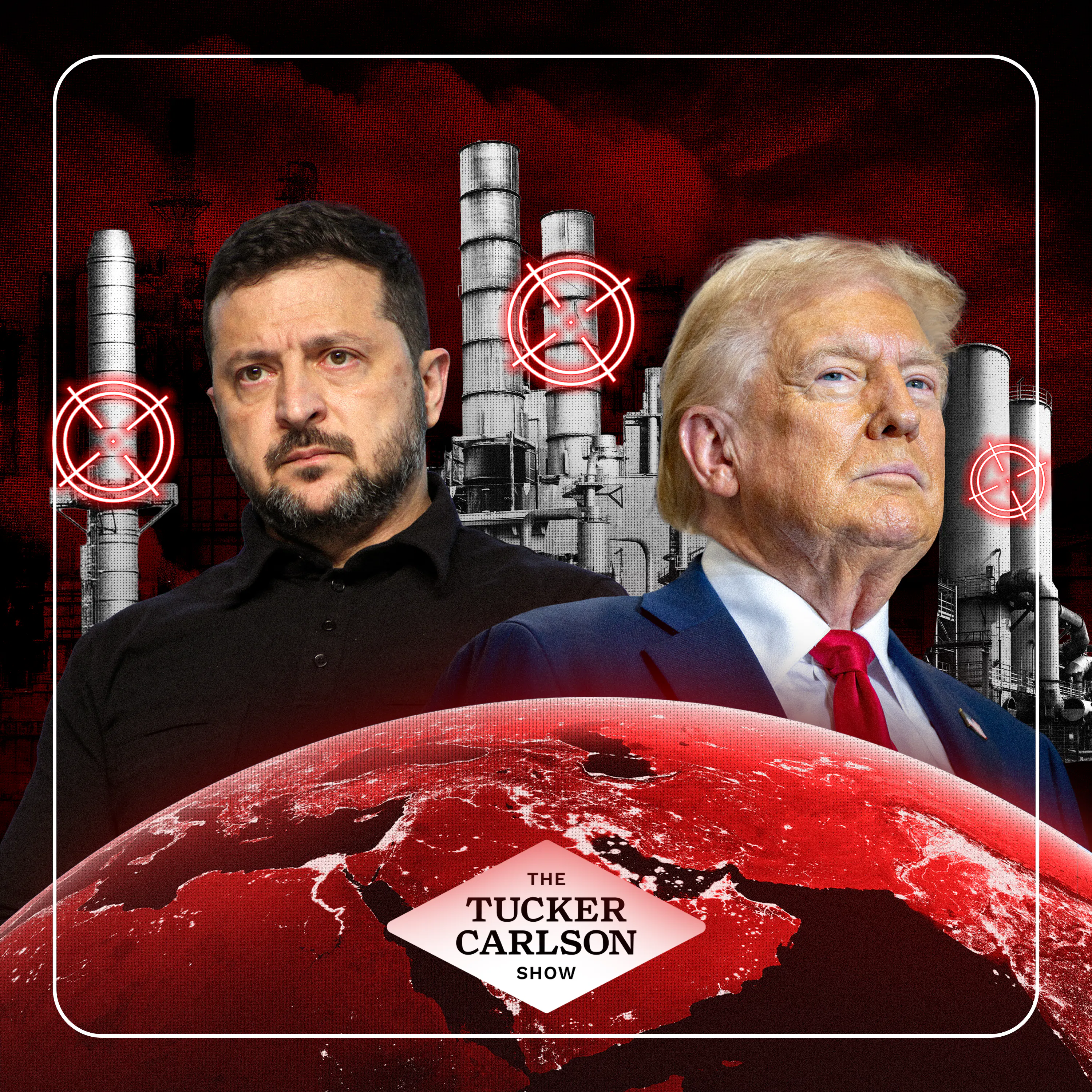
Overview of Tucker Carlson Network episode
In this episode, Tucker Carlson argues that the real story behind the Iran and Ukraine wars is not the familiar talking points about nuclear weapons or controlling shipping lanes, but the systematic destruction of refinery infrastructure. He says refinery attacks drive up diesel, gasoline, jet fuel, and fertilizer costs, reduce Western living standards, and may serve a broader agenda of weakening the U.S. and Europe while strengthening China. The second half of the episode features analyst Brandon Weichert, who expands on the strategic importance of refineries, China’s refining advantage, and the risk that the wars could escalate toward direct NATO-Russia confrontation or even nuclear use.
Main arguments
Refineries matter more than straits
- Carlson argues that while waterways like the Strait of Hormuz are important, they can be reopened quickly through diplomacy.
- By contrast, refineries are scarce, expensive, and slow to replace.
- He says damaging refineries has a far more durable impact on global energy supply and prices.
War is being waged through energy infrastructure
- He claims that strikes on Iranian and Russian refineries are not incidental but central to the war effort.
- He points to Israeli drone attacks on Iranian refineries and Ukrainian attacks on Russian refineries as examples.
- His core claim: the real effect is not battlefield gain, but global fuel shortages and higher prices.
Climate politics are being applied through war
- Carlson argues that the modern climate movement has effectively achieved its goals through war rather than environmental policy.
- He says the same elites who pushed lower consumption, fewer appliances, reduced mobility, and lower population are now benefiting from refinery destruction.
- He emphasizes the irony that major environmental groups say little about the carbon emissions from bombs, refinery fires, or pipeline sabotage.
The wars are about lowering Western living standards
- According to Carlson, the practical result of these conflicts is:
- higher diesel and fuel prices,
- more expensive shipping and goods,
- pressure toward reduced consumption,
- possible famine and migration pressures in poorer countries,
- and a long-term decline in Western autonomy and prosperity.
- He suggests this is not accidental, but the intended outcome.
Trump, Ukraine, and who actually controls policy
Trump’s public frustration
- Carlson highlights a clip where Trump tells Zelensky to stop hitting Russian diesel targets because it raises fuel prices.
- He interprets this as Trump recognizing the economic damage caused by the refinery strikes.
Trump’s lack of control
- Carlson then says Trump appears unable to actually stop the attacks, implying that U.S. intelligence agencies and other unelected actors are still driving policy.
- He frames Trump as politically powerful but operationally constrained.
The deeper claim
- Carlson argues that the episode exposes the limits of presidential control and, more broadly, the illusion of sovereignty in the U.S. and Europe.
- In his view, the “real” decisions are being made by a transnational elite, not elected leaders.
Brandon Weichert interview: strategic and geopolitical implications
Why refineries are strategically decisive
Weichert says refinery attacks are like pulling pieces from a Jenga tower:
- reopenable maritime chokepoints are one thing,
- but destroyed refineries take years to rebuild.
- He stresses that refinery capacity is a bottleneck the public and media often overlook.
United States and China
Weichert says:
- the U.S. has not built a new refinery since the late 1970s,
- environmental regulation and investor risk have discouraged new capacity,
- China, by contrast, has built excess refining capacity and dominates critical processing chains.
His broader point:
- the West is losing industrial resilience,
- China is gaining leverage over global energy and industrial supply chains,
- and Western self-inflicted energy constraints are helping Beijing.
Russia, NATO, and escalation risk
- Weichert says Ukraine’s long-range attacks on Russian refineries are severe and potentially escalatory.
- He warns that if NATO territory is used to support strikes on Russia, Moscow could retaliate against the launch points.
- He sees a real risk of a wider European war if the pattern continues.
Israel, Iran, and possible future escalation
- Weichert argues Israel sees weakening Russia as indirectly weakening Iran, since Russia supports Tehran.
- He suggests Israeli and U.S. decision-makers may see the Ukraine and Iran fronts as linked in a broader strategic struggle.
- He also warns that the conflict could eventually involve more dangerous strikes, including possible nuclear escalation if political leaders decide to “finish” the war.
Key takeaways
- The episode’s central thesis is that refinery destruction, not headline diplomatic disputes, is driving the economic pain and strategic shift.
- Carlson presents the wars in Ukraine and the Middle East as tools for:
- reducing Western wealth,
- tightening elite control,
- and advancing a long-term geopolitical realignment.
- Weichert reinforces the idea that:
- refinery capacity is a critical vulnerability,
- China benefits from Western energy insecurity,
- and the current war posture carries serious escalation risks.
Notable perspective
The show’s strongest recurring claim is that the purpose of a system is what it does: regardless of official explanations, Carlson argues the observable result of these wars is cheaper control for elites, weaker Western nations, and a more favorable position for China.