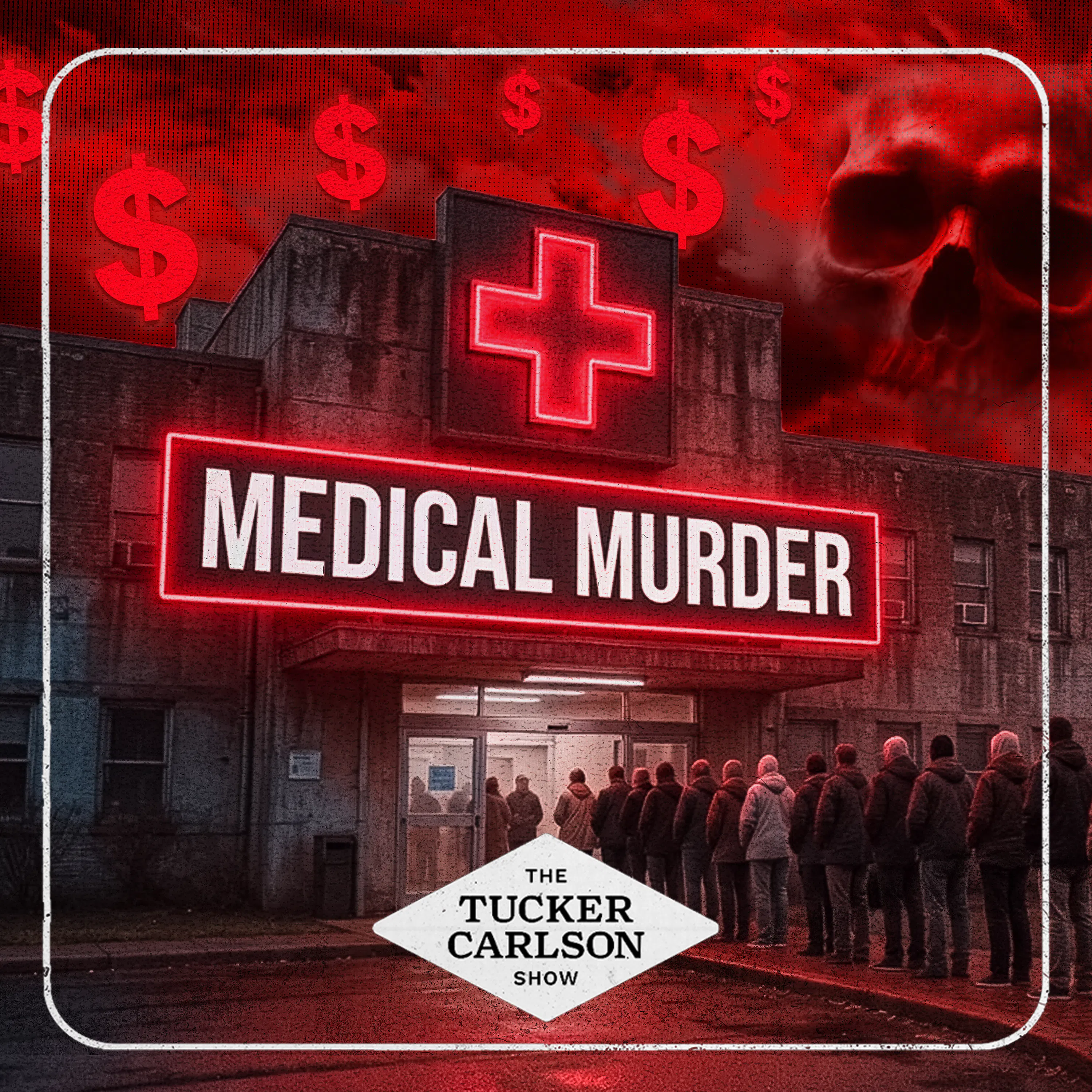
Overview of Tucker Carlson Network Episode
This episode is a forceful critique of physician-assisted dying and euthanasia, framed by the host as a warning about what he sees as a growing “state-sponsored” system of killing disguised as compassion or healthcare. It begins with New York’s legalization of medical aid in dying and expands into a broader argument about Canada’s MAID program, alleged abuse of end-of-life laws, and the moral danger of giving medical systems the power to end life. The second half of the episode is a long interview with Canadian activist Kelsey Sharon, who argues that Canada’s euthanasia regime has expanded far beyond terminal illness and is now being pushed onto disabled, depressed, and vulnerable people.
Main Argument
The host argues that:
- Euthanasia and physician-assisted suicide are being sold as compassionate “healthcare,” but are really about cost-cutting and social control.
- Modern medical systems create incentives to shorten life, especially when end-of-life care is expensive.
- Once doctors are allowed to kill patients, even under supposedly narrow rules, the boundaries expand.
- The issue is not just medical or financial but also moral and spiritual.
- Historical examples, especially Nazi euthanasia programs, show the risks of allowing the state or medical class to decide whose lives are worth preserving.
New York and Bill Gates as Examples
The episode opens with New York Governor Kathy Hochul announcing the legalization of “medical aid in dying,” which the host interprets as state approval for doctors to kill patients.
The host also revisits a 2010 Bill Gates clip about the cost of keeping very sick people alive versus spending money elsewhere, using it to argue that elite discussions about healthcare economics can slide into “death panel” logic.
Canada’s MAID Program
A major focus is Canada’s Medical Assistance in Dying (MAID) system, which the episode portrays as the clearest real-world example of abuse.
Claims highlighted in the episode
- More than 100,000 Canadians have allegedly died through MAID since legalization in 2016.
- The vast majority of those killed are white Canadians, which the host and guest describe as evidence of demographic and cultural bias in who is most likely to be offered or accept MAID.
- The program has expanded from terminal illness to broader categories such as chronic suffering, disability, mental illness, and, potentially, minors.
Concerns raised
- Patients may be pressured into choosing death because they cannot access timely healthcare, housing, or treatment.
- Safeguards are described as weak or meaningless because the system is largely self-reporting.
- Doctors and nurses can refer patients to another provider if they object, making participation easier to normalize.
- Families may not be informed early enough to intervene.
Notable Cases Mentioned
Several individual cases are used to illustrate the episode’s argument:
- Veterans being offered MAID instead of support for PTSD, traumatic brain injury, or disability.
- Christine Gauthier, a veteran allegedly offered euthanasia instead of a wheelchair ramp.
- Jennifer Hatch, a young woman with a painful but non-terminal condition who appeared in a commercial supporting MAID.
- Keanu, a young man with diabetes, hearing loss, depression, and head injuries, whom Sharon says was pushed toward euthanasia.
- Mrs. B, described as being euthanized after changing her mind.
- A disabled or autistic adult whose parents allegedly had to fight the system to stop MAID from proceeding.
- A child with Down syndrome and medical complications, raised as an example of how far expansion could go if “mature minors” or child euthanasia were legalized.
Kelsey Sharon’s Interview
Kelsey Sharon, a Canadian activist and veteran advocate, says she became alarmed after hearing that veterans were being offered MAID instead of help. She describes the program as:
- A “death cult” or “medical murder” system.
- A social contagion that spreads through language like “dignity” and “choice.”
- A mechanism that normalizes killing vulnerable people while presenting it as compassion.
Her key claims
- Canada’s healthcare system is failing, with long wait times and poor access to treatment.
- MAID is often presented as a humane alternative when people cannot get actual care.
- Expansion is being driven by activist groups, government funding, and public-relations campaigns.
- The public is not being told the full truth about how MAID works or who is using it.
Sharon’s proposed reforms
- Stop the expansion of euthanasia.
- Expose and publicly identify the clinicians involved.
- Roll back laws that allow MAID beyond narrow terminal cases.
- Treat the practice as homicide rather than healthcare.
Ethical and Religious Themes
The episode repeatedly frames euthanasia as a spiritual and moral crisis, not just a policy question.
It argues that:
- Human suffering has meaning and should not automatically be erased.
- Medicine should preserve life, not decide whose life is worth ending.
- The original Hippocratic Oath explicitly rejected giving poison or abortion-inducing tools.
- Modern revisions of medical ethics have weakened that prohibition.
The host and guest also stress that most major religions oppose suicide and euthanasia, and that a materialist worldview makes it easier to justify them.
Key Takeaways
- The episode treats euthanasia as a warning sign of institutional decay, not a compassionate reform.
- Canada is presented as the most extreme example of how MAID can expand once legalized.
- The guest argues that vulnerable groups — veterans, disabled people, the elderly, the mentally ill — are at greatest risk.
- The broader message is that medical systems should be held to a strict duty to heal, not to help people die.
Overall Tone
The conversation is highly emotional, combative, and moralistic. It mixes policy criticism with religious language, historical analogy, and personal testimonies in order to argue that euthanasia is not a neutral medical service but a dangerous social and ethical breakdown.