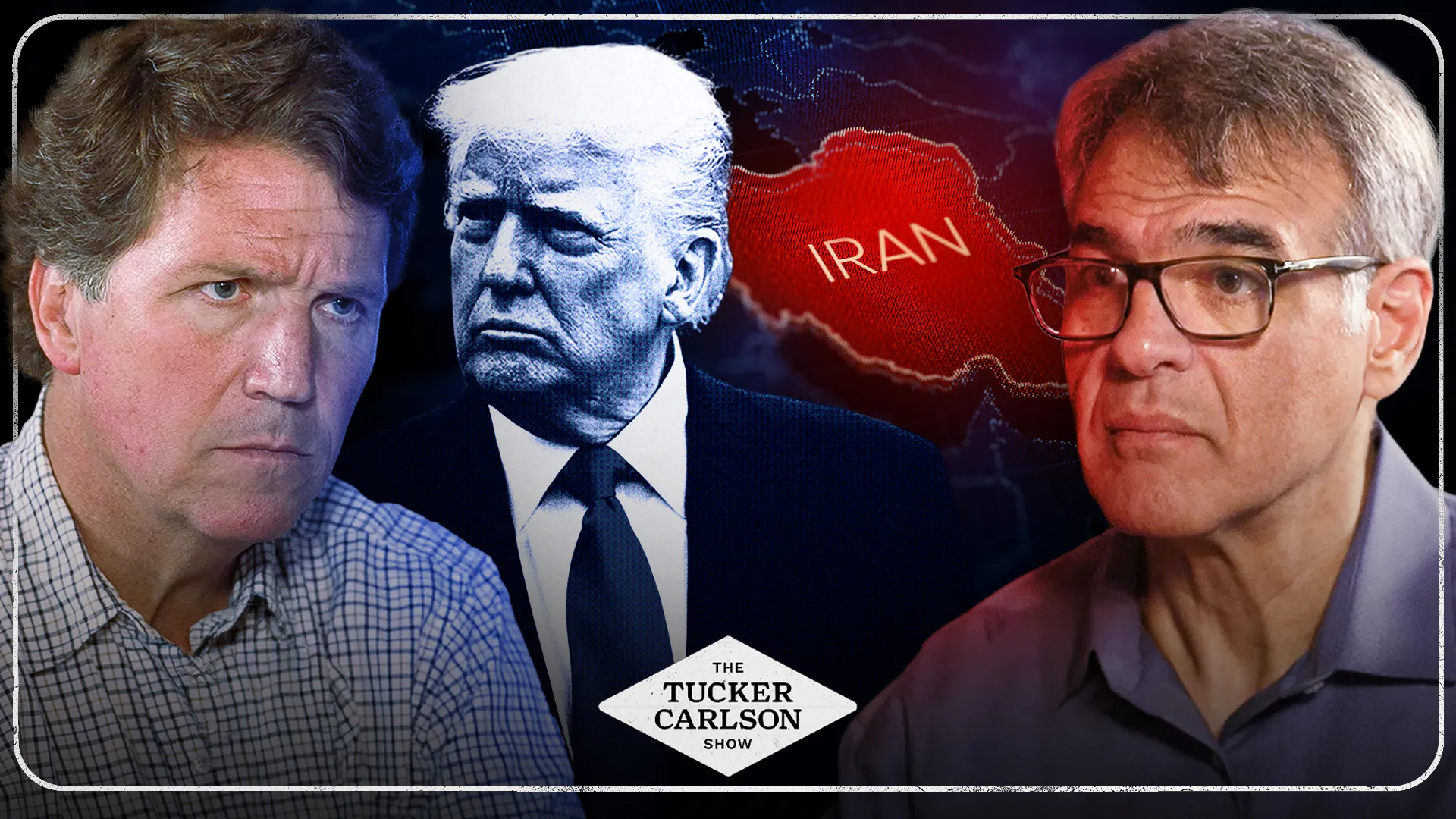
Overview of Tucker Carlson Network
This interview with former CIA officer John Kiriakou centers on his claim that the U.S. war with Iran was driven less by American intelligence and more by Israeli priorities, institutional groupthink, and a broader failure of U.S. national-security leadership. Kiriakou argues that Washington ignored allies, overstated the Iranian nuclear threat, neglected the real danger posed by drug cartels, and has become too politicized and too detached from constitutional oversight.
Main Arguments About the Iran War
Kiriakou’s core thesis
- He says the decision to go to war with Iran did not follow the normal interagency process.
- In his view, the White House should have consulted:
- the intelligence community
- the State and Defense Departments
- the National Security Advisor
- and key allies in Europe and the Gulf
- Instead, he argues, the administration relied heavily on Israeli intelligence and Israeli pressure.
Why he says the war was a mistake
- He insists Iran was not an imminent nuclear-weapons threat.
- He says two National Intelligence Estimates concluded Iran had no nuclear weapons program.
- He also argues Iran had no credible delivery system to strike the United States.
- According to him, the strike would only:
- strengthen Iranian nationalism
- push Iran closer to China, Russia, and India
- and weaken U.S. global influence
On Iran’s internal structure
- Kiriakou pushes back on the idea that Iran is a simple, monolithic theocracy.
- He cites Hillary Clinton’s view that Iran functions more like a military dictatorship dominated by the IRGC.
- His point: U.S. policy should be based on the regime’s actual power structure, not on stereotypes about religious fanaticism.
Israel, Lobbying, and U.S. Foreign Policy
His criticism of U.S.-Israel alignment
- Kiriakou says the U.S. often acts in Israel’s best interests rather than its own.
- He believes the war on Iran is a clear example of that dynamic.
- He argues Israel has long wanted the U.S. to:
- attack Iran
- destabilize the region
- and weaken Iran’s allies
Historical examples he cites
- He says there have been times when the U.S. resisted Israeli demands because they conflicted with U.S. interests.
- But in this case, he argues, U.S. policymakers failed to stand up for American interests.
- He also says organizations like AIPAC should be treated as foreign lobbying entities and register as foreign agents.
False Flags, Threat Narratives, and Political Manipulation
“Boogeymen” and fear politics
- Kiriakou says the U.S. has a habit of inventing or inflating enemies:
- Bolsheviks
- socialism
- Nazism
- Islamism
- He argues the same pattern now applies to Iran and other Middle Eastern actors.
On the Charlie Kirk / Butler / assassination theories
- The conversation touches on claims that various attacks or security breaches may have been used to justify war or shape the president’s thinking.
- Kiriakou says he would not be surprised if people told the president that these events were tied to Iran.
- He stresses, however, that he has no inside information and is describing the logic of how such narratives can take hold.
His view of the intelligence failure
- He says if there are credible leads about foreign involvement in political violence, they must be investigated.
- He portrays the failure to fully investigate as evidence of a deeper breakdown in accountability.
The Real National Threat: Drugs and Cartels
Why he thinks the U.S. focuses on the wrong enemy
- Kiriakou argues the U.S. should treat drug cartels and narcotics trafficking as a far greater threat than Iran.
- He says fentanyl has devastated American communities and killed far more people than the conflicts Washington obsesses over.
Afghanistan opium story
- He recounts a Senate Foreign Relations Committee trip to Afghanistan, where he investigated poppy production.
- A DEA contact allegedly told him Afghanistan’s heroin was allowed because it:
- went mainly to Iran and Russia
- and weakened those societies
- He says the U.S. tolerated or enabled poppy production for geopolitical reasons.
His broader allegation
- He believes this same logic applies to fentanyl:
- China and Mexico, in his view, benefit from keeping Americans addicted and weakened
- He frames narcotics as a tool of statecraft and sabotage.
CIA, Politics, and Institutional Decay
What he says went wrong
- Kiriakou says the CIA used to enforce a strict norm against overt politics.
- He claims that norm collapsed over time, and the agency became deeply politicized.
- He cites examples like:
- employees punished for small political expressions in the 1990s
- later intelligence officers signing off on the Hunter Biden laptop letter
His reform proposal
- He says reforming the CIA would require:
- tearing it down to the studs
- rebuilding it with real rules
- restoring political neutrality
- He also floats the idea that there may need to be more external political oversight to prevent the bureaucracy from governing itself.
Congressional oversight
- He argues the intelligence committees are ineffective and often too cozy with the agencies they are supposed to oversee.
- He says real oversight has disappeared, and Congress has become passive.
Other Notable Topics
The MEK and Iranian exile politics
- Kiriakou describes the MEK as a violent, cult-like anti-Iranian exile group with a history of anti-American attacks.
- He says it was rehabilitated in Washington through lobbying and embraced by figures across both parties.
- He also dismisses Reza Pahlavi, the Shah’s son, as an unserious exile figure promoted by Israeli interests.
Russia, China, and diplomacy
- He argues the U.S. should still cooperate with Russia on:
- counterterrorism
- counterproliferation
- counternarcotics
- He says China poses a greater long-term threat than Russia.
- He also warns that Canada is becoming strategically more vulnerable to Chinese influence.
Personal Note: His Pardon Campaign
- The interview closes with Kiriakou discussing his request for a presidential pardon.
- He says he was punished for telling the truth and remains grateful for support from MAGA-aligned conservatives.
- He frames his case as one of constitutional principle and retaliation by the national-security bureaucracy.
Bottom Line
Kiriakou’s message is that Washington has:
- misread Iran
- subordinated U.S. interests to Israeli priorities
- ignored the cartel/narcotics threat
- and allowed intelligence and law-enforcement institutions to become politicized and ineffective
His argument is less about one war than about a deeper institutional failure: a U.S. national-security state that, in his view, no longer thinks clearly, consults honestly, or acts in the country’s long-term interest.