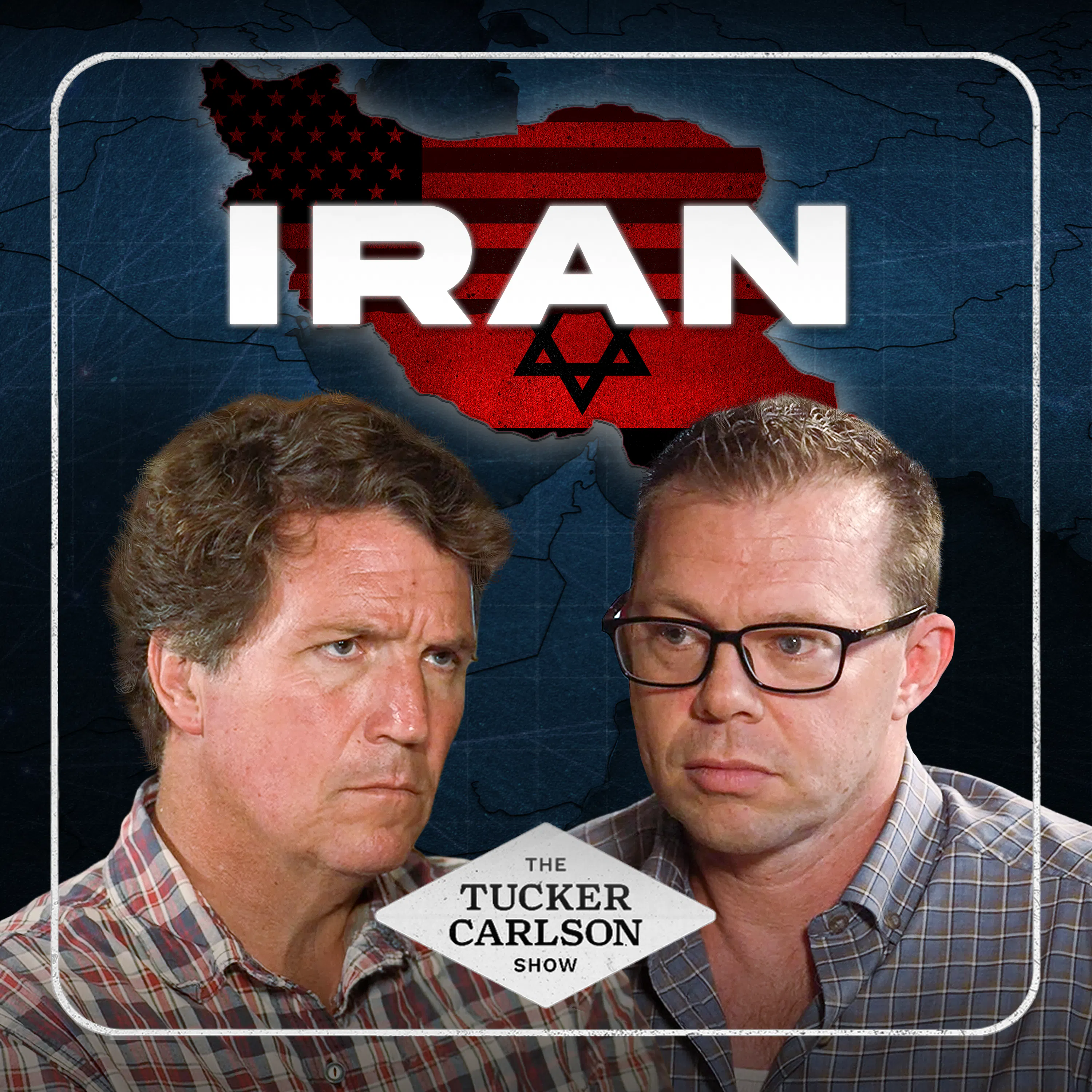
Overview of Darryl Cooper Deep Dive: Zionism, Islam, Spain & Why the Iran War Is a Pivot Point in World History
This conversation between Tucker Carlson and historian Darryl Cooper ranges across war ethics, the Iran conflict, Israel/Gaza, Spain, migration, and the long-term decline of civic and moral cohesion in the West. Cooper argues that modern Western societies have abandoned older norms of honor and restraint in war, become more atomized and easier to manipulate, and are now entering a dangerous historical phase in which propaganda, prolonged conflict, and elite-driven tribal politics could reshape the world order.
Key Themes and Arguments
1. The decline of “civilized” warfare
Cooper frames the 18th and 19th centuries as a high point of limited warfare, where enemies were still treated as human beings even in defeat. He argues that:
- The 20th century saw a steady erosion of those norms.
- Modern Western wars increasingly justify civilian harm or moral exceptions.
- Americans used to see certain acts — like sneak attacks during negotiations — as fundamentally dishonorable.
His broader point is that a civilization’s moral health is reflected in how it treats enemies.
2. The Iran war as a turning point
A major focus is Cooper’s view that the Iran conflict is strategically unsustainable and historically significant.
He argues that:
- The war is being fought largely through long-range strikes and missile defense, not a viable occupation/invasion model.
- U.S. missile stockpiles and industrial capacity are too limited for a prolonged high-intensity exchange.
- The logistical burden of interception and reloading makes the conflict far harder to sustain than officials admit.
- The war has exposed U.S. military limitations to adversaries around the world.
He also warns that continued escalation could move toward a nuclear threshold.
3. Gaza, moral compromise, and the loss of public outrage
Cooper says the West has become desensitized to violence in Gaza and elsewhere because political leaders and media have trained people to rationalize it.
He argues that:
- Earlier generations would have been shocked by scenes now treated as normal.
- The refusal of leaders to apologize or show accountability damages national moral credibility.
- Public silence is itself evidence of how far the culture has shifted.
4. Israel, Zionism, and strategic influence
A large portion of the discussion centers on Cooper’s claim that Zionist influence has pushed U.S. policy toward moral and strategic self-corruption.
He argues that:
- U.S. political and media elites often bend standards to defend Israel.
- This creates double standards around civilian deaths and war crimes.
- The cost is not only strategic but spiritual: it poisons the host society as well.
He also suggests that Israel’s own society has been hardened by prolonged conflict, making it more extreme over time.
5. Spain as a civilizational battleground
The discussion on Spain uses the country as an example of a people still “living historically,” meaning they retain continuity with their ancestors, traditions, and national memory.
Cooper says:
- Spain has long been a battleground for deeper ideological struggles.
- It remains one of the European societies that still has a strong sense of historical continuity.
- That continuity makes it a target for forces seeking to dissolve national identity.
He interprets recent migration crises in Spain as part of broader geopolitical manipulation.
6. Migration as a political weapon
Cooper argues that mass migration is not merely an economic or humanitarian issue, but increasingly a tool used to destabilize unwanted governments and weaken cohesive cultures.
He claims:
- Large-scale migration can be weaponized against states.
- Some elites support it because it breaks apart traditional communities.
- Atomized populations are easier to govern and propagandize.
7. The postwar order and “living historically”
One of the most important ideas in the interview is Cooper’s distinction between people who live historically and people who do not.
By “living historically,” he means:
- Seeing yourself as part of an intergenerational chain.
- Feeling responsible for preserving and passing on a civilization.
- Thinking beyond your own lifetime.
He argues that modernity has shattered this mindset through:
- suburbia,
- consumerism,
- mass media,
- isolation,
- ideological propaganda,
- and weakened family/community life.
Notable Insights
Cooper’s core historical warning
Once a society stops treating enemies as human beings, it begins handing the reins over to something dark.
On identity and civilization
He repeatedly returns to the idea that how individuals see themselves shapes the civilization they build.
On resentment and paranoia
Cooper argues that sustained fear and resentment become self-fulfilling: if a group believes everyone hates them, they eventually behave in ways that make conflict inevitable.
On the fragility of the West
He suggests that much of the post-World War II moral order is built on myths that once served a stabilizing purpose but now function mainly to protect power and suppress dissent.
Main Takeaways
- The Iran war, in Cooper’s view, is not just another regional conflict — it may reveal the limits of U.S. power and mark a broader historical pivot.
- Western civilization’s older ideals of restraint, honor, and human dignity in war have been badly eroded.
- Israel/Gaza and related propaganda battles are, in his view, accelerating that moral collapse.
- Mass migration, atomization, and bureaucratic centralization weaken historical communities and make societies easier to manipulate.
- Spain is presented as an example of a nation still retaining civilizational memory, which is why it remains a target.
- The only durable response, Cooper argues, is rebuilding from the smallest human scale outward: family, neighbors, local community, then nation.
Practical / Implied Recommendations
- Rebuild close-knit community life.
- Focus on family and local relationships before abstract politics.
- Resist propaganda that normalizes civilian harm.
- Think historically and intergenerationally rather than only in short-term political cycles.
- Restore moral standards that apply universally, regardless of who is involved.
Bottom Line
This episode is less a conventional foreign-policy interview than a sweeping civilizational argument. Cooper’s thesis is that the West has traded honor, restraint, and historical continuity for manipulation, abstraction, and permanent conflict — and that the Iran war, Gaza, and Europe’s migration crises are all symptoms of the same deeper decay.