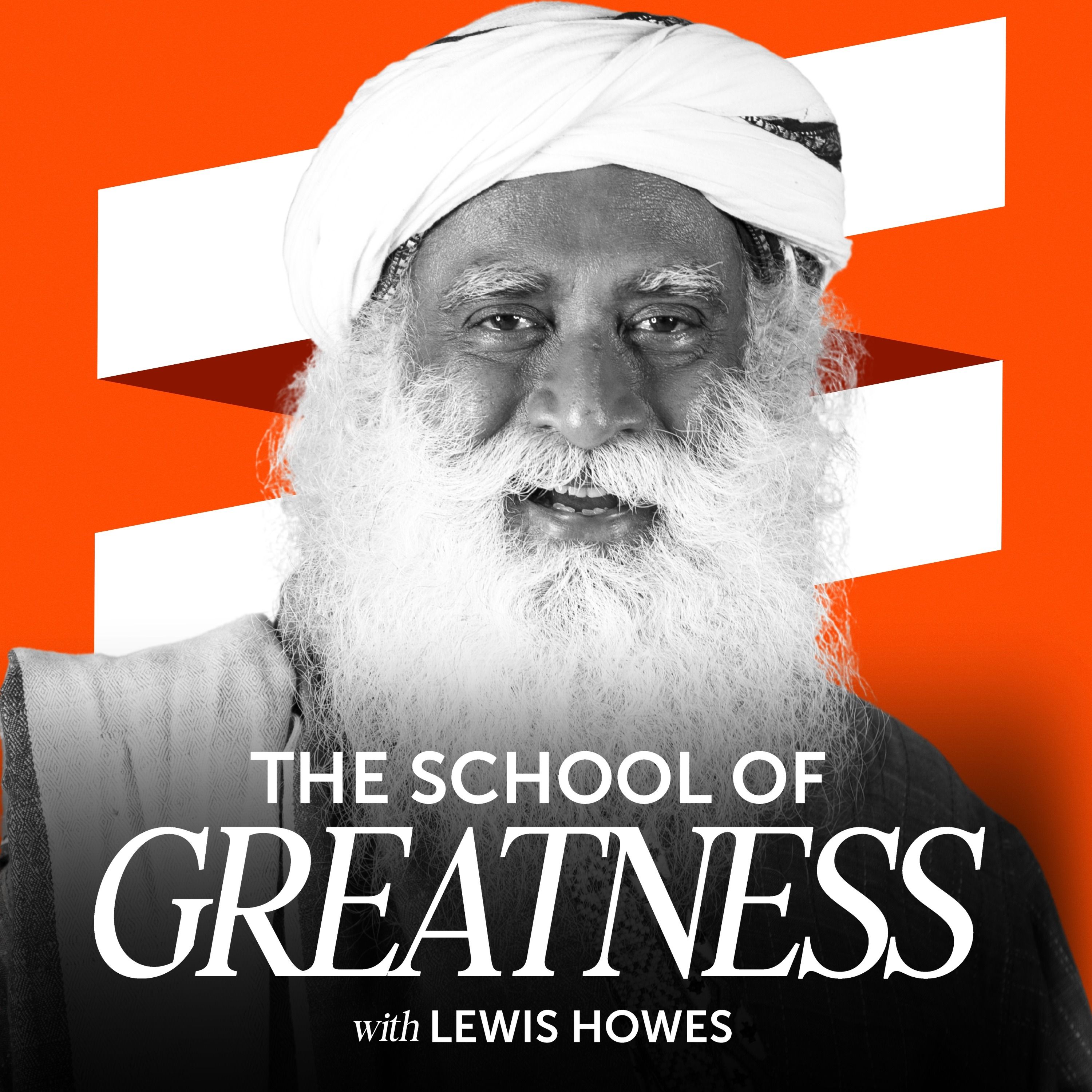
Overview of The School of Greatness with Sadhguru
In this conversation with Lewis Howes, Sadhguru argues that much of human suffering comes from limited identity, overreliance on intellect, and living from memory rather than conscious choice. He reframes karma not as punishment, but as the accumulated memory that shapes perception and behavior. The core message is that people can transform pain into wisdom by creating space between themselves and their thoughts, emotions, and conditioning.
Main Themes and Takeaways
Pain can become wisdom or poison
Sadhguru says unpleasant experiences are inevitable, but the real choice is whether they make you:
- wounded or wise
- stuck in memory or free to act consciously
- toxic or fertile like manure turned into nourishment
Karma is memory, not moral payback
He challenges the common Western idea that karma means “bad things happen because you did bad things.” Instead, karma is described as:
- the massive accumulation of memory in the body and mind
- the basis of identity, habit, and reaction
- something you cannot erase, but you can learn to stand above
The root of suffering is limited identity
A major point of the interview is that people harm others when their identity is too small:
- family
- religion
- race
- nationality
- ideology
Sadhguru says the more empowered someone is with a narrow identity, the more dangerous they can become. He uses Hitler as the extreme example of how competence without expanded identity can become destructive.
Intellect is useful, but not enough
He repeatedly says the intellect is like a knife:
- excellent for analysis
- terrible for “stitching” a life together
- dangerous when it becomes the only tool you use
His criticism is that education often sharpens intellect without expanding wisdom, emotional maturity, or inner stability.
Joy and love are inner qualities, not external rewards
He pushes back strongly against the idea that happiness comes from people, status, money, or possessions. Instead:
- joy is an expression of your being
- love is the sweetness of your emotions
- success is only about external circumstances
- inner states should not depend on others’ behavior
Relationships fail when people use each other as crutches
Sadhguru compares dependence in relationships to needing a physical crutch:
- If your happiness depends on another person, you’ve become emotionally crippled.
- Healthy relationships should be an expression of wholeness, not a demand for completion.
On Abundance, Success, and Goals
He rejects “abundance” as the main life goal
Rather than chasing money or status, he says the better goal is:
- fulfillment
- full blossoming
- becoming the best version of yourself according to your capacity and situation
He notes that if every desire is framed as “more,” people eventually consume too much, compete too much, and damage the planet and themselves.
Life should be about becoming, not accumulating
Using a tree as an analogy, he says:
- a tree doesn’t try to be anything other than itself
- it simply becomes its fullest expression
- humans should aim for the same kind of natural flourishing
Family, Parenting, and Identity
Parents should nurture, not “raise cattle”
He criticizes the idea of raising children into fixed identities:
- “I was raised Catholic / Jewish / Baptist” reflects conditioning, not freedom.
- Children should be nurtured as possibilities, not molded into absolutes.
He calls for a broader identity
Instead of teaching children that they belong only to a small group, he suggests:
- a global identity
- even a cosmic identity
- understanding that “the world is my family”
He believes this shift is necessary to reduce hatred, conflict, and division.
Yoga, Consciousness, and Inner Engineering
Yoga means union, not exercise
Sadhguru emphasizes that yoga is not merely physical postures. In his framing, yoga is:
- consciously dissolving the boundaries of individuality
- experiencing union with life
- reducing suffering by creating distance between “you” and your body/mind
The core practice is creating space
He says suffering ends when you create space between:
- you and your body
- you and your mind
- you and your memory
This inner distance allows you to respond consciously instead of reacting automatically.
Practical Takeaways
What to do differently
- Don’t let memory run your life.
- Question inherited identities.
- Stop using other people as the source of your joy.
- Focus on becoming a whole human being, not on competing for status.
- Use your intelligence, but don’t let it be your only tool.
- Create inner stability before chasing external success.
A simple daily orientation
Sadhguru’s advice can be boiled down to:
- observe more
- identify less
- react less
- expand your sense of self
- act appropriately to the situation
Notable Quotes / Lines
- “When unpleasant things happen, do you become wise or do you become wounded?”
- “Karma is about liberation; it is about freedom.”
- “Select is like a knife.”
- “You are trying to fix everything with your intellect.”
- “The world is my family.”
- “Love is not something that you do. Love is something that you become.”
- “If you cannot walk without a crutch, then an emotional crutch is no different.”
- “Just shut up, look and listen.”
Final Message
The episode’s central idea is that freedom comes from consciousness, not from external conditions. Suffering is reduced when you stop overidentifying with memory, status, and division, and instead learn to live with awareness, spaciousness, and a wider sense of belonging.