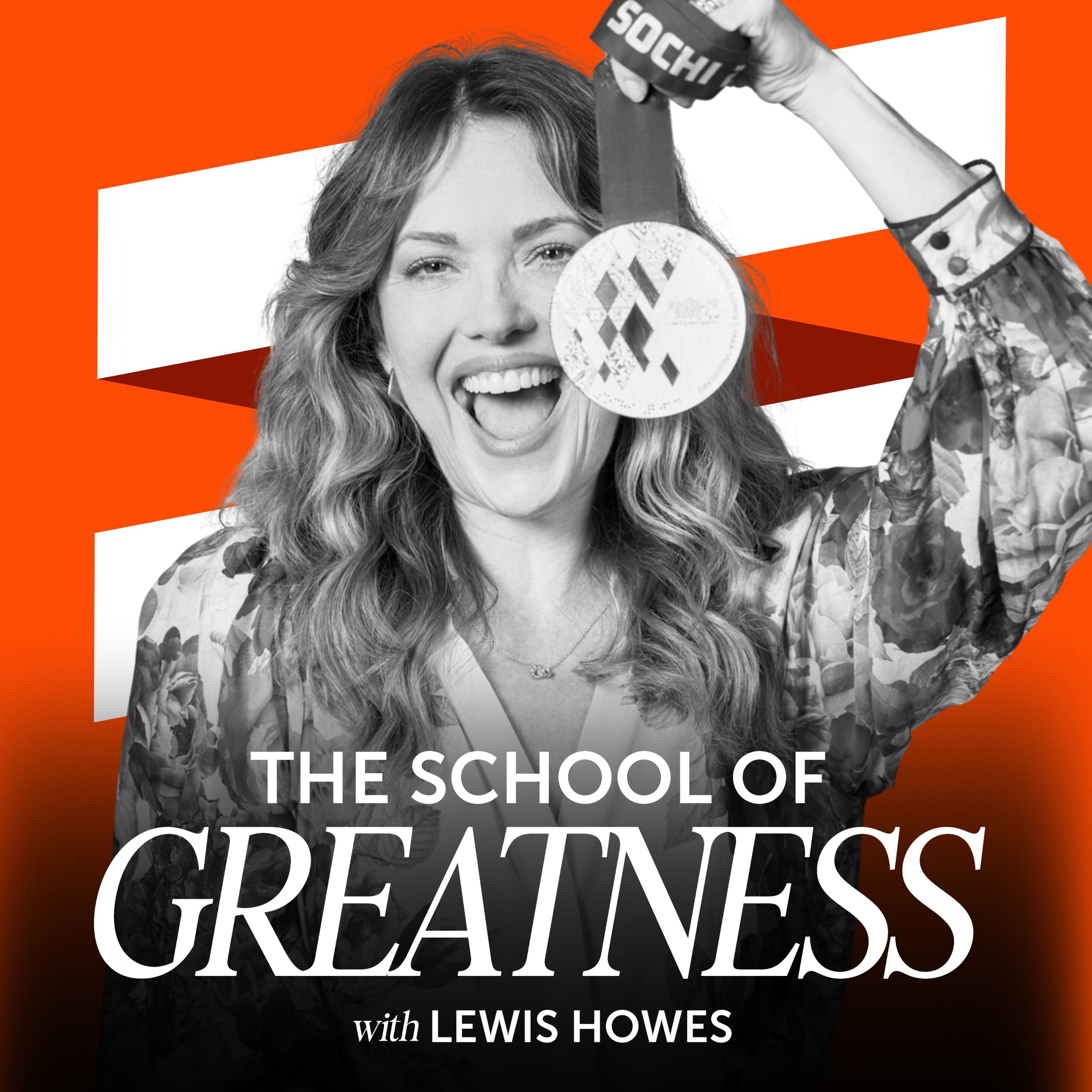
Overview of The School of Greatness — Amy Purdy episode
Lewis Howes interviews Amy Purdy — adaptive athlete, motivational speaker, author and two‑time public figure (Paralympic medalist and Dancing with the Stars finalist). The episode traces Amy’s sudden battle with bacterial meningococcal meningitis at age 19 (given <2% chance to live), her near‑death experience, below‑ankle amputations, recovery and comeback into elite snowboarding, founding Adaptive Action Sports, earning a Paralympic bronze (Sochi 2014) in snowboard cross, viral TED Talk, Dancing with the Stars runner‑up finish, and ongoing mission to inspire and grow adaptive sports worldwide.
Key moments in Amy’s story
- Medical emergency: fell ill with meningococcal bacterial meningitis, went into septic shock within 24 hours, put on life support and an induced coma. Doctors initially gave her less than 2% survival odds.
- Acute complications: internal bleeding and an enlarged spleen that required emergency surgery; kidneys failed and she was hooked up to dialysis; ultimately received a kidney transplant (ongoing monitoring).
- Amputations: lost both feet/parts of her legs (amputations just above the ankles) due to loss of circulation and gangrene risk.
- Near‑death experience: describes an out‑of‑body vision with three silhouettes offering her a choice and a bright light that told her “there will be mountaintops and valleys… it will all make sense in the end.” That belief became central to her resilience.
- Immediate goals & comeback: while being wheeled to surgery she set three goals (one was to snowboard again that year). Seven months after amputation she returned to snowboarding.
- Adaptive Action Sports: co‑founded with her then‑boyfriend (now husband) Daniel — nonprofit to get youth, wounded vets and people with permanent physical disabilities into action sports (snowboard, skateboard, wakeboarding, rally racing, etc.).
- Paralympics: campaigned to get snowboarding into the Paralympic Games; competed in Sochi 2014 in timed snowboard cross and won bronze. She remains one of the only double‑leg‑amputee competitive snowboarders at that level.
- Media & public platform: viral TED Talk (used as an example for TED organizers), Dancing with the Stars (second place), book: On My Own Two Feet: From Losing My Legs to Learning the Dance of Life. Those platforms amplified her speaking and advocacy work.
Main themes & mindset takeaways
- Survival mode unlocks unexpected strength: in acute crisis Amy describes a stripped‑down, pragmatic acceptance and determination to survive and move forward.
- Use limitations as leverage: instead of letting loss define her, she used constraints to innovate (custom prosthetic “feet,” creative choreography for dance, adaptive sports techniques).
- Small, tangible goals matter: setting concrete objectives (e.g., “I will snowboard this year”) provided control and focus when everything else felt chaotic.
- Faith and meaning: her near‑death experience instilled trust that “it will all make sense in the end,” a perspective she credits for getting through the hardest moments.
- Persistence + community = change: years of showing up, creating adaptive divisions at competitions and building a grassroots network helped make snowboarding a Paralympic sport.
- The power of visibility: TED, TV, and media appearances expanded her platform, which she used to uplift others and grow adaptive sports.
Practical lessons & action items
- If you face a major setback: pick 2–3 concrete, non‑ambiguous goals you can pursue immediately to regain agency.
- Innovate around constraints: test, iterate and be willing to use imperfect solutions (Amy preferred simpler, controllable prosthetic feet for snowboarding rather than flashy but unstable options).
- Build community: find or create groups that practice the skill you want to scale (Amy seeded adaptive divisions at events and connected athletes globally).
- Use platforms thoughtfully: public speaking, a TED Talk or media appearances can accelerate advocacy; prepare thoroughly and align your message with a clear theme.
- Practice gratitude and health maintenance: Amy monitors transplant/kidney health every three months and treats each good report as a renewed opportunity — a daily reminder to act with purpose.
- Put intentions into words: Amy emphasizes declaring goals publicly (or writing them) and regularly acting toward them.
Notable quotes & soundbites
- “I believe in love.” (Her core answer during the near‑death moment — used as a guiding principle.)
- “It will all make sense in the end.” (Central belief that sustained her through recovery.)
- “Use your limitations to push off of.” (Reframing obstacles as launch points for creativity and growth.)
- “Live inspired.” (Her personal motto and suggested tattoo phrase.)
Topics covered in the episode
- Medical details of meningococcal meningitis, septic shock and related surgeries
- Near‑death experience and spiritual framing of trauma
- Prosthetic technology: limits of ankles, tradeoffs between control vs. high‑tech solutions
- The process of getting snowboarding into the Paralympics and classification/safety issues
- Founding and running Adaptive Action Sports (mission, grassroots work, impact)
- Transition from athlete to public speaker, TED Talk and media (Dancing with the Stars)
- Practical motivation, goal‑setting, and how to turn adversity into purpose
Recommended resources & where to follow Amy
- Book: On My Own Two Feet: From Losing My Legs to Learning the Dance of Life
- Instagram / Twitter / Snapchat / Facebook: @AmyPurdyGurl (her preferred platform: Instagram)
- Adaptive Action Sports (nonprofit) — search the org to learn about programs or volunteer/support opportunities
Final note: the episode mixes hard medical detail with uplifting examples of persistence, invention and public advocacy. It’s useful both as a human story of survival and as a practical model for using constraints to fuel purpose and community change.