The SaaS Podcast: How B2B SaaS & AI Founders Get Customers
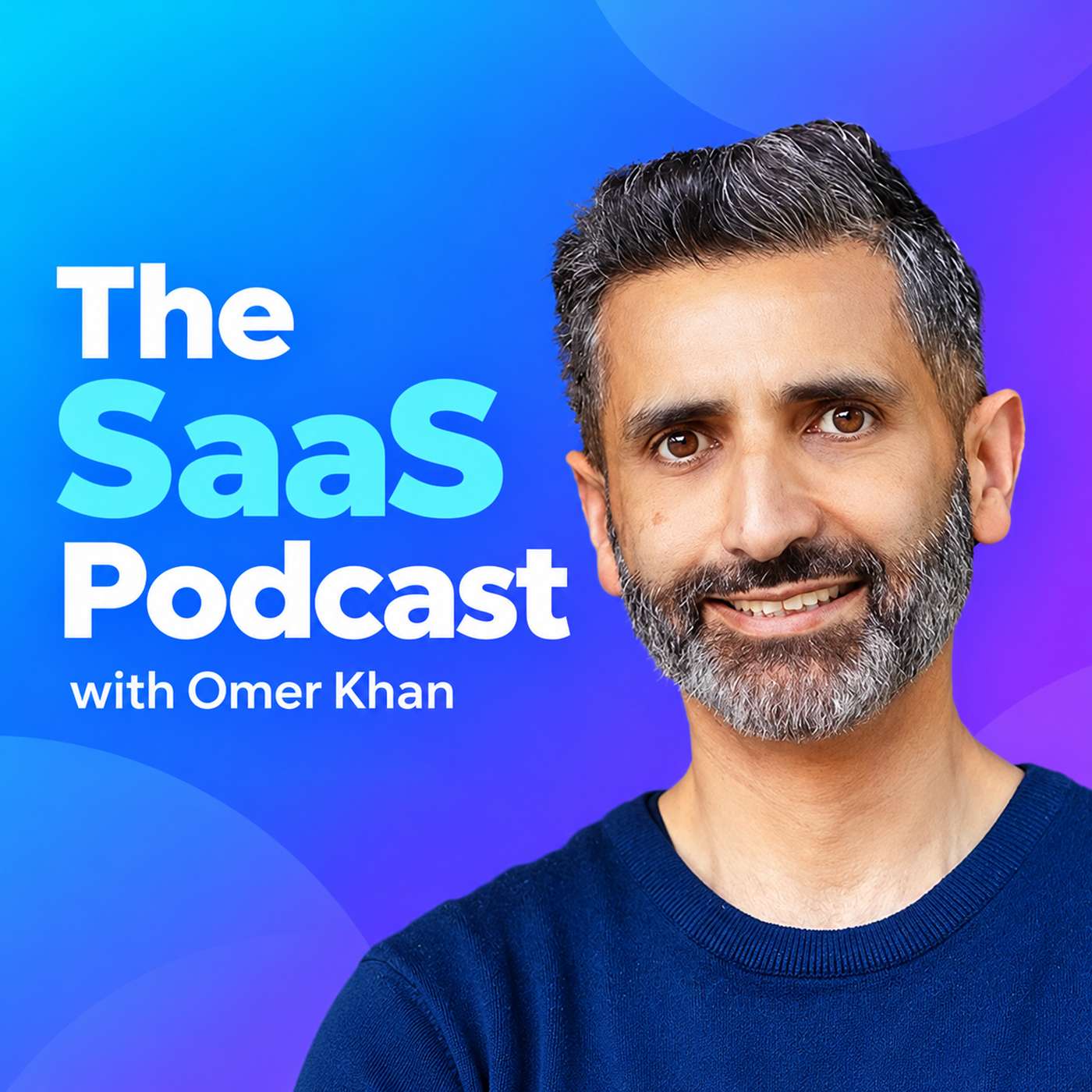
by Omer Khan
Building software got easier. Getting customers didn't. Every week, a founder building B2B SaaS or an AI product tells you how they got their first customers, and how they kept them: what worked, what didn't, and what they'd do differently. You'll hear how founders find a channel that works, price their product, sell without a sales team, and stop churn. That includes founders building AI startups and AI agents. Host Omer Khan has interviewed almost 500 founders since 2014, including Calendly's Tope Awotona and Fyxer's Richard Hollingsworth. The SaaS Podcast is part of SaaS Club, which helps early-stage B2B SaaS...
Episodes
Enterprise Sales Without Salespeople: How a SaaS Hit $10M
<p><strong>Costco put out an RFP for an ad server and didn't like any of the answers. Then they found AdButler online.</strong> Rajiv Khaneja had never sold to an enterprise, and AdButler had 12 people. He showed up at Costco with a laptop and a demo, and signed his first Fortune 100 customer.</p> <p>Rajiv explains how AdButler sells enterprise deals with no salespeople: inbound leads from a contact form, product-led demos, missing features built in weeks, and month-to-month contracts instead of lock-in. He also shares the pricing mistake he made for 15 years.</p> <p>Plus: why he thinks AI will kill the settings page and give every customer their own version of your software.</p> <p>Rajiv started AdButler as a teenager after DoubleClick hung up on him. It ran as a side project for a decade, with plans from $9.95 a month, before he went all in and built it into a $10M SaaS.</p> <p><strong>🔑 Key Lessons</strong></p> <ul> <li><strong>Let the demo be your sales process:</strong> AdButler has no salespeople. Product people show the software screen by screen, and Rajiv watches the room to see what excites buyers. That demo won Costco and AdButler's next enterprise deals.</li> <li><strong>Answer the gap before the buyer asks:</strong> At the end of every demo, AdButler shows how it will fill whatever is missing. Promising three weeks against a competitor's six months, then shipping in two, won long-term enterprise contracts.</li> <li><strong>Price on value, not on your costs:</strong> For 15 years, Rajiv charged a multiple of what it cost to serve an ad. His first enterprise deal was many orders of magnitude bigger than his SMB plans.</li> <li><strong>Don't lock customers in with contracts:</strong> AdButler offers enterprise clients month-to-month terms and signs longer ones only when asked. If a contract is the only thing keeping a customer, Rajiv says you've already lost them.</li> <li><strong>Put an enterprise door on your website:</strong> After Costco, AdButler added an enterprise tier with a contact form. Its first 10 enterprise customers all came through inbound leads, with no outbound sales team at all.</li> <li><strong>Split features into one-person pieces:</strong> AdButler breaks every big feature into the smallest units one engineer can ship alone, like single API endpoints. Fewer people syncing means fewer meetings and much faster custom builds.</li> <li><strong>Treat AI like the tractor next door:</strong> Rajiv tells his team the farmer with a tractor sells carrots cheaper than the one with an ox. Founders who won't adopt AI will get priced out the same way.</li> </ul> <p><strong>Chapters</strong></p> <ul> <li>What AdButler does and the size of the business</li> <li>How AdButler differs from Google Ad Manager</li> <li>A polls website and the call to DoubleClick at 14</li> <li>Building his own ad server</li> <li>Close to seven figures before finishing high school</li> <li>Turning down a $2.5 million acquisition offer</li> <li>The dot-com crash and the pivot to paid software</li> <li>10 years as a side project at $9.95 a month</li> <li>Going all in on AdButler</li> <li>Costco's email and the 29-tab RFP</li> <li>A laptop demo for a room of 25</li> <li>Enterprise customers 2 through 10</li> <li>Building custom features in weeks, not months</li> <li>Why AdButler offers month-to-month contracts</li> <li>Shared Slack channels and one-engineer features</li> <li>Why AI makes configurable software obsolete</li> <li>Lightning round</li> </ul> <p><strong>Resources</strong></p> <ul> <li>Full show notes: <a href="https://saasclub.io/500">https://saasclub.io/500</a></li> <li>Join 5,000+ SaaS founders: <a href="https://saasclub.io/email">https://saasclub.io/email</a></li> </ul>
Selling an AI SaaS Platform After 200 Buyers Called It Crazy
<p><strong>He asked buyers to rip out their whole Salesforce stack. The first 200 to 300 called him crazy.</strong> David Zhu, co-founder and CEO of Reevo, built an all-in-one AI sales platform and learned the hard way how to sell it. He kept the platform and changed the ask: buyers start with one piece, like the dialer, the sequencer or the AI-native CRM.</p> <p>David explains why Reevo spent two years in stealth before selling, how a founder he met at an AWS program became the first paying customer before seeing the product, and how Reevo got to $1M ARR in 6 months while an introvert ran founder-led sales. He also shares the Mom Test mistake he made early on.</p> <p>Plus: why the startups that happily adopted his whole platform turned out to be false validation.</p> <p>David ran engineering teams at DoorDash and worked with Keith Rabois at OpenStore before founding Reevo, his fifth startup, with a founding team of 14. Reevo now serves hundreds of customers without paid marketing.</p> <p><strong>🔑 Key Lessons</strong></p> <ul> <li><strong>Be strict on architecture, flexible on the sale:</strong> Reevo kept its all-in-one platform but stopped demanding rip-and-replace. Letting a buyer start with one tool asks for a much smaller first yes than throwing out Salesforce.</li> <li><strong>Give buyers three doors, not the whole menu:</strong> Reevo groups its land motions into pipeline generation, deal progression and manager reporting. Prospects pick their biggest pain instead of facing every module and integration at once.</li> <li><strong>Watch out for false validation:</strong> Startups with no RevOps leader or security review adopted Reevo's whole platform easily. That said little about the entrenched mid-market buyers Reevo actually wanted to win.</li> <li><strong>Play to your strength, not someone else's game:</strong> David had no sales brand, so he built on what he did have, a dense engineering team. Copying founders who have distribution you lack is how you lose.</li> <li><strong>Open the deal, then hand off the close:</strong> David, an introvert, sent the first email and ran the intro call. A founding sales leader from HubSpot closed, and Reevo copied his talk tracks across 12 to 15 AEs.</li> <li><strong>Ask for payment to test your discovery:</strong> Early prospects praised David's pitch, then said no when he asked them to pay. The Mom Test's non-leading questions get you to the honest answer sooner.</li> <li><strong>Don't outsource ICP discovery:</strong> Paying a vendor $50,000 to run your outbound skips the learning. David says founders without product-market fit have to do discovery themselves or risk a false start.</li> </ul> <p><strong>Chapters</strong></p> <ul> <li>What Reevo does and who it's for</li> <li>Founding team of 14 and the size of the business</li> <li>From DoorDash and OpenStore to the idea for Reevo</li> <li>Why Reevo built in stealth for two years</li> <li>The first paying customer from an AWS program</li> <li>The Mom Test mistake and winning without a sales brand</li> <li>Founder-led sales as an introvert</li> <li>Platform vs point solution</li> <li>200 buyers called the rip-and-replace pitch crazy</li> <li>Selling the platform one piece at a time</li> <li>Why startup customers were false validation</li> <li>Three land motions instead of an a la carte menu</li> <li>Vibe coding, outsourced SDRs and enterprise bake-offs</li> <li>Lightning round</li> </ul> <p><strong>Resources</strong></p> <ul> <li>Full show notes: <a href="https://saasclub.io/499">https://saasclub.io/499</a></li> <li>Join 5,000+ SaaS founders: <a href="https://saasclub.io/email">https://saasclub.io/email</a></li> </ul>
ChatGPT Should Have Killed His AI SaaS. Instead, He's Nearing $10M
<p><strong>ChatGPT turned his product into a commodity at close to $1M ARR.</strong> Alon Talmor rebuilt Ask-AI into Mosaic AI, an AI platform for technical support, by narrowing into a market rivals called too hard and selling measurable cost reduction instead of features. The company is now at multiple seven figures in ARR, approaching eight.</p> <p>Alon breaks down how six months of listening to enterprises produced the product idea, how he closed a $6.5M seed after his co-founder quit in the middle of the round, and how 5-day pilots built on technical support automation turn skeptical enterprise buyers into six-figure customers.</p> <p>Plus: why he believes the next phase of enterprise AI is agents orchestrating people, not people orchestrating agents.</p> <p>Alon sold his first startup, BlueTail, to Salesforce, went back for a PhD in AI and question answering, and founded Ask-AI in 2021, a full year before ChatGPT. Today Mosaic AI serves about 100 enterprise customers, with go-to-market in Toronto and R&D in Tel Aviv.</p> <p><strong>🔑 Key Lessons</strong></p> <ul> <li><strong>Find a blue pond, not a blue ocean:</strong> When funded giants crowd your market, narrow into a segment they cannot serve well. Mosaic left enterprise assistants to own technical support and grew past seven figures.</li> <li><strong>Talk to customers six months before investors:</strong> Alon pitched no VCs until enterprises had told him their problem. Yotpo's knowledge chaos became the product, and the seed closed on that proof.</li> <li><strong>Tell investors bad news before they find it:</strong> His co-founder quit mid-raise; he disclosed it immediately and still closed $6.5M. Prettifying reality reads as mistrust, and investors sense it every time.</li> <li><strong>Sell the cost reduction, not the feature list:</strong> Support is a cost center with a known price tag. Mosaic pitches 50-70% savings on a seven-figure budget instead of arguing about features.</li> <li><strong>Pick the metric your buyer cannot argue with:</strong> Tickets per engineer per day survived scrutiny where time-to-resolution failed. One customer measured an 80% lift in a week of the pilot.</li> <li><strong>Treat build vs buy as your real competitor:</strong> With AI coding cheap, enterprises default to building. Win by showing the end state their side project becomes obsolete against, not a feature comparison.</li> </ul> <p><strong>Chapters</strong></p> <ul> <li>What Mosaic AI does and who it's for</li> <li>The real cost of technical support</li> <li>BlueTail, Salesforce and the PhD detour</li> <li>Founding Ask-AI a year before ChatGPT</li> <li>Losing a co-founder in the middle of the seed round</li> <li>Radical honesty with investors</li> <li>Six months of listening before pitching VCs</li> <li>Yotpo and the design partner playbook</li> <li>Founder-led sales to the first 25 customers</li> <li>ChatGPT turns the product into a commodity</li> <li>Agents orchestrating people</li> <li>Finding the blue pond: technical support</li> <li>Build vs buy: the number one competitor</li> <li>The 5-day pilot and the metric that closes deals</li> <li>Lightning round</li> </ul> <p><strong>Resources</strong></p> <ul> <li>Full show notes: <a href="https://saasclub.io/498">https://saasclub.io/498</a></li> <li>Join 5,000+ SaaS founders: <a href="https://saasclub.io/email">https://saasclub.io/email</a></li> </ul>