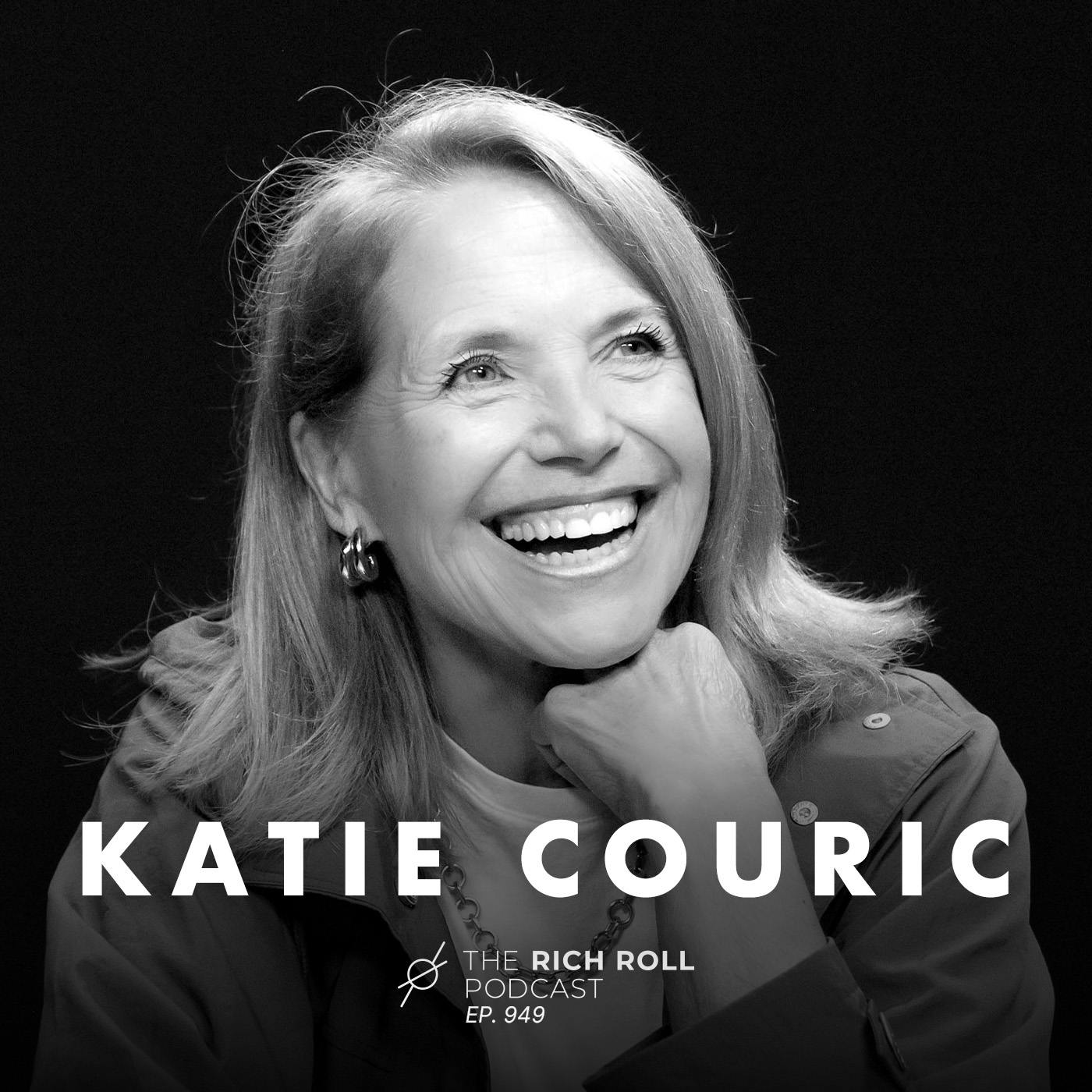
Overview of Interview With An Icon: Katie Couric On The State of Media, Institutional Distrust, Cancer Advocacy & What Actually Creates Happiness
Rich Roll interviews journalist and media icon Katie Couric about her long broadcast career and transition to independent media, the decay and potential revival of journalism, rising institutional distrust and political polarization, personal and public work on cancer advocacy, and what creates lasting happiness. The conversation moves between media history and culture, threats to democratic norms (AI, authoritarian trends, concentrated media ownership), public health and research funding, loneliness and phone addiction, and practical interviewing craft and life lessons Katie has learned over decades in the spotlight.
Guest snapshot
- Katie Couric — veteran broadcast journalist: longtime Today Show anchor, first solo female anchor of a network evening newscast (CBS Evening News), 60 Minutes correspondent, co-founder of Stand Up To Cancer, documentary producer, and now an independent digital creator and publisher.
- Personal context: husband Jay Monahan died of colon cancer at 42; sister Emily Couric died of pancreatic cancer. These losses shaped her advocacy.
Key topics covered
- Career arc and motives for leaving legacy broadcast roles to run independent media and production projects.
- Culture and workplace dynamics at legacy outlets (NBC, CBS, 60 Minutes) — gendered structures, “boys’ club” mentalities, and examples of being sidelined.
- The collapse of a centralized news monoculture and the pros/cons of disintermediation: access to more information vs. echo chambers and competing “facts.”
- Political polarization, post-truth dynamics, and how leaders (notably Donald Trump) have amplified distrust and coarseness in public life.
- Media ownership shifts and the risks of powerful owners influencing journalism.
- Loneliness, phone addiction, “bed rotting,” and the erosion of proximate civic spaces — implications for civic cohesion and mental health.
- Medical research and funding threats (NIH cuts, brain drain), gender gaps in clinical research, and specific public-health concerns (early-onset cancers, screening).
- Cancer advocacy work: colonoscopy awareness, the “Couric effect” (large uptick in screenings after public campaigns), and the need for sustained research funding.
- Interview craft: preparation, listening, empathy, and tailoring questions to achieve meaningful conversations.
- Life lessons on happiness: relationships, service, purpose, and intentional gratitude.
Main takeaways
- The media landscape has dramatically fragmented: greater access but weaker shared facts and more polarized realities. Repairing public trust requires better civic proximity (people having cross-cutting contact), stronger institutions, and responsible editorial independence.
- Concentrated media ownership and political pressure threaten journalistic independence; editorial courage and institutional guardrails are crucial.
- Personal examples matter: public demonstrations (e.g., Couric’s on-air colonoscopy) can move behavior and public health outcomes. Screening and prevention save lives.
- Medical research is fragile and long-term; cutting NIH and clinical-trial funding risks losing momentum, talent, and patient hope.
- Loneliness and device addiction are cultural public-health problems. Phone-free norms (especially in schools) and creating more real-world social spaces can improve well‑being and creativity.
- Happiness and fulfillment are less about chasing pleasure and more about relationships, service, and purpose — intentional small acts matter.
Notable quotes & insights
- “Everyone's entitled to their own opinion, but they're not entitled to their own set of facts.” (echoing Daniel Patrick Moynihan; used to frame the dangers of competing realities)
- On journalism: “If you support one side or another, you should still be supportive of an independent journalistic ecosystem of integrity that is always going to challenge those who are occupying seats of power.”
- On personal meaning: finding joy is an intentional act — service and purpose are central to enduring happiness.
- Phone culture: boredom is valuable because it enables creative thinking; constant phone stimulation dulls that capacity.
Interview highlights
CBS / 60 Minutes experience
- Katie describes being hired to “freshen” the evening news and encountering a culture that wasn’t always receptive to her style. She recounts instances of being sidelined (e.g., story assignments) and the internal politics of legacy newsrooms.
The Sarah Palin interview
- Katie explains her intent: to probe a candidate’s grasp of policy and governance, and how that interview became a culturally significant moment about qualifications for high office.
Media decline and political consequences
- Fragmented media + a presidency that rewards provocation = accelerated distrust and erosion of norms. Katie worries about the “post-consequences” environment and the normalization of disrespectful leadership.
Cancer advocacy & public health
- Personal tragedy motivated public campaigning (co-founding Stand Up To Cancer). Public demonstration (like on-air colonoscopy) led to measurable increases in screening rates — a model for advocacy impact.
- Early-onset cancers (rising among younger people) are an urgent unknown; more research is needed into microbiome, ultra‑processed foods, antibiotic use, environmental factors.
Loneliness and tech
- Katie pushed projects about loneliness and advocates for policies and cultural shifts (phone-free schools, public service) to rebuild proximate civic life.
Practical advice & action items (what listeners can do)
- Health: keep up with recommended screenings (colonoscopy; age guidelines have lowered), especially given rising early-onset digestive cancers.
- Media literacy: seek diverse news sources, step outside algorithmic bubbles, and practice dialectical thinking (two things can be true at once).
- Civic engagement: foster proximate connections — join local groups, volunteer, or consider public service opportunities that build cross-cutting ties.
- Digital hygiene: reduce phone use (store your phone in another room in the morning, experiment with phone-free times), encourage schools to test phone-free classrooms.
- Support science and independent journalism: advocate against cuts to research funding (NIH, clinical trials) and support outlets that prioritize editorial independence.
- Interviewing & conversation: prepare, listen actively, make subjects comfortable, ask fresh/curiosity-driven questions and tailor the approach to the person.
How Katie approaches interviews (tips from the conversation)
- Preparation is non-negotiable: know the interviewee and context.
- Listen closely — ensure responses actually answer your question and be ready to pivot.
- Empathy and making people comfortable improves candor and depth.
- Avoid repetitive “hasn't-asked-800k-times” questions; seek novel angles that reveal insight.
- Tailor tone: challenge when necessary, but do it strategically.
Recommended resources / follow-ups mentioned
- Stand Up To Cancer (Katie’s advocacy organization)
- Reading recommendation noted by Katie: Viktor Frankl’s Man’s Search for Meaning (on purpose and meaning)
- Research and reporting suggestions: further investigation into gender disparities in medical research, early-onset cancer drivers, and the effects of phone culture on youth.
Bottom line
This wide-ranging interview blends media history with urgent cultural and public-health concerns. Katie Couric uses her professional experience and personal losses to argue for stronger, independent journalism, sustained medical research, and the restoration of proximate civic life. Practical takeaways center on screening and prevention, reducing device dependence, cultivating relationships and service, and supporting institutions that hold power accountable.