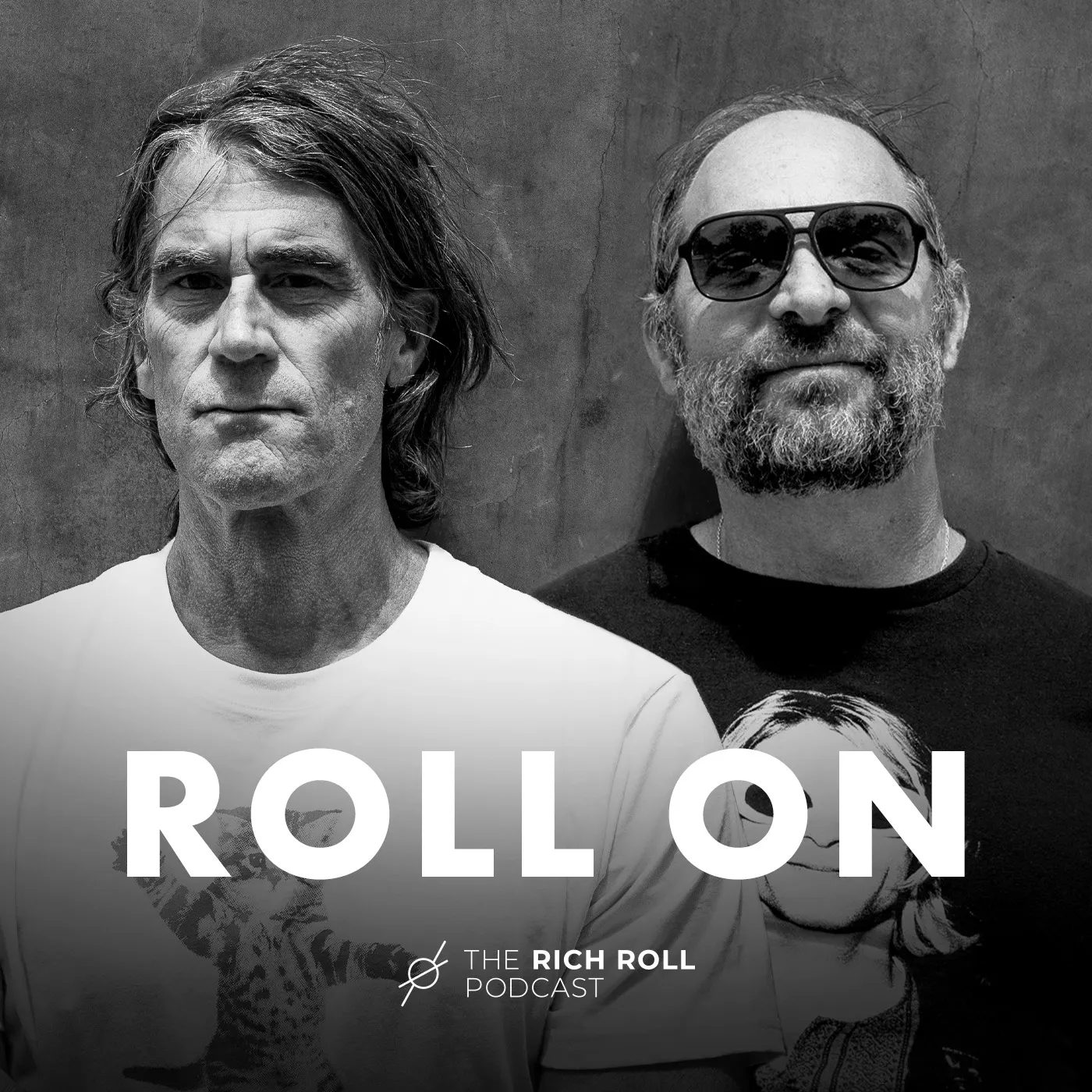
Overview of ROLL ON: Stop Optimizing Your Life & Start Living It, Seeking Depth Over Algorithms, The Future of Podcasting, Artemis II, Media Diet & More
Host Rich Roll and guest Adam have a loose, reflective conversation recorded outdoors about stepping away from relentless optimization, rediscovering play and presence, the changing podcast/music/media landscape, SXSW highlights, space (Artemis II), and recent documentaries and films. The tone is conversational and wide-ranging — personal anecdotes, cultural observations, and practical encouragement to seek depth and collect meaningful moments rather than chase algorithmic optimization.
Key themes & takeaways
- Move from optimization to presence: Stop treating life like a series of hacks and metrics; prioritize connection, presence, and collecting meaningful moments.
- Authenticity & experimentation in media: Podcasting (and content generally) is crowding in formulaic formats; listeners crave realness, parasocial connection, and hosts willing to experiment.
- Uncertainty fuels the optimization impulse: Trying to control body/mind is understandable, but it can become avoidance of life’s inherent uncertainty.
- Beauty and perspective matter: Events like Artemis II and other peak experiences remind us of our shared fragility and the value of appreciating the world.
- Creativity across generations: New music and art keep surfacing — kids and local radio are great portals to discover it.
Topics discussed
Podcasting, format & creative experimentation
- Rich reflects on 14 years of podcasting and the need to return to a beginner’s mind: experimenting with solo episodes and more informal formats feels playful and is resonating with listeners.
- Observation: the typical two-people-across-a-desk interview is getting stale in a crowded landscape; audiences want heart-centered, authentic conversation.
- Practical implication: try small format changes, embrace play, and prioritize emotional connection over production-by-numbers.
Stop optimizing, start living
- Critique of the self-improvement/self-optimization industry: it can promote self-obsession, implying we’re “broken” and must be continuously fixed.
- Alternative: cultivate presence, service-mindedness, and moments of connection (Rich calls these lightning-bolt realizations that reveal what truly matters).
- Rich’s shorthand: “microdosing on love/presence” — small intentional practices that produce more life-satisfying effect than constant optimization.
SXSW, music & culture
- Rich recounts SXSW highlights: introducing sculptor Tom Sachs, time with RJ Scaringe (Rivian), and hosting a Q&A with Ed O’Brien (Radiohead).
- Music notes and discoveries:
- Newer bands discussed: Geese (and Cameron Winter’s solo work), Wet Leg, Turnstile, TV Colors.
- Loved acts: Khruangbin (spelled in conversation as Kurongbin), Mike D (Beastie Boys) performing locally with his sons, and Julie Piatt (Rich’s wife) releasing music under her band project.
- Sources to discover music: local/college radio (Alma del Barrio on KXLU 89.9), KCRW, KEXP, Tiny Desk, and following younger family members’ playlists.
- Theme: cross-generational music-making (artists performing with their kids) and the continuing vitality of rock/indie scenes.
Media diet — what to watch & listen to
- HBO docuseries on climber/base-wingsuit athlete Dean Potter (named in the episode as a four-part series): praised for its depth, access to journals, and portrayal of the creative/tragic arc of an outlaw athlete.
- Netflix true-crime documentary about Moriah (Mariah in transcript) Wilson — gravel racing and the violent murder story involving Colin Strickland’s circle; noted as chilling and consequential, especially for those involved.
- Dan McPherson’s film Beast (actor/athlete turned lead role) — Rich recommends it for realistic MMA portrayal; Russell Crowe in supporting role.
- Rich also recommends following astronaut coverage/podcasts (e.g., BBC’s short coverage of Artemis II) to get context around space missions.
Artemis II & space reflections
- Rich watched Artemis II (launch and splashdown) with family and found it emotionally uplifting — a shared moment of beauty and optimism.
- Technical notes explained conversationally: “sphere of influence” (moon’s gravitational influence), free-return trajectory (safety path if propulsion failed).
- Ethical/strategic reflections: celebrating NASA’s capability while cautioning against exporting terrestrial mistakes (e.g., building lunar bases without humility about environmental/social consequences).
- Human takeaway: astronauts repeatedly report a profound sense of unity and appreciation for Earth when viewing it from space — a perspective Rich finds worth cultivating.
Reporting project / wingsuit culture
- Rich is researching and interviewing wingsuit/base-jump athletes for a writing project. Observations so far:
- The subculture ranges from adrenaline-chasers to thoughtful artists; proximity-to-death can heighten appreciation for life and produce deep moments.
- Dean Potter portrayed as artistically driven; contrast drawn with Alex Honnold (engineer-like precision vs. Dean’s artistry and pathos).
Personal anecdotes and family
- Various personal stories: Great Pyrenees dogs (Ollie sponsorship tie-in), taking a kid to college, Julie Piatt releasing music, and memories of doing grassroots organizing in LA and encountering musicians.
Sponsors & product mentions (brief)
- Episode included native-style ad reads for: Ollie (dog food), Freaks of Nature (deodorant & sunscreen), Squarespace (websites), Go Brewing (NA beer), and Rivian (R1S vehicle demonstration at SXSW). These are woven into the episode as personal endorsements.
Notable quotes & insights
- “Self-obsession is an antagonist to personal growth.”
- “What would it be like if you embrace that you’re not broken?”
- “Collecting these amazing, valuable moments — that’s really it.”
- “The less I think of my own bullshit, the better off I am.”
- On podcasting: listeners want “heart-centered” and “parasocial” connection — more hanging-out-than-interrogation.
Action items / recommendations (what to do next)
- If you feel trapped in optimization: try small experiments — schedule time to “do nothing,” sit by water, or prioritize one present-moment experience this week.
- For podcasters/creators: test looser formats (solo episodes, alfresco conversations); prioritize authenticity over formula.
- Music discovery: listen to local college radio (Rich’s picks: Alma del Barrio KXLU 89.9), KEXP, Tiny Desk sessions; ask your kids what they’re listening to — they’re a great portal to new music.
- Media to check:
- HBO documentary series on Dean Potter (the episode references a four-part series).
- Netflix true-crime doc about gravel racer Moriah Wilson (for those following cycling/gravel sport coverage).
- Dan McPherson’s film Beast (if you want a realistic MMA drama).
- Follow Artemis II coverage and short science/podcast explainers for context (Rich recommended BBC’s short features).
- Practice perspective: notice one “Earthrise” moment for yourself — a sunrise, a tide, or an unhurried conversation — and treat it as a data point for how you want to live.
Short summary
This episode is a relaxed, wide-ranging conversation that urges listeners to move away from constant life-hacking and toward presence, play, and depth. Rich uses examples from podcasting experiments, SXSW encounters, music discoveries, space exploration (Artemis II), and climbing/wingsuit reporting to make a case for authenticity, humility, and collecting meaningful moments. The practical message: experiment, be less self-obsessed, and intentionally create opportunities to be present.