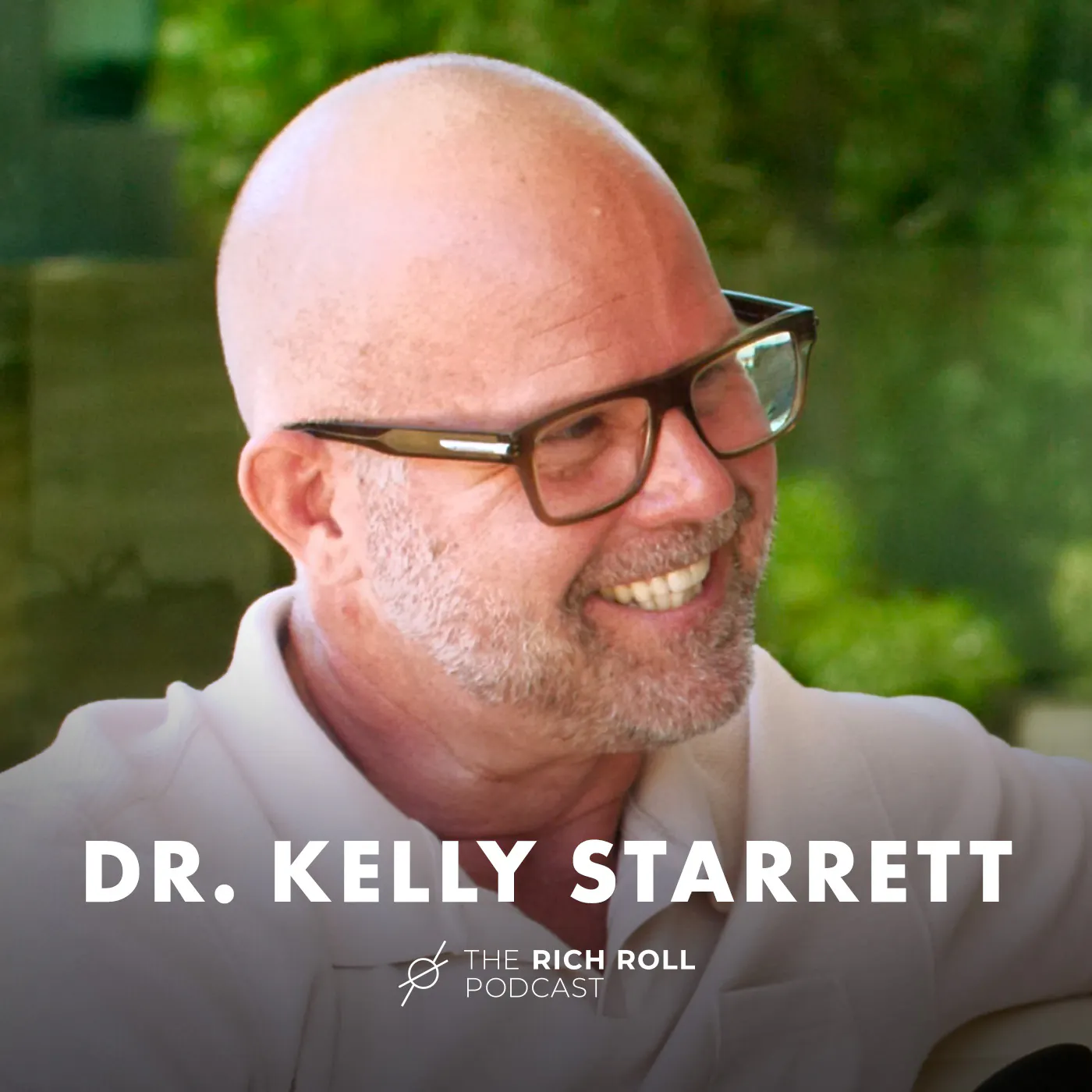
Overview of Play Is The Miracle Drug: Dr. Kelly Starrett On Movement, Recovery, & The Wellness Trap
Rich Roll and Dr. Kelly Starrett unpack the current state of wellness culture, arguing that the industry has become overly focused on gadgets, hacks, aesthetics, and optimization at the expense of the fundamentals: movement, play, community, sleep, food, and resilience. Starrett makes the case that most people do not need more expensive interventions—they need better habits, more curiosity, and a more joyful relationship with training and daily life. The conversation also touches on recovery, parenting, performance, and the ethics of enhancement culture, especially as it trickles down to everyday people and young athletes.
The Main Critique: Wellness Has Become a “Trap”
The industry is overrun with hacks and products
- Starrett and Roll criticize the wellness marketplace for selling “solutions” that often distract from root causes.
- They argue that many people try to buy their way out of problems with:
- vibration plates
- supplements
- peptides
- recovery gadgets
- biohacks
- Their point: most of the things that truly improve health are boring, free, or low-cost.
The real pillars are still the basics
- Cook food.
- Eat dinner with people.
- Move your body.
- Get sleep.
- Build relationships.
- Do something bigger than yourself.
Wellness can become self-obsessed
- The conversation suggests that modern wellness often functions like a secular religion or identity system.
- Starrett warns that optimization culture can become narcissistic and disconnected from real human needs.
Play as the “Miracle Drug”
Movement should be fun, not punitive
- Starrett repeatedly emphasizes that play is essential for sustainable health and performance.
- He argues that adults have stripped joy out of movement and turned training into a grim, performance-obsessed ritual.
- His approach with Rich included:
- frisbees
- tennis balls
- ropes
- games and drills
- playful warmups
Why play matters
- Play improves:
- coordination
- attention
- mobility
- emotional state
- adherence to exercise
- It also helps people reconnect to curiosity and joy, which makes training more likely to last.
Key idea
- “Everyone learns better through play.”
- Starrett frames play as the best entry point into movement for both athletes and non-athletes.
Performance, Resilience, and Starting Again
The best athletes don’t chase constant perfection
- One of Starrett’s central principles is the ability to “start again.”
- He pushes back on the internet’s obsession with endless PRs and linear progress.
- Real training includes cycles:
- off-seasons
- rebuilding
- injuries
- rest
- resets
Performance should be measured by real-world capacity
- He uses a performance lens to evaluate wellness trends:
- Does it help you get faster?
- Does it improve recovery?
- Does it make you more capable under load?
- If something only looks good on Instagram but doesn’t improve real performance, it’s probably not that meaningful.
Resilience matters more than fragility
- Starrett argues that the goal is to become more robust, not more delicate.
- If a tiny disruption breaks your whole routine, that may signal a lack of resilience rather than true wellness.
The Ethics of Enhancement Culture
The Enhanced Games and “PED” normalization
- The discussion covers the Enhanced Games, doping, peptides, and the broader normalization of performance enhancement.
- Starrett’s view:
- elite sport has always included some form of enhancement
- but modern culture is increasingly normalizing unregulated, unsupported use
- He sees this as especially concerning when it influences teenagers and amateur athletes.
A gray area, not a simple moral issue
- Roll and Starrett acknowledge that some uses of modern medicine can be legitimate:
- injury recovery
- prescribed HGH for medical needs
- treatment for older people or damaged tissue
- But they caution against the idea that enhancement can replace discipline, training, or biology.
The larger warning
- “You cannot cheat your biology.”
- There is no shortcut that bypasses sleep, recovery, adaptation, and consistency.
Parenting, Kids, and the Problem of Influence
Young athletes need boundaries, not hype
- Starrett argues that parents should focus on the fundamentals:
- family meals
- sleep schedules
- real food
- hydration
- consistency
- He warns against letting kids be shaped primarily by influencers, aesthetics culture, or energy drink/ nicotine trends.
Be the model, not the coach
- Parents should be supportive and create structure, not project elite expectations onto their children.
- His advice:
- be the “chief reminder”
- keep the environment sane
- make healthy choices easy
- don’t let kids solve their nutrition and identity problems online
Practical family example
- He shares how he helps his daughter by preparing breakfast or breakfast-to-go so she gets good nutrition without sacrificing sleep.
Practical Takeaways from Kelly Starrett
For training
- Make the first 10–15 minutes of exercise playful.
- Use movement games, dance, eye-hand drills, or light competition to warm up.
- Don’t confuse seriousness with effectiveness.
For mindset
- Replace “I failed” with “I’m starting again.”
- Treat setbacks as part of training, not evidence of weakness.
- Use self-talk that builds momentum instead of shame.
For health decisions
- Ask:
- Is this evidence-based?
- Is it scalable?
- Would I let my kids do this?
- Is it solving a root cause or just masking one?
For everyday life
- Eat with people.
- Walk more.
- Sleep enough.
- Drink less when stressed.
- Prioritize relationships and meaning over optimization.
Closing Message
The conversation ends on a hopeful note: fitness and wellness should make us better humans, not more anxious consumers. Starrett’s core message is that sustainable health comes from joy, play, consistency, and community—not from chasing every new hack. The “miracle drug” is not a supplement or device; it’s the willingness to move, laugh, reset, and keep showing up.