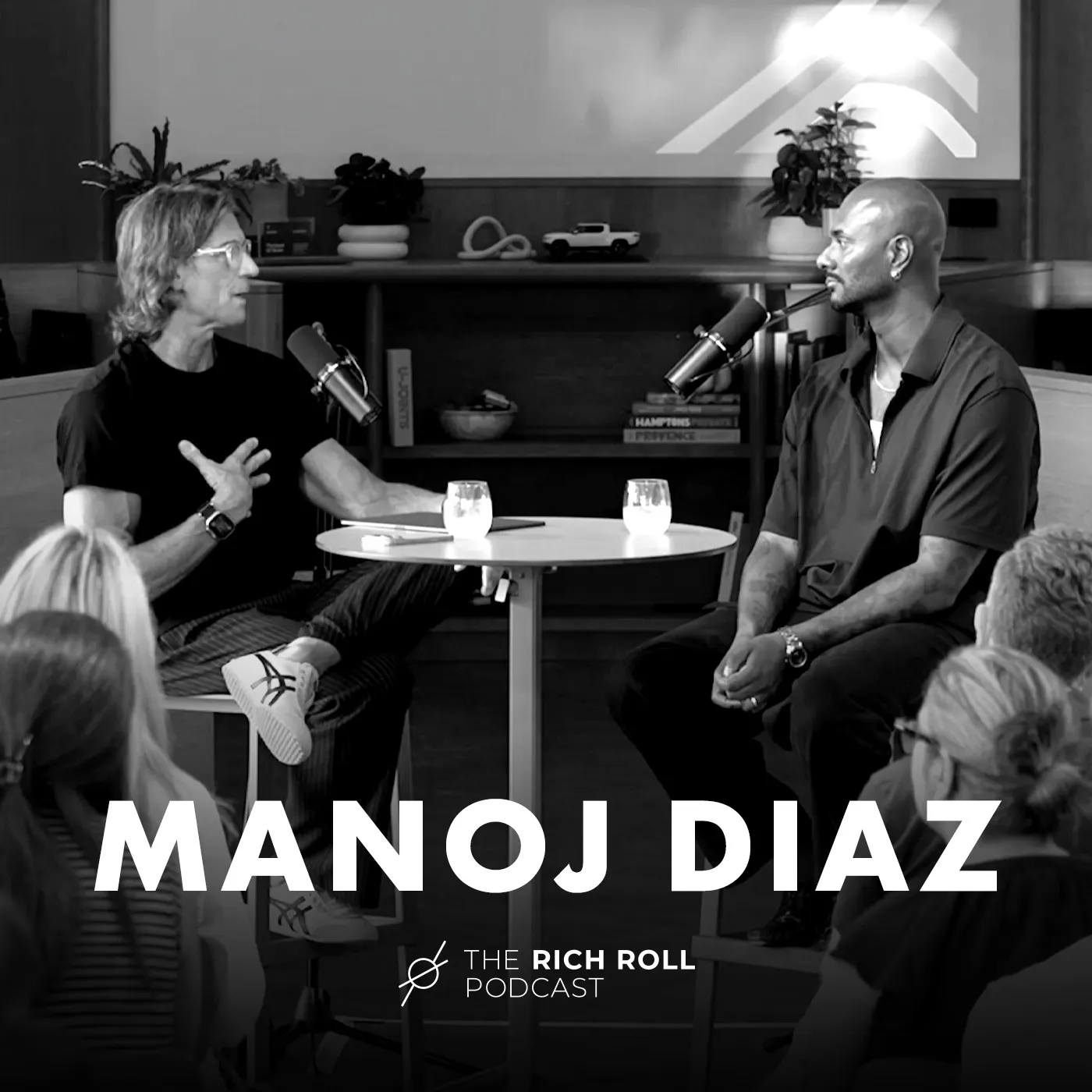
Overview of Mindfulness, Meditation & Performance: Manoj Dias Live At The Rivian Performance House
This live conversation between Rich Roll and meditation teacher and wellness founder Manoj Dias explores how mindfulness, meditation, breathwork, and performance intersect. Rather than framing mindfulness as a tool for calm or productivity alone, Dias presents it as a way to become more present, reduce suffering, and live with greater compassion, awareness, and ethical clarity. The discussion moves from the origins of his practice, to the limits of optimization culture, to how athletes, parents, and everyday people can use attention and body awareness to improve their lives.
Core Themes and Big Ideas
Mindfulness is about presence, not just calm
Dias emphasizes that mindfulness is not simply about being relaxed or slow. It is about being fully available to the present moment, which is the only place reality actually exists.
- The mind often lives in the past or future.
- Mindfulness helps people notice thoughts without becoming them.
- Presence is framed as a skill that changes how we relate to stress, work, and relationships.
Meditation is a life practice, not a technique trophy
A repeated theme is that people do not meditate to become “good at meditation” — they meditate to get good at life.
- Practices like meditation and breathwork are useful, but only if they change how you live.
- Dias warns against treating these practices as self-improvement badges.
- The real aim is deeper awareness, compassion, and ethical living.
Western culture is often over-identified with thought and performance
The conversation explores why mindfulness can feel difficult in modern, especially urban and professional, life.
- Many people are conditioned to be productive, optimized, and constantly “on.”
- Slowness can feel threatening because it removes distraction.
- The challenge is not just stress; it is the discomfort of being alone with oneself.
The self is a story, not a fixed identity
Dias repeatedly returns to the Buddhist idea that the self is fluid and constructed.
- Identity can become a source of suffering when people cling too tightly to labels.
- Growth requires the ability to loosen attachment to roles, achievements, and narratives.
- Change becomes easier when you see yourself as evolving rather than fixed.
Performance and mindfulness can support each other
The episode strongly connects mindfulness to athletics and peak performance.
- Athletes benefit from present-moment awareness because it improves reaction time, creativity, and recovery from mistakes.
- Interoception — the ability to sense internal bodily signals — is critical both for performance and regulation.
- The body and mind are not separate systems; they should be used in balance.
Key Takeaways
1. Attention shapes life
One of the most powerful ideas in the conversation is that all we really have is attention. Where you place it influences your habits, emotions, and long-term trajectory.
2. Mindfulness is already happening in daily life
Dias reframes mindfulness as something people already do in moments like:
- cooking
- running
- listening
- sensing the body
- noticing thoughts without reacting
Meditation simply trains and deepens that capacity.
3. Optimization is useful, but incomplete
Rich Roll and Dias both acknowledge that performance, optimization, and wellness tools can be helpful entry points. But they argue these are only the surface layer.
- The deeper question is not “How do I optimize?”
- It is “How do I live wisely, ethically, and meaningfully?”
4. Breathwork is a practical bridge
Dias offers a simple breathing practice and explains its value:
- it can support sleep
- it can help regulate stress
- it can improve resilience over time
He highlights coherent breathing: inhale for 5, exhale for 5, optionally with a pause.
5. Life changes should be seen as invitations, not threats
Rich Roll speaks candidly about how his own definition of peak performance evolved from training and achievement into being more available, more loving, and more joyful.
- Setbacks, aging, injuries, and new responsibilities can become openings for growth.
- Identity shifts are not losses; they can be liberating transitions.
Practical Advice and Practices Mentioned
Coherent breathing exercise
Dias leads a guided practice designed to calm the nervous system and increase presence.
Basic method:
- Breathe in through the nose for 5 counts
- Breathe out for 5 counts
- Repeat for several rounds
- Optionally pause gently between breaths
Gratitude reflection
At the end of the practice, he guides listeners to reflect on:
- someone they are grateful for
- something in their life they appreciate
- something about themselves they are grateful for
This combines regulation, perspective, and self-compassion.
Bringing mindfulness into ordinary moments
Instead of compartmentalizing practice and daily life, the episode encourages carrying awareness into:
- conversations
- exercise
- parenting
- work
- transitions and discomfort
Notable Insights
- “You don’t meditate to get good at meditation. You meditate to get good at life.”
- “All we have is our attention.”
- Mindfulness is not the absence of thought; it is the ability to see thought clearly.
- The present moment is the only place where life actually happens.
- Peak performance may ultimately be a measure of capacity to love rather than output or status.
Audience Q&A Highlights
The live audience raises questions about:
- peak performance vs. mindfulness
- interoception and trauma
- maintaining practice when life gets busy
- parenting and endurance sport
- whether spirituality is necessary to know your true self
Rich Roll’s evolving view of peak performance
Roll explains that his idea of peak performance has shifted from achievement and intensity toward:
- presence
- joy
- openness
- love
- deeper self-understanding
Parenting as a mindfulness practice
When asked about new parents, the response is that children become powerful teachers.
- Parenting reveals character patterns and blind spots.
- It can deepen presence if approached with openness rather than resentment.
- The experience is framed as abundance, not limitation.
Closing Thoughts
This conversation positions mindfulness as far more than a stress-reduction hack. Manoj Dias and Rich Roll present it as a way to relate differently to thought, identity, suffering, performance, and change. The message is clear: mindfulness is not about escaping life — it is about being more fully here for it.