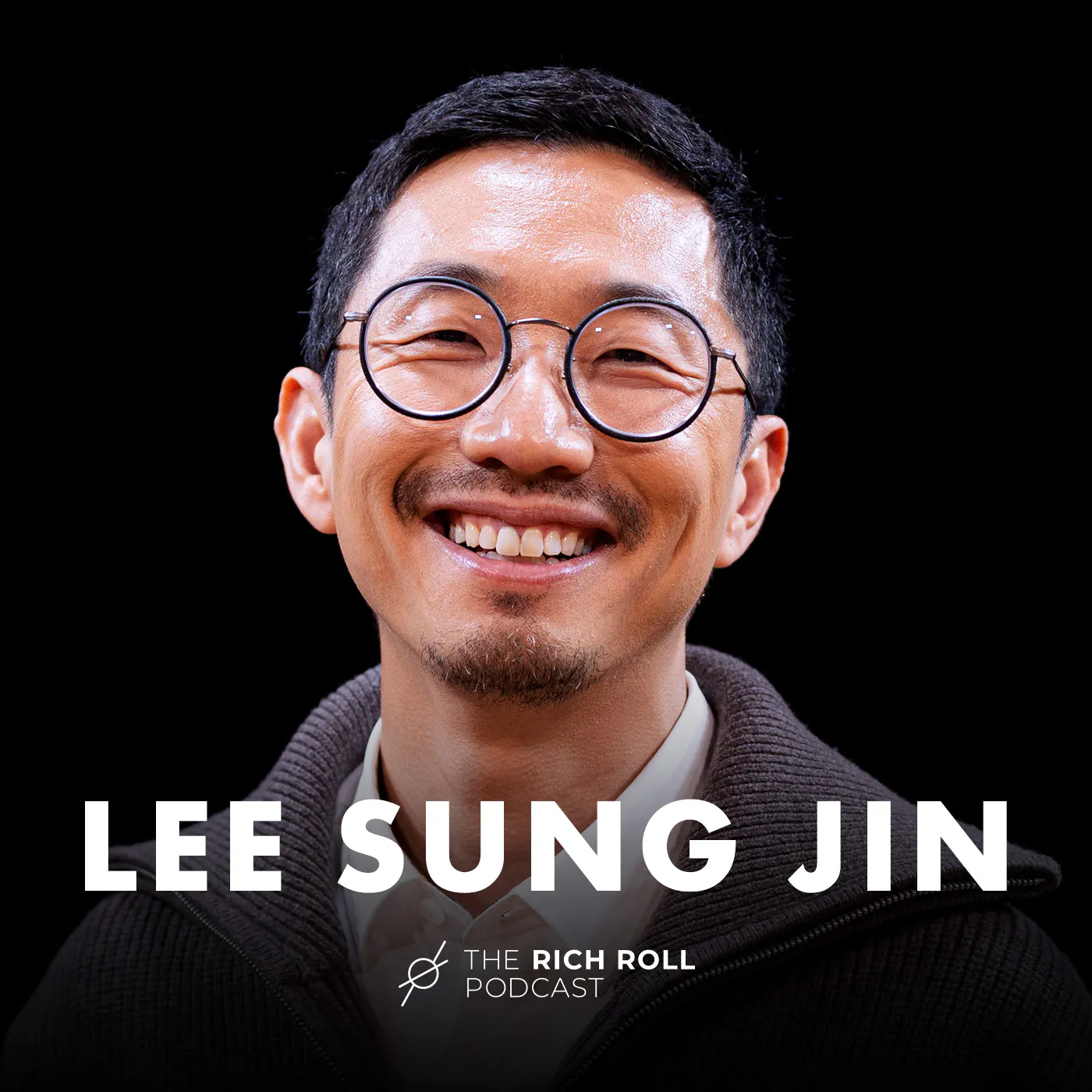
Overview of Lee Sung Jin On The Spirituality Of Netflix’s ‘Beef’
In this Rich Roll conversation, Beef creator Lee Sung Jin reflects on the deeply personal, spiritual, and psychologically layered themes behind the Netflix series, while also tracing his own journey from insecure striver to Emmy-nominated writer-director. The interview moves from trauma, depression, identity, and family dynamics into broader ideas about samsara, free will, generational cycles, and why telling very specific stories can create universal resonance.
Key Themes and Takeaways
Letting go is the central lesson
- Sung Jin returns repeatedly to the idea that “letting go is actually the thing”—a counterintuitive but core spiritual lesson in Beef.
- The show explores how people get trapped in loops of ego, control, and self-protection, and how real change often comes not from striving harder, but from surrender.
Pain can become art
- He speaks candidly about his depression, suicidal crisis in 2013, and the way that breaking point became a turning point.
- Rather than seeing that period only as damage, he frames it as the moment that forced him to ask:
- What is my intention as a friend?
- What is my intention as a son?
- What is my intention as a writer?
- That self-examination became the foundation for his creative work.
Specificity creates universality
- One of his strongest beliefs is that the more specific you get about a lived experience, the more universal it becomes.
- Beef works because it is rooted in highly particular cultural, familial, and emotional details—yet audiences recognize themselves in the characters.
Lee Sung Jin’s Personal Journey
From Korean immigrant kid to Hollywood showrunner
- Born in Korea, he moved between Korea and the U.S. and spent much of childhood feeling like an outsider.
- He studied economics at Penn and was initially headed toward investment banking, but instead moved to New York without a plan.
- His parents were initially confused and worried, but are now proud of his success.
Family background and sacrifice
- His father was a professor and briefly worked at Samsung, where he was involved in designing the company’s first supercomputer.
- Sung Jin says his father gave up that prestigious role to move the family back to the U.S. because of the harsh and violent Korean school environment at the time.
- He presents that sacrifice as a major example of parental love and protection.
Why he changed his name
- He was born Lee Sung Jin, but became known professionally as “Sonny” after struggling with mispronunciations in Minnesota.
- Later, he reclaimed his Korean name professionally as part of a broader move toward authenticity and self-acceptance.
Mental Health, Identity, and Spirituality
Depression and disconnection
- Sung Jin says his depression began young, tied to constant moving, insecurity, loneliness, and not feeling at home anywhere.
- He describes growing up in a way that made him feel like he was always mimicking others rather than being fully himself.
The “mask” and the crisis point
- Early in life and career, he often tried to survive by conforming to the people around him.
- He says this eventually led to a breaking point, both mentally and creatively, when the gap between his inner self and outward self became unsustainable.
Spiritual frameworks in Beef
- He and Roll discuss:
- Samsara: cycles of suffering and repetition
- Maya: illusion and misperception
- Wu-wei: moving with, rather than against, reality
- Jungian shadow work: confronting repressed parts of the self
- The show’s ending is intentionally open-ended, leaving viewers to interpret whether the characters are trapped, awakening, or both.
Why Beef Resonated
The show as shadow work
- Sung Jin believes part of the show’s appeal comes from its willingness to confront uglier, less socially polished parts of human behavior.
- The characters are not “bad” in isolation; they are acting from wounds, scarcity, attachment issues, and inherited patterns.
Collaboration creates texture
- He emphasizes that Beef was built through deep collaboration with actors and creatives, often via long, vulnerable conversations.
- Example: his first Zoom with Oscar Isaac reportedly lasted more than three hours.
- These conversations shaped the emotional texture of the show more than plot alone.
Tone is everything
- Sung Jin describes a deliberate tonal balance in Beef:
- psychological comedy
- bingeable momentum
- melancholy, emotional depth
- He stresses that intention must be crystal clear, or the audience feels the muddiness.
Season 1 vs. Season 2
Season 1: old wounds
- Season 1 is framed as an “old chapter,” rooted in his past, including his own brush with suicide.
- The aesthetic was intentionally grungy, messy, and emotionally raw, matching the characters’ state of mind.
Season 2: middle-age grief and love
- Season 2 shifts toward the present—middle age, time, parenthood, regret, and acceptance.
- The look and sound became more lush and painterly, with a more emotive score by Phineas.
- Sung Jin says he also drew from real life, including grief from losing a dog during production.
The finale and generational interpretation
- The ending was designed to be ambiguous and open to different readings.
- He notes that Gen Z, millennials, and older viewers often interpret the final episodes very differently.
- That difference, he suggests, is part of the point: as people age and circle the same “mountain” of life, they see it differently each time.
Relationships, Attachment, and Character Psychology
Ashley and Austin
- A major portion of the discussion focuses on the relationship dynamics in Season 2.
- Ashley is interpreted as having anxious attachment; Austin as avoidant.
- Their relationship is driven less by love than by old emotional wounds and the need for stability.
Why viewers react so strongly
- Sung Jin says audiences often reject characters like Ashley because they reflect uncomfortable truths about themselves.
- He and Roll discuss how audiences are often responding to mirrored traits rather than just fictional behavior.
Generational behavior
- He contrasts millennials and Gen Z:
- Millennials often seek external validation and use social media performatively.
- Gen Z tends to be more pragmatic and outcome-driven, especially around money and career.
- He admits he’s both fascinated by and worried about the internet’s role in shaping identity.
The Writing Career and Industry Perspective
Early years in writers’ rooms
- His first major break came through the NBC Page Program, then later It’s Always Sunny in Philadelphia.
- He describes learning how to write by watching shows, reading, and writing scenes with a partner.
Racism in early rooms
- Sung Jin speaks honestly about painful experiences as a writer of color, including racist jokes and moments where he stayed silent out of fear.
- He says he regrets not speaking up more, but also recognizes the power imbalance and the toll it took.
Confidence and younger generations
- He admires younger Asian-American writers who lead with confidence and identity.
- At the same time, he warns that identity alone is not enough—craft still matters.
- His advice: know your identity, but also master structure, story shape, and the mechanics of entertainment.
Marvel, X-Men, and What’s Next
Working on X-Men
- Sung Jin says he is currently focused on an X-Men project with Marvel and director Jake Schreier.
- He emphasizes Kevin Feige’s collaborative energy and childlike joy in the process.
- He is surprised by how fun and creatively open the experience has been.
Future of Beef
- He says he feels done with the series for now, though he leaves open the possibility of returning someday if inspiration strikes.
- In the meantime, he is focused on X-Men and other projects under his overall deal.
Notable Insights
- “Rock bottom can be your trampoline.”
- “To oppose something is to maintain it.” — a quote Sung Jin credits from Ursula K. Le Guin, helping frame the show’s spiritual logic.
- The most important creative work often comes from acceptance, not resistance.
- Storytelling is a way of breaking the isolation of the self and returning to shared human experience.
Final Impression
This interview presents Lee Sung Jin as both a sharp pop storyteller and a deeply introspective spiritual thinker. Beef is revealed as more than a dark comedy or prestige TV hit—it’s a work about trauma, attachment, generational inheritance, and the exhausting illusion of the self. The conversation ultimately suggests that the show’s power comes from its honesty: it doesn’t pretend people are simple, and it doesn’t pretend growth is easy.