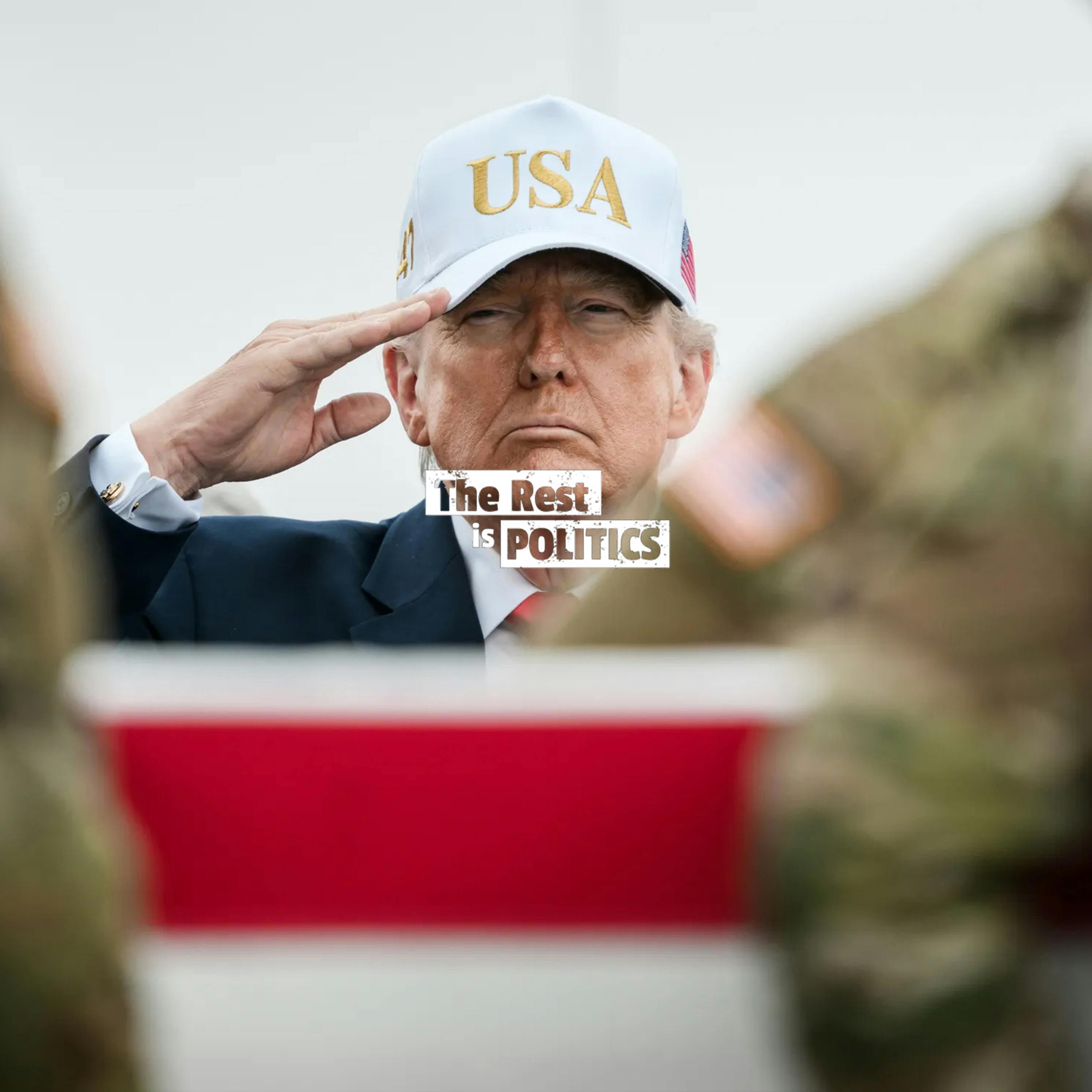
Overview of The Rest is Politics — 510. How The Iran War Is Spiralling Into a Global Crisis
Alastair Campbell and Rory Stewart discuss how recent US–Israeli strikes on Iran and Iran’s reprisals have snowballed into a wider geopolitical, economic and technological crisis. They trace immediate events (Gulf strikes, appointment of Mojtaba Khamenei as successor), analyse second- and third-order effects (oil, shipping, fertilizer, alliances), and argue this episode exposes fragility in the post‑war security architecture and the changing nature of warfare (cheap drones, electronic warfare, AI).
Key takeaways
- The conflict has moved rapidly from a regional tit‑for‑tat into a global shock with major economic and strategic consequences.
- Iran’s response (including strikes on Gulf targets) appears deliberate, calibrated and planned; it has raised oil prices, disrupted LNG and fertiliser supplies, and driven up shipping insurance and rerouting costs.
- The nature of warfare is shifting: cheap one‑way drones (Shahid‑type) and electronic warfare are undermining expensive air/sea platforms and depleting costly interceptors (Patriot missiles).
- The crisis weakens US credibility with allies, strengthens adversaries (Russia, China), and accelerates geopolitical realignment among “middle powers.”
- Humanitarian and infrastructural risks are rising (desalination plants, fertilizer shortages, food insecurity), with potential for nonlinear financial fallout.
Recent developments highlighted
- Mojtaba Khamenei — son of the late Supreme Leader — was appointed as the new Supreme Leader in Iran, signalling regime continuity rather than change.
- Iran launched strikes on Gulf targets (embassies, bases, infrastructure); some attacks were deliberately calibrated to pressure Gulf states hosting US forces while avoiding full escalation.
- Oil prices topped $100/barrel; US petrol prices spiking (estimates of potential $5+/gallon in US).
- Qatar halted LNG exports; UAE and Saudi oil exports fell sharply (examples cited: UAE down from ~5 → 1 million bpd; Saudi from ~7 → 3.5 million bpd).
- A desalination plant was hit, raising concerns about water security in the Gulf.
Geopolitical and strategic consequences
- Chokepoint vulnerability: the Strait of Hormuz’s centrality to global oil, LNG and fertilizer flows makes the region strategically fragile—threats to it have immediate global effects.
- US credibility: allies are alarmed by decision‑making and poor consultation. Perception of US unpredictability may prompt allies to seek alternative security/economic arrangements.
- Realignment: Russia and China are covertly assisting Iran (intelligence, electronic‑warfare assets); middle powers and Europe may explore new alignments independent of the US.
- Nuclear proliferation risk: states may reassess deterrence and consider nuclear options if they feel exposed to erratic regional actions.
Military & technological shifts
- Drone warfare: low‑cost attack drones (~$30–$35k) have changed calculus—expensive interceptors (Patriots) vs cheap drones is economically unsustainable.
- Electronic warfare and targeting: China reportedly provided an electronic warfare vessel to assist Iranian targeting; Russia has benefited economically (higher oil revenues).
- Autonomy and AI risk: trajectory toward autonomous/AI‑guided weapons is accelerating; legal, ethical and technical challenges remain acute.
- Supply constraints: Western air defence stocks and interceptors are being consumed rapidly, raising questions about readiness for other theatres (e.g., Taiwan, Ukraine support).
Economic and humanitarian impacts
- Energy: sharp oil and gas price increases; LNG disruptions; higher consumer fuel prices; fiscal strain on Gulf economies.
- Agriculture & food security: around a third of common nitrogen fertilizer flows through Hormuz—disruption will likely spike fertilizer prices and affect crop yields worldwide, hitting vulnerable countries hardest.
- Shipping & insurance: premium rises and long‑route rerouting (as seen in the Red Sea) increase costs and delays; shallow parts of Hormuz mean blockages (sunken boats/mines) could be devastating.
- Infrastructure & civilians: attacks on desalination and petrochemical facilities risk water scarcity and toxic pollution; schools and civilians are affected in Iran and elsewhere.
- Financial contagion: risk of broader market shocks, private credit stress and even recession due to energy shock and confidence loss.
Principal actors and their positions
- Iran: showing continuity and cohesion at leadership level; calibrated strikes aimed at Gulf states and US/Israeli assets; skilled at information operations and propaganda.
- US (Trump administration at time of discussion): criticised for planlessness, poor consultation with allies, and messaging that fuels unpredictability.
- Israel: likely to seek repeated options to degrade Iran’s capabilities; may view the present moment as a last chance to act decisively.
- Gulf states: trapped between hosting US forces (and being targets) and not wanting to be drawn into a wider war; economic exposure is high.
- Russia & China: benefiting materially (Russian oil sales) and strategically (providing tech/intel support to Iran).
- Middle powers/Europe: potential to form alternative coalitions; Germany and others reassessing dependency on US security/product chains.
Risks and second‑order effects to monitor
- Extended energy crisis and associated inflation → recession risk.
- Fertilizer shortages → food price spikes and humanitarian crises in poorer states.
- Erosion of trust in US security guarantees → shift in alliance structures and trade/tech decoupling.
- Acceleration of drone/autonomous weapon deployment and permissive norms for attacks on critical civilian infrastructure (desalination, ports).
- Nuclear proliferation as regional states hedge against unpredictability.
- Fiscal/financial instability via confidence shocks and private credit stress.
What the hosts recommend watching (actionable signals)
- Oil price trend and retail fuel prices in major economies.
- Resumption or continued suspension of Qatar LNG exports.
- Shipping patterns through the Strait of Hormuz (rerouting, delays) and insurance premium levels.
- Patriot and other air‑defence inventories and resupply timelines.
- Iran internal stability (protests, regime cohesion) and actions targeting critical civilian infrastructure.
- Chinese/Russian military/intelligence assistance to Iran.
- Fertilizer export volumes and price spikes.
- Any new Israeli plans or US operational escalations.
Notable quotes & framing
- “Trump’s Planlosigkeit (planlessness) is a danger.” — the German word used to capture the critique of US policy style.
- “This is the moment where the post‑war security architecture really crumbles.” — hosts warn the episode may mark durable damage to norms and alliances.
- Hosts argue renewables should be framed as resilience: reducing dependence on chokepoints like Hormuz would lessen strategic vulnerability.
Conclusions and calls to action from the episode
- The episode stresses the urgent need to reckon with strategic fragility created by energy dependence, single chokepoints and under‑resourced air‑defence inventories.
- Policy implications suggested: accelerate renewables for resilience, urgent diplomatic coalition‑building beyond binary alignments, and careful thinking about norms for autonomous weapons and protection of civilian infrastructure.
- Short term: watch economic indicators (oil, fertilizer, insurance) and diplomatic signals from Gulf states, China, Russia and Europe.