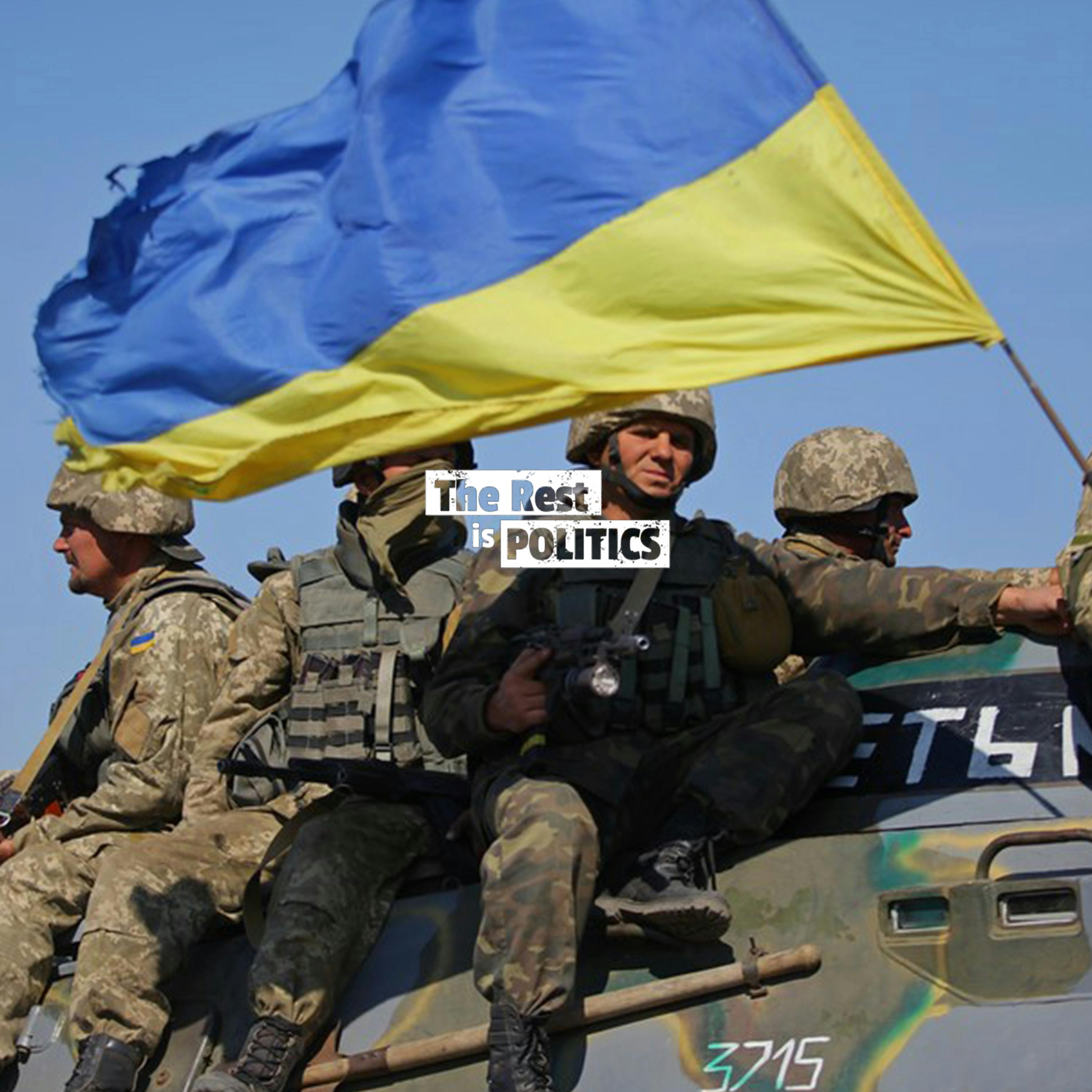
Overview of The Rest is Politics — Episode 505: Are Trump and Putin Underestimating Ukraine?
Rory Stewart hosts this episode with on‑the‑ground reporting from Alastair Campbell, who is in Kyiv for the fourth anniversary of Russia’s full‑scale invasion. The conversation covers what Campbell saw and heard in Ukraine (Maidan events, civil society, damaged infrastructure), the shifting military and political balance, debates over EU accession and reform, and how US policy (and Trump‑aligned negotiators) are perceived in Kyiv. The episode mixes eyewitness detail, strategic analysis, and policy recommendations for Europe and the West.
Main topics covered
- On‑the‑ground impressions from Kyiv (Maidan, Zelensky, damage, civilian stories)
- Ukrainian morale, creativity and the problem of “praising resilience”
- Security and political pressure around Zelensky (constant assassination risk and heavy security)
- Recent diplomacy: Geneva talks, the “Wyckoff/Whitcoff” U.S. negotiation strand, and the Coalition of the Willing
- The U.S. role vs. Europe’s role — cuts in U.S. support, European spending and leadership
- EU enlargement and proposed “reverse membership” / gradual integration idea for Ukraine and Moldova
- Sanctions, the “shadow fleet” and continued Russian oil exports (India/China links)
- Corruption and reform debates inside Ukraine, and implications for EU accession
- Human cost, casualty figures, displacement and reconstruction needs
- Wider geopolitical impact: China, India, NATO enlargement, and global shifts
- Sport and politics (debate over Russian athletes at Paralympics)
Key on‑the‑ground observations
- Maidan ceremony: powerful symbolic tribute to the fallen; Zelensky present but visibly stressed and heavily secured.
- Everyday Kyiv: life continuing (shops, public movement) juxtaposed with visible cratered buildings and recent missile damage — civilians carry the psychological and physical toll.
- Creative resistance: arts, poetry, repurposed infrastructure (e.g., damaged train carriages used as an ICU and children’s recovery compartments).
- Civil society voices: intense appetite for EU membership, impatience with slow reforms, and insistence that Putin must be defeated.
Notable data points and human costs reported
- Total military casualties (combined killed and wounded): ~1.2 million; projection to 2 million if war continues at the same pace.
- Russian military deaths cited: ~325,000 (speaker stressed this is an extraordinary, unprecedented loss).
- Ukrainian military casualties: between 500,000 and 600,000; fatalities estimated 100,000–140,000.
- Reconstruction needs (World Bank / UN / EU assessment): estimated damage so far ~USD 600 billion (housing, transport, energy, commerce most affected).
- Displacement: ~4.7 million Ukrainians in the EU; broader total displaced (internal + abroad) referenced at roughly 11 million.
(These figures are presented in the episode as reported from briefings and published assessments.)
Geopolitics and diplomacy: U.S., Europe and negotiating posture
- Perception in Kyiv: growing frustration with the U.S. (especially Trump‑aligned negotiators) and fear U.S. position could enable a “frozen” settlement unfavorable to Ukraine. Several interviewees interpret signals from Trump/Whitcoff as sympathetic to Russian demands.
- U.S. actions: significant reduction in financial/weapon support (referenced $50bn cut); but continued U.S. intelligence support in some strikes (e.g., enabling long‑range Ukrainian strikes around radar coverage).
- Europe’s response: Europe (and the UK) has increased spending and weapons procurement; debate over whether Europe should take a leading role in negotiations if the U.S. steps back.
- Geneva talks: recent talks with U.S. envoy “Wyckoff” and Russians reported as unproductive; European leaders reportedly turned up uninvited to engage directly with Ukraine.
EU accession and reform debate
- Strong public desire: polls referenced—~75% of Ukrainians would accept economic sacrifice to join the EU.
- Commissioner for enlargement (Marta Kos) present on the trip: argues current accession methodology (peacetime model) is not fit for wartime, suggesting faster or alternative routes.
- Proposed ideas: “gradual integration” or “reverse membership” — formally declare countries European while leaving some reforms to be completed after accession (bringing in a phased model to speed political and security alignment).
- Internal challenge: criticism from civil society that Ukrainian reforms (especially anti‑corruption) are too slow and oligarchic influences remain.
Sanctions, the “shadow fleet”, and energy/leverage
- Shadow fleet: vessels not flagged as Russian used to export Russian oil; EU/UK have increased sanctions on such shipping but campaigners urge more action to choke Russia’s oil revenue; U.S. reportedly less active in sanctioning shadow fleet in the last year.
- Russia’s external buyers: pivot to China, India and others has blunted sanctions’ impact; cheap Russian oil/energy reshapes regional alignments (e.g., India benefits).
- Hungary/Orban: political standoff — Hungary and Slovakia have used energy interdependence as leverage (Hungary threatened/vetoed EU loan package until oil transit resumed). This complicates EU unanimity on aid and sanctions.
Corruption, politics and security inside Ukraine
- Civil society voices: strong criticism that some people around Zelensky are benefiting corruptly; however, interviewees largely support Zelensky himself and see no credible alternative mid‑war.
- Reform urgency: many Ukrainians argue that a visible, credible anti‑corruption push is required to strengthen EU accession prospects.
- Election complexities: conducting free elections during wartime is practically and legally fraught (martial law, millions displaced, cyber threats, servicemembers abroad).
Strategic and moral themes
- Resilience vs. relief: commentators in Kyiv resent “resilience” being framed as a substitute for more decisive support; praising resilience can be used to justify inaction.
- Morale and national pride: the episode argues these intangible factors have been decisive in Ukraine’s defense and are often under‑counted in conventional analyses focused on hardware or GDP.
- Risk of a premature frozen deal: concern that a negotiated freeze could leave Ukraine vulnerable while Russia consolidates gains; comparison to possible similar dynamics in Gaza.
Recommendations and actions discussed
- Europe should assume greater leadership in finance, weapons, and negotiations if U.S. support wanes.
- Urgent actions urged by interviewees: step up maritime/sanctions pressure (target shadow fleet), accelerate provision of missiles and long‑range strike capability, and supply the budgetary resources Kiev needs.
- Consider creative EU accession mechanisms (gradual/reverse membership) to bind Ukraine into European structures more quickly while allowing reform to continue.
- Push for tougher, enforceable anti‑corruption measures domestically in Ukraine to strengthen political legitimacy and accession prospects.
Notable quotes and soundbites
- “All they want to do is kill Zelensky. He is the number one target of the entire Russian machine.”
- On U.S. negotiator’s language: “This is a very silly war” — phrase from a U.S. commentator that alarmed interviewees.
- From a Ukrainian journalist quoted: praising resilience can become an excuse not to send a lifeboat — “If Ukraine’s partners were to give the kind of support Kiev continually begged for, civilians would not have to be suffering.”
Bottom line / Takeaway
Campbell’s reporting portrays a country deeply scarred but fiercely determined, increasingly impatient with external rhetoric that emphasizes resilience over substantive support. Strategic momentum on the ground is more mixed than many outside assessments expected: Ukraine has surprised with long‑range strikes and selective counterattacks, but the human and reconstruction costs are enormous. The episode argues Europe must be prepared to step up materially and politically (including exploring novel accession pathways) if the U.S. reduces its role — otherwise Ukraine risks being forced into an unfavorable freeze while Russia consolidates gains.
If you want, I can produce a one‑page quick briefing (bullet list) for policymakers summarizing recommended immediate actions and strategic risks.