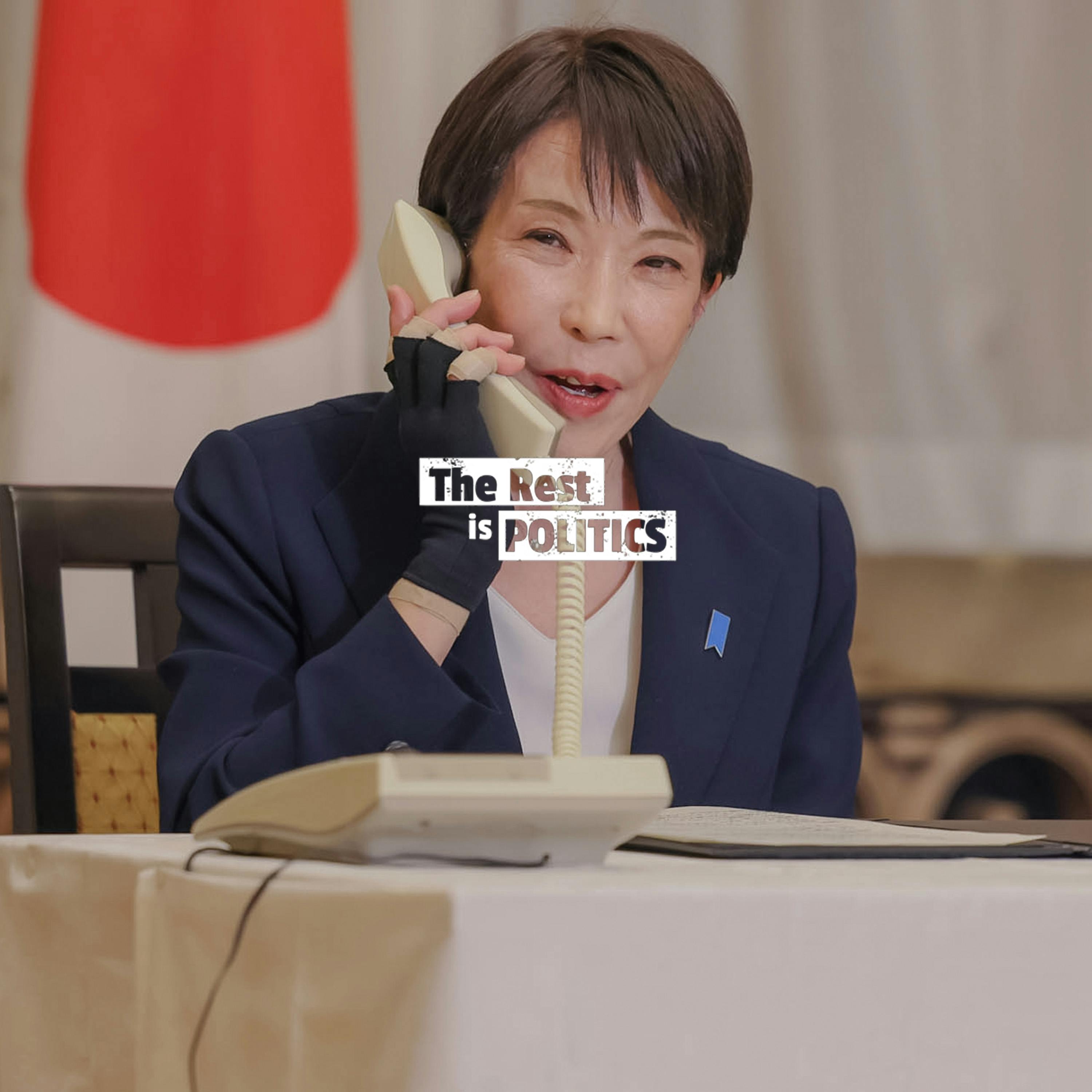
Overview of The Rest Is Politics — Episode: "500. Japan, China, and the Fight for Taiwan (Question Time)"
Hosts Alastair Campbell and Rory Stewart answer listener questions in a wide-ranging "Question Time" episode. Main topics: Japan’s surprise election under Prime Minister Sanae Takaichi and its implications for China–Taiwan security; the Portuguese presidential runoff and what it teaches about countering the far right; a mix of sports and culture (Winter Olympics, Super Bowl halftime); environment policy and nature’s place in government; and personal reflections on happiness and mental health.
Japan’s election and the Indo‑Pacific
-
Election result and why it mattered
- Sanae Takaichi (correct spelling) secured a landslide for the governing Liberal Democratic Party (LDP), moving the party from minority to a dominant majority in the lower house. The snap campaign was short, in bad weather and during exam time—conventional wisdom said it shouldn’t work, but it did.
- Takaichi is a right‑wing, Abe-aligned figure (she models herself on a Thatcher/Abe style) who campaigned on nationalist and security themes as well as bold economic measures.
-
Geopolitical implications
- For the first time as prime minister she explicitly stated Japan would effectively defend Taiwan against China—this raises the possibility of Japan being willing to participate in military action in the Taiwan Strait.
- Her government’s closer alignment with the U.S. security posture in the Indo‑Pacific will be amplified in Beijing’s messaging, and China has already responded with economic measures (tourist advisories, bans on some imports) and sharp rhetoric.
- Key risk: if the LDP uses its supermajority to pursue constitutional revision that allows a more overtly militarized Japan, the post‑WWII security balance in East Asia could shift markedly.
-
Domestic economic and social policy
- Takaichi is proposing looser monetary/fiscal policy, big spending and tax cuts (e.g., consumption tax relief) — markets reacted positively short‑term, but Japan’s very high debt/GDP ratio is a long‑term concern.
- Tougher immigration rhetoric (to counter a rising far‑right party) runs against Japan’s demographic needs — Japan faces severe ageing and low birth rates and needs workers.
- Tourism and trade links with China are vulnerable to political retaliation.
Portugal presidential election — lessons about countering the far right
- Context
- Portugal’s runoff system (two rounds) forced a head‑to‑head in the second round between a mainstream candidate and André Ventura (Chega), a rising far‑right figure.
- What happened
- Civil society, cross‑party elites, the Catholic Church and many mainstream politicians rallied to block the far‑right candidate in the second round, demonstrating an effective temporary coalition against an authoritarian/populist surge.
- Takeaway for other democracies (e.g., UK)
- Coordinated anti‑far‑right mobilization can work in a two‑round system. But the underlying rise of populist/far‑right energy remains significant and should not be taken for granted as defeated.
Sport and culture highlights
- Winter Olympics
- Hosts’ opening ceremony praised for unity messaging. Rory (a keen skier) discusses why winter sports are especially compelling: technical nuance, changing course conditions, and smaller, emotionally intense crowds.
- Super Bowl halftime — Bad Bunny
- Bad Bunny’s Spanish‑language, Puerto Rico–rooted halftime show was celebrated for joy and community by many; it also drew criticism from political figures who complained about language and style.
- The episode discusses political reactions (notably from some U.S. right‑wing figures), the cultural disconnect it reveals, and the broader point that U.S. Hispanic/Latino voters are an increasingly pivotal and not monolithic electorate.
Environment: the 25‑Year Plan and breaking silos
- Concern: environmental policy risks being siloed inside DEFRA despite clear cross‑government value.
- Points raised
- Biodiversity loss is acute in the UK; nature policy should link to health, social prescribing, urban planning, farming and climate policy.
- A bold proposal: transform parts of London’s greenbelt into native, long‑term forest (oaks etc.) — multiple co‑benefits for climate, biodiversity, public health and legacy.
- Recommendation: elevate nature across ministries, invest in large, visible public‑facing projects that generate political and public momentum.
Wellbeing, culture and personal reflections
- Happiness perspective
- Rory frames happiness as long‑term fulfillment (a sense of meaningful projects and legacy) rather than momentary pleasure. Adversity and low moments can be drivers of purposeful work.
- Personal sources of hope and joy
- Skiing, crafts and artisan work (exhibition featuring craftspeople from Afghanistan, Myanmar, Palestine), and cathartic cultural experiences (the film Hamnet) are cited as restorative.
- Rory’s writing
- He references books he’s written on happiness and depression, framing practical ways to live with both highs and lows.
Key takeaways / action items
- For watchers of Asia:
- Monitor Takaichi’s use of her parliamentary supermajority (constitutional revision, defence policy).
- Expect Beijing to use economic levers and historical narrative to push back; watch tourism and trade signals.
- For democrats/progressives:
- Cross‑party and civil‑society coalitions can block far‑right breakthroughs in runoff scenarios — but organization must be sustained and not just reactive.
- For UK policymakers:
- Stop siloing nature in a single department; consider large, symbolic projects (e.g., reforesting the greenbelt) that combine health, climate and social benefits.
- For civic engagement:
- Younger generations remain politically engaged via social platforms (TikTok etc.) and can shape narratives — don’t underestimate youth mobilization.
Notable insights and quotes (paraphrased)
- “Japan matters—its political turn could change the Indo‑Pacific balance and the security architecture that’s held since WWII.”
- “Winning elections builds reputational currency; Takaichi has just acquired a huge reserve of it.”
- “Nature policy must stop being a DEFRA-only project; it’s fundamentally cross‑governmental and cross‑societal.”
- “Happiness is long‑term fulfillment built through projects and meaning, not merely momentary pleasure.”
Who’s mentioned (selection)
Sanae Takaichi, Shinzo Abe, Koizumi (LDP scion), André Ventura/Chega (Portugal), Bad Bunny, JD Vance, Alastair Campbell, Rory Stewart.
This summary captures the episode’s core arguments and practical implications for foreign policy watchers, environmental advocates, and citizens concerned about democratic resilience.