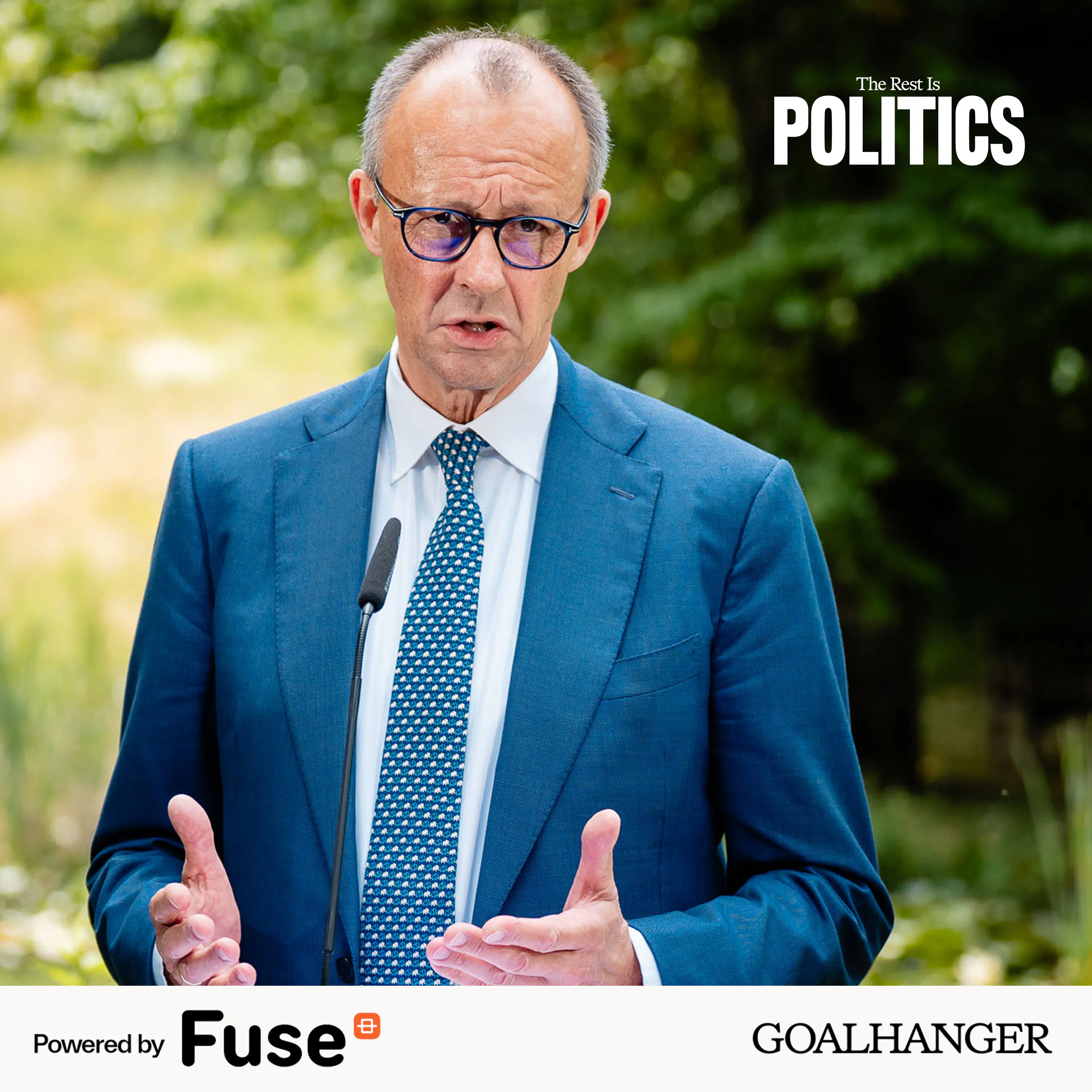
Overview of The Rest Is Politics: Leading — Germany’s Political Disaster and the Lib Dems’ Future
This episode is a wide-ranging listener Q&A that opens with a deep dive into Germany’s shock regional election results, where the far-right AfD surged and the CDU collapsed in Angela Merkel’s old political territory. Rory Stewart and Alastair Campbell then move through a set of domestic and political topics: the pressures facing rural Britain, the Liberal Democrats’ struggle to turn parliamentary gains into a bigger national force, attacks on the RNLI, the value of longer-form interviews, and what gives them hope in a turbulent political era.
Germany’s “Political Earthquake”
What happened
- In Mecklenburg-Western Pomerania (Merkel’s former political base), the AfD topped the poll, while the CDU won no seats.
- In Berlin, the hard-left Die Linke also performed strongly, pushing the CDU out of government there.
- The hosts describe both results as signs of a major political earthquake, not just a routine local upset.
Why it matters
- Germany is framed as:
- the third-largest economy in the world
- central to the future of the EU
- increasingly important for European defence funding
- Both the AfD and Die Linke are treated as potential threats to Germany’s stability and to its alignment with the EU and NATO.
Main takeaway
- The episode argues this is not just a German domestic story: it has major implications for European security, NATO, and the broader future of the West.
Friedrich Merz, the CDU, and the Rise of Extremes
Should Merz be replaced?
- The hosts discuss whether CDU leader and Chancellor Friedrich Merz could or should be replaced.
- The conclusion: it would be extremely difficult, because removing him would likely trigger a vote of no confidence and potentially a general election the CDU would likely lose.
The “firewall” problem
- The discussion returns to Germany’s Brandmauer — the “firewall” preventing mainstream parties from governing with the AfD.
- The same logic is increasingly applied to Die Linke, due to its radical left positions and concerns about antisemitism and anti-Western politics.
- The hosts suggest that if mainstream parties do not manage extremism carefully, the firewall can effectively collapse through political normalisation.
Communication and leadership
- Merz is seen as having the right broad instincts on reform, but the episode questions whether he is connecting emotionally or politically with voters.
- His Ukraine stance is praised, but the hosts argue that his messaging may not be landing in a political climate shaped by distrust of the “uni-party” establishment.
Rural Britain: Farming, Taxes, and Neglect
The central problem
- A listener question from Minette Batters sparks a discussion of rural decline and government policy.
- The hosts argue that rural communities feel ignored and under pressure, especially because of:
- tax policy
- declining public services
- transport cuts
- the worsening impact of drought and climate change
Inheritance tax and family farms
- A major issue discussed is the inheritance tax treatment of farms:
- many farms are income-poor but asset-rich
- family farms are often passed down across generations
- current policy risks forcing sale or fragmentation of working farms
- The hosts say official figures claiming “almost nobody is affected” do not reflect the reality in many constituencies.
Bigger rural concerns
- Other pressures highlighted:
- disappearing rural buses
- closure of local courts, banks, police stations, and hospitals
- the hollowing out of rural life
- The episode argues that rural policy should be about growth in every postcode, but tailored to rural realities, not urban assumptions.
Political angle
- The hosts suggest rural issues should not be reduced to hunting and shooting.
- They see an opportunity for Labour to build a more credible rural strategy, especially given its increased number of rural MPs.
Can the Liberal Democrats Break Through?
The problem
- The Lib Dems are seen as having parliamentary strength but not enough national energy or ambition.
- Despite holding around 70 seats, they are described as failing to animate the “middle third” of voters:
- younger
- more optimistic
- more socially liberal
- more internationalist
Media and visibility
- The hosts argue that the media under-covers the Lib Dems compared with smaller but louder parties like Reform.
- They say the party should be treated as a serious national actor, not as a side note.
What the Lib Dems need
- The episode suggests the party should:
- behave like a government-in-waiting
- campaign more aggressively and nationally
- project more confidence and ambition
- Ed Davey is said to have “fire in his belly” but not yet the sense of a leader who can drive the national conversation.
Listener Questions and Quickfire Topics
Longer interviews
- The hosts debate whether they should do two- to three-hour interviews.
- They joke about whether listeners would really stay engaged, but agree that long-form conversations could be interesting if the right guest were chosen.
Languages vs instruments
- Asked whether they would rather be a master of languages or instruments, both lean toward languages.
- Rory notes that being able to speak other languages deeply enriches travel and engagement with the world.
The RNLI and far-right attacks
- The episode strongly condemns attacks on the RNLI.
- The hosts criticise far-right activists who have:
- targeted RNLI volunteers
- published names and addresses online
- accused the charity of helping migrants
- They defend the RNLI as a life-saving organisation that rescues people in dangerous seas, regardless of politics.
Rory’s LSE role
- Rory mentions his new role teaching at the London School of Economics.
- He says he wants to talk to students about:
- the reality of politics
- public service
- hope
- how to navigate a changing world shaped by Trump, AI, and geopolitical instability
Hope, Technology, and the Future
What gives them hope
- A listener cites Sir Tim Berners-Lee, asking what gives the hosts hope in an era of technological and geopolitical disruption.
- The response:
- people like Mark Carney and Berners-Lee are shaping constructive models of global cooperation
- AI may require new forms of international coordination, like a “CERN for AI”
- local devolution, civil society, and alliances of middle powers could help build a more stable future
The broader message
- Despite the grim political headlines, the episode ends on a relatively hopeful note:
- public life is still capable of renewal
- young people often have a better sense of the world than they are given credit for
- politics should aim not only to manage decline, but to build trust and possibility
Key Takeaways
- Germany’s regional elections are treated as a warning sign for Europe, not just German politics.
- Extremist parties on both left and right are reshaping the political landscape and testing democratic firewalls.
- Rural Britain is under real strain, and government policy needs to reflect the realities of farms and countryside communities.
- The Liberal Democrats have the numbers but not yet the momentum to become a true national force.
- Attacks on the RNLI are condemned as dangerous and disgraceful.
- Despite everything, the episode ends by arguing that hope still comes from institutions, cooperation, and people willing to think beyond short-term politics.