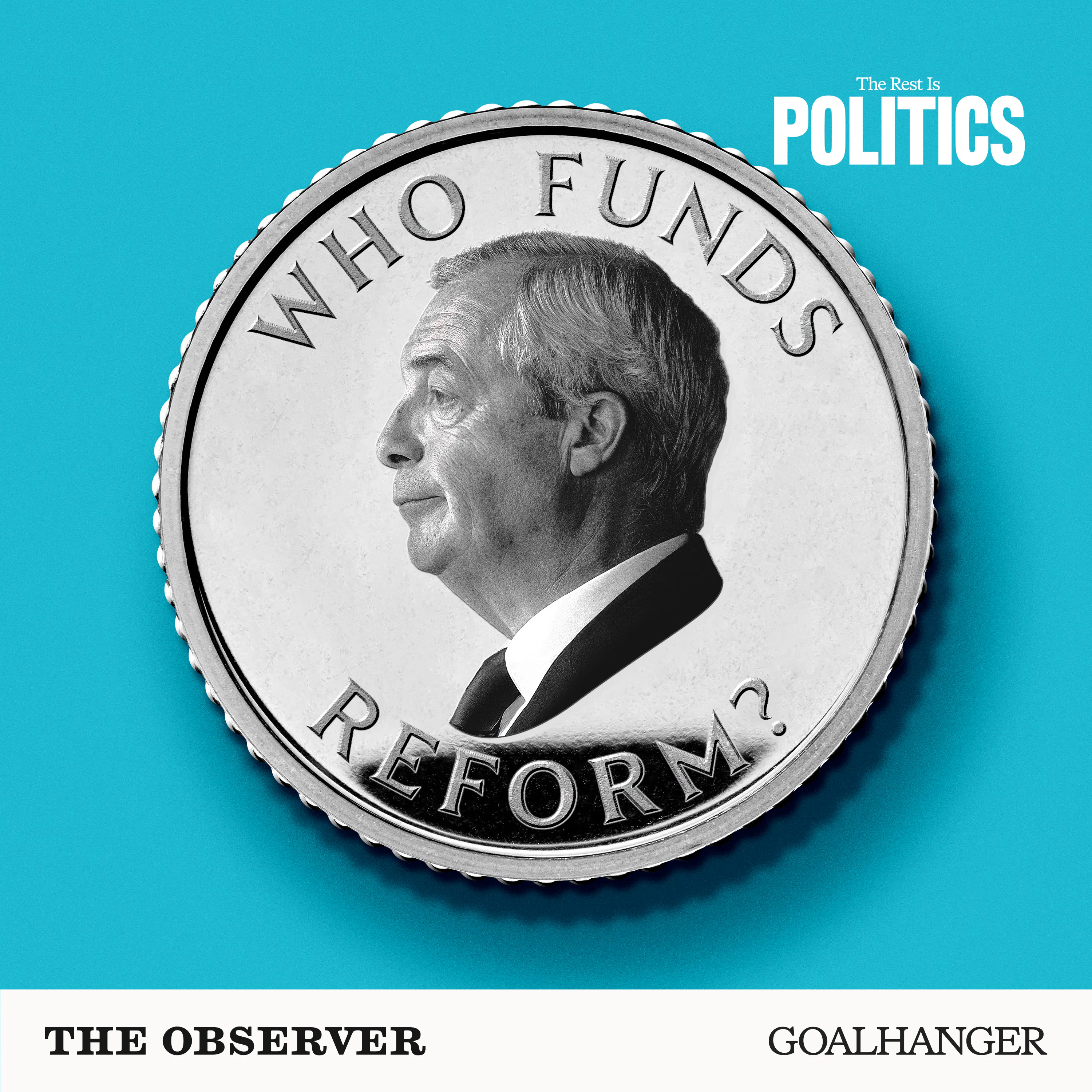
Overview of 550. Will Farage's Extreme Wealth Be His Downfall?
This episode of The Rest is Politics examines the growing controversy around Nigel Farage’s personal wealth, particularly the reported £5 million gift from crypto billionaire Christopher Harborne and his large outside earnings as an MP. Alastair Campbell and journalist Kat Nealon discuss how Farage’s self-styled image as a champion of “ordinary people” is being undermined by revelations about elite money, possible undeclared income, and the wider funding ecosystem around Reform UK. The conversation also considers whether this could damage Farage politically, whether Reform is beginning to plateau, and whether the party is still inseparable from Farage himself.
Key Themes and Takeaways
Farage’s wealth is becoming a political liability
- Farage has been accused of hypocrisy for presenting himself as a “man of the people” while receiving very large sums from wealthy backers.
- The biggest flashpoint is the £5 million gift from Christopher Harborne, which was not initially declared.
- His outside earnings are extraordinary even by Westminster standards, including:
- £270,000 for 12 hours of work from Direct Bullion.
- A long-running relationship with GB News, which has paid him even more overall.
The core issue is transparency, not just morality
- Kat stresses that the key question is whether Farage should have declared the money, not how he spent it.
- The episode notes that a standards commissioner investigation is ongoing.
- There is also a possible legislative route: an amendment to the Elections Bill / Representation of the People Bill could force MPs to declare certain large sums received before taking office.
Farage’s “nothing to see here” response may be hurting him
- Farage’s repeated line that the money is “nobody’s business” is seen as brittle and Trump-like.
- The hosts argue that this style may work with his base, but it also reveals defensiveness and thin skin.
- His response to scrutiny, especially from women journalists, is described as particularly combative.
Reform UK’s brand is being tested
- The episode suggests Reform’s funding model and donor relationships are increasingly under scrutiny.
- Reform’s structure as a limited company does not change the rules on political donations, but it does raise questions about control and influence.
- Kat says there is growing interest in:
- who is funding Reform,
- what they expect in return,
- and whether the party’s public messaging aligns with its private backers.
Security claims around Farage are viewed skeptically
- Farage has argued he needs high-level security because of threats against him.
- Kat and Alastair question whether the scale of security is sometimes performative.
- They note that MPs do face genuine risks, but Parliament typically provides tailored protection, and Farage’s claims can sound exaggerated.
- Alastair highlights how offensive it sounded for Farage to invoke security concerns in the week of the 10th anniversary of Jo Cox’s murder.
The public may be less outraged than Westminster
- In Clacton, many voters had not even heard the full story.
- Those who had often called it “disgusting” or hypocritical, but this did not necessarily translate into changed voting intentions.
- Many voters were described as cynical about all politicians, seeing them as broadly self-interested.
- The biggest local concerns remained practical issues like:
- potholes,
- dog mess,
- e-bikes and e-scooters,
- and local representation.
Reform’s Future: Is Farage Essential?
Farage is still the party’s main asset
- Reform continues to be heavily tied to Farage’s personal brand.
- The discussion suggests the party is aware of its “one-man band” problem and has tried to bring in figures like:
- Robert Jenrick
- Suella Braverman
- Nadim Zahawi
- Zia Yusuf
- Even so, none are seen as having Farage’s ability to cut through with voters.
Could Farage step aside?
- There is speculation that if Reform’s poll numbers plateau or decline, Farage could choose to frame himself as the man who “got them this far” and leave before a final test.
- But both hosts think the draw of power makes that unlikely.
Rival Threats and Internal Tensions
Rupert Lowe and Restore could split the right
- The conversation identifies Rupert Lowe and his movement Restore as a possible threat to Reform, especially in target seats.
- On a national level, Restore is not seen as a direct replacement for Reform, but it could split votes enough to matter locally.
- The hosts note that this is similar to what Reform has done to the Conservatives.
Reform’s internal pecking order is uneasy
- The arrival of high-profile defectors and ambitious figures may create friction.
- Zia Yusuf, Robert Jenrick, and Richard Tice are all discussed as figures who may see themselves as future leaders.
- The episode hints at tensions, rivalry, and ego within Reform’s upper ranks.
Brexit and the Bigger Political Picture
Farage still escapes blame for Brexit’s fallout
- The hosts revisit the question of why Farage is not more widely held accountable for Brexit’s damage.
- Kat argues that many supporters simply see him as someone who fought and won a cause, while the failures afterward were the responsibility of others.
- Westminster politicians are also reluctant to foreground Brexit because of electoral risks and lingering trauma around the process.
Reform thrives on a sense of grievance
- The broader political context includes:
- post-financial crisis resentment,
- Brexit,
- inflation,
- and a general sense of decline.
- The episode argues that Farage succeeds because he gives people someone to blame.
- But it also suggests that a more optimistic, constructive political message could still cut through if offered convincingly.
What Happens Next?
Likely future developments
- A standards investigation may determine whether Farage breached parliamentary rules.
- Further reporting could uncover more undisclosed income or clarify the scale of his holdings and links to media and crypto interests.
- The question of whether he should have declared his GB News shareholding may also become more prominent.
- Reform’s funding and donor network will likely remain a major subject of scrutiny.
Bottom line
- The episode’s central argument is that Farage’s wealth is not just a personal issue — it cuts to the heart of his political identity.
- If Reform wants to remain credible as a party of “ordinary people,” its dependence on elite money and wealthy backers may become increasingly hard to hide.