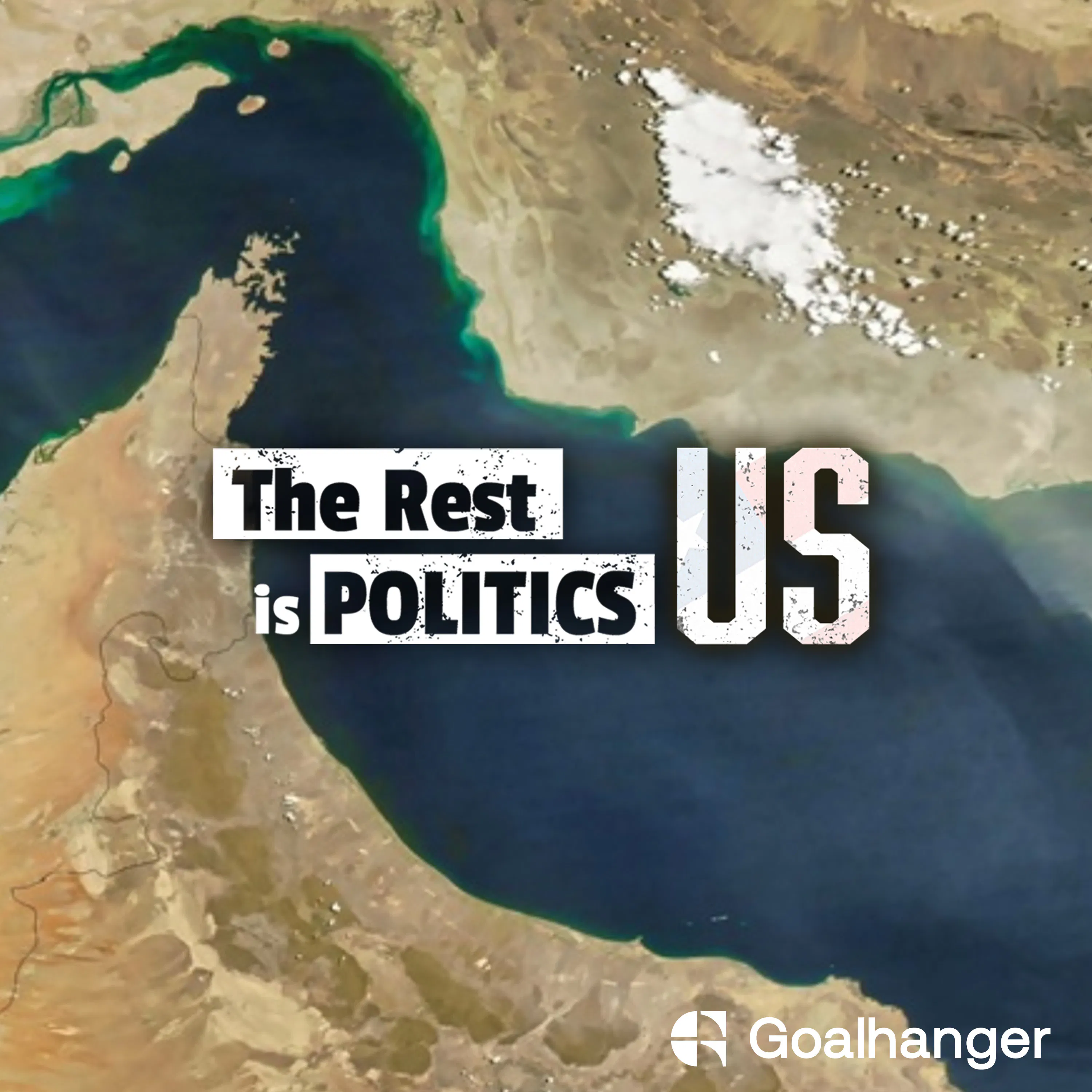
Overview of The Rest is Politics US — Episode 168: Why Trump Can't Win This War Alone
Hosts Katty Kay and (normally Anthony) interview veteran diplomat Richard Haass to assess the state of the U.S.–Iran conflict, what options President Trump faces, the fissures inside the White House, and whether allies will rescue the administration. The conversation emphasizes that the president miscalculated the campaign’s costs and complexity, that time and supply‑chain pressures are forcing choices, and that neither escalation nor de‑escalation is an attractive or easy path.
Key points and main takeaways
- Trump and his team appear to have underestimated Iran’s capabilities and resolve; the campaign has not gone as quickly or cleanly as they expected.
- Two concrete objectives Trump needs to claim “victory”: reopen the Straits of Hormuz and secure a ceiling on Iran’s nuclear program.
- Time pressure is acute — Haass and others estimate the administration cannot tolerate the Straits being effectively closed beyond roughly three more weeks without major economic and supply‑chain consequences (oil, LNG byproducts like helium, insurance/disruption effects).
- Escalation has diminishing returns, low odds of forcing Iranian capitulation or regime change, and significant risk of widening the war (e.g., major attacks on Gulf states).
- De‑escalation requires negotiation and concessions (nuclear limits, non‑attack pledges, sanctions relief, military posture) — politically painful for Trump but arguably the more plausible path to restore normalcy.
- Operationally and politically, allied help to escort tankers is unlikely: navies are reluctant to expose expensive vessels in narrow, easily attacked waters; Europeans are also hesitant given lost goodwill and domestic pressures.
- Strategic winners so far: Russia (higher energy revenues, U.S. distraction from Europe/Ukraine) and China (U.S. military attention diverted from Indo‑Pacific/Taiwan; continued energy access).
Options for the president — escalate vs. de‑escalate
- Continue the military campaign (escalate)
- Rationale: try to degrade Iran’s capabilities, force concessions or regime collapse, claim victory.
- Problems: diminishing returns (most missiles/drones already used or destroyed), unacceptable environmental risks if nuclear sites are hit, strong likelihood Iran resists rather than capitulates, and risk of broader regional escalation.
- Negotiate and de‑escalate
- Rationale: secure reopening of the Straits and a nuclear ceiling via diplomacy to permit a face‑saving “win.”
- Problems: requires concessions and a credible inspection/enforcement regime; Trump must accept an outcome that is not complete military victory; Iran and third parties will leverage U.S. vulnerabilities.
Timeframes and practical constraints
- Straits of Hormuz: administration reportedly believes it cannot tolerate sustained closure beyond about three weeks without serious economic/supply consequences (oil, gas, helium used in semiconductor production).
- Logistics and readiness: U.S. forces are not pre‑positioned for some contingencies (e.g., escorting tankers or rapid arrival of minesweepers/MEUs), reflecting lack of planning and hollowed NSC/staff.
- Insurance and shipping: a few mines or successful drone/speedboat attacks can quickly make insurers pull out, amplifying disruption even if naval presence is increased.
White House splits and internal dynamics
- Two camps:
- Escalators: described as people like Lindsey Graham, Jared Kushner, and certain influencer/real‑estate backers; pushing for stronger military pressure and tighter alignment with Israel’s goals.
- De‑escalators: including J.D. Vance, Marco Rubio, many tech executives, and others warning against widening the conflict and prioritizing a rapid diplomatic solution.
- The president’s style complicates decision‑making: Haass emphasizes Trump’s improvisational approach, dislike of planning, top‑down control, and reluctance to heed advisers who say “no.”
- Leaks and blame‑shifting are already occurring inside the administration, as staff try to cover their tracks and influence public perception.
Allies and international response
- NATO/Europe:
- Europeans are reluctant to commit naval escorts inside the Straits without being part of a larger political plan and without clear safeguards.
- Haass advises a “yes, so long as” approach from Europe: offer conditional support tied to a broader negotiating/diplomatic framework that addresses nuclear limits and shipping rules.
- Europe lacks some of the specific capabilities (e.g., sufficient minesweepers) and has less appetite for being drawn into an open‑ended campaign.
- Middle East partners:
- Gulf states worry about their own exposure; massive Iranian attacks on Saudi/UAE/Qatar would widen the war and complicate options.
- China and Russia:
- Both gain strategically and economically: higher energy prices and U.S. distraction help Russia and China. China has been quiet publicly but benefits from U.S. focus elsewhere and secured energy ties.
- Possible transactional diplomacy:
- Haass notes possible bargaining chips (e.g., sanction easing on Russian oil tied to security guarantees for Ukraine), but these are politically fraught and risky for Ukraine’s leadership.
Notable quotes and insights
- “He let loose the dogs of war” — framing Trump’s campaign as a rushed military move lacking planning and realistic assumptions.
- “You never want to be surprised when you're president.” — planning matters; lack of it exposes a presidency to unwelcome constraints.
- “This is the most top‑down administration. I've worked for four. I've never seen anything in the same zip code as this.” — Haass on White House management and its consequences.
- Escalation’s limits: “I think the arguments for continuing the war get weak.”
Risks to watch and short list of indicators
- Status of the Strait of Hormuz (reopened, intermittent closures, continued attacks).
- Any major Iranian strike on Gulf oil infrastructure (Saudi, UAE, Qatar).
- Allied offers: whether Europe or regional partners commit naval assets or a diplomatic package.
- U.S. domestic economic signals: oil price spikes, helium/semiconductor supply disruptions, insurance pullbacks.
- White House decision signals: will Trump publicly accept negotiations, or will he be pushed toward further military operations? Who gains influence in the internal split?
- China/Russia diplomatic posture and any adjustments to energy purchases or military signaling.
Actionable thought for policymakers and observers
- For allies: engage constructively — propose joint diplomatic frameworks that tie any maritime assistance to broader nuclear/verification arrangements rather than flat rejection.
- For U.S. policymakers: prioritize reopening the Straits and a credible nuclear ceiling; recognize that military-only approaches have low probability of achieving political objectives.
- For markets and industry watchers: monitor insurance companies and shipping movements in the Gulf — these often presage larger disruptions.
Episode participants: Katty Kay (host), Richard Haass (guest, Council on Foreign Relations, former diplomat). The episode emphasizes the strategic and political constraints facing the Trump administration and argues that without allied diplomacy and Iranian buy‑in, a unilateral “win” is increasingly unlikely.