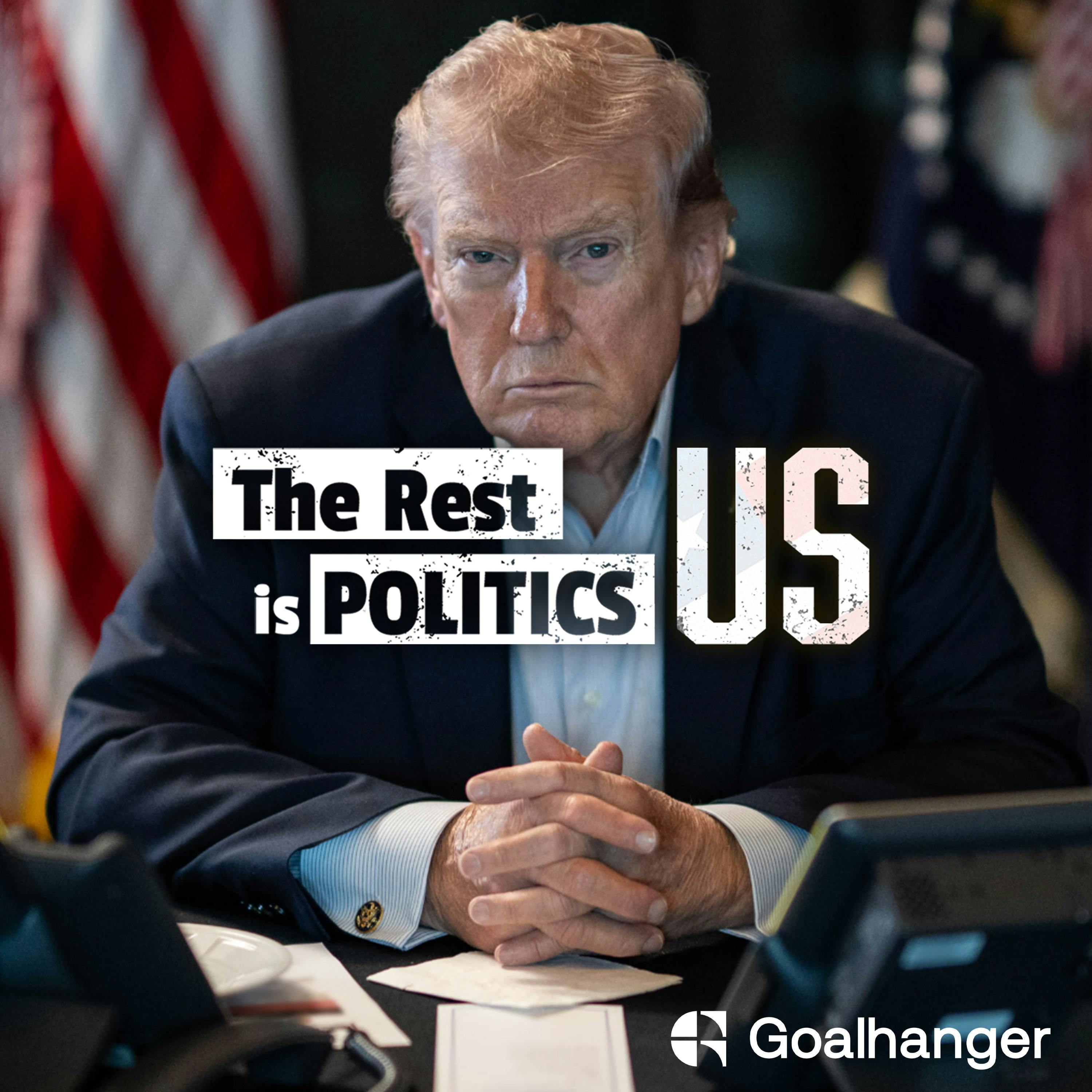
Overview of 165. Why Trump Fired Noem and the Forever War Presidency
This episode of The Rest Is Politics US (Goalhanger) features Katty Kay filling in with a political update and then a longer conversation with Anthony about two core topics: (1) Donald Trump’s decision to remove Kristi Noem from her post in the White House/DHS team and (2) the administration’s military action against Iran — its execution, political fallout, and economic consequences.
Key developments: Kristi Noem’s removal
- Announcement: Katty explains Trump publicly announced Noem’s removal (via social post) and named Oklahoma Senator Markwayne Mullin as her replacement.
- Reasons given on the show for Noem’s ouster:
- Publicly contradicted the president about an alleged $220m ad campaign.
- A controversial self-promotional ad and photos (including one with detainees/prisoners) that provoked backlash.
- Financial scandals: expensive private jet use tied to deportations.
- Office romance with longtime Trump advisor Corey Lewandowski drew negative attention.
- High-profile operational controversies, especially ICE actions in Minneapolis that led to American deaths and strong criticism.
- Context: Trump had been reluctant to fire aides (contrast drawn to high turnover in his first term). The hosts don’t expect major DHS policy change; replacement likely to carry out Trump’s border/security priorities.
Iran: military performance vs. political messaging
- Military picture: Hosts conclude the strikes have been militarily effective (disrupting missile/air defenses, damaging naval assets), and reduced immediate alarm in some allied areas.
- Messaging failure: The administration has struggled to present a clear, consistent public case for the operations. Competing explanations (imminent nuclear threat, pre-empting Israeli action, retaliation) have created confusion.
- Public opinion:
- Snapshot reported: roughly 40% approve / 60% disapprove on the operation (polls vary by question).
- Independents strongly negative (~68% against in a cited crosstab).
- Only ~12% of Americans favor sending ground troops to Iran.
- Media/briefing dynamics: The hosts sharply criticize the bombastic tone of one civilian official’s (Pete Hegseth in the transcript) public briefings, contrasting it with a sober military briefing that named the fallen and focused on facts. That difference, they argue, affects credibility.
Political consequences inside the GOP and Trump’s coalition
- MAGA fractures: The operation has split parts of Trump’s base — some hardline MAGA influencers oppose intervention while traditional GOP foreign-policy hawks back action.
- J.D. Vance: Portrayed as politically squeezed — an anti-interventionist who has been sidelined and forced into awkward messaging defending the administration, eroding his standing with non‑interventionist supporters.
- Marco Rubio: Presented as a rising figure inside the power structure and likely to be rewarded politically for alignment.
- Trump’s persona and motive: Hosts argue Trump’s “fixer/strongman” identity (the “Mr. Fix-It” ethos traced back to his business time) and desire to demonstrate decisiveness help explain escalation. There’s also discussion of Israeli pressure and Trump’s mixed feelings about Israeli actions that eliminated many Iranian figures.
Possible outcomes for Iran and regional strategy
- Questions raised:
- Who remains to lead Iran? Guests speculate about pragmatic figures (e.g., Hassan Khomeini, Ali Larijani mentioned in the conversation) but emphasize deep uncertainty.
- Will the Iranian people accept a regime‑adjacent replacement? Hosts doubt a merely “enfeebled” regime will satisfy Iranians who want fundamental change — but also note people may be too fearful to revolt without strong outside support.
- Risk of a fragmented, failed-state outcome — which Israel might tolerate but the U.S. may not.
- Covert/other operations: Mention of CIA activity and Kurdish dynamics, with concern about historical U.S. abandonment of insurgent partners.
Economic impact and domestic politics
- Immediate economic effects:
- Spike in gas prices and risk of sustained higher energy costs.
- White House scramble: suggested policy levers include SPR release and suspending gas taxes; Susie Wiles reportedly contacting oil executives.
- First‑day war cost cited at roughly $1bn; EY/Parthenon forecast noted estimating U.S. GDP growth could be 50–100 basis points lower as a result.
- Fed dilemma: Higher inflation/energy prices vs. political pressure for rate cuts creates a “Gordian knot” for the Fed.
- Political strategy for Democrats: Hosts believe Democrats could politically capitalize by tying the war to pocketbook issues (a “war tax” narrative), focusing on affordability and gas/energy pain in midterm messaging — without necessarily opposing action on Iran outright.
Notable insights & soundbites
- “Trump says he came in to stop the forever wars — but his presidency is now prosecuting one.” — Theme of the episode.
- Military success does not equal political success; effective operations need a coherent narrative to sustain public support.
- The internal GOP dynamic: anti‑interventionists (Bannon/Vance wing) are losing influence; the traditional hawkish wing and pro‑Israel allies are ascendant.
- Hosts recommend listening to their multi‑part series on Trump to understand the personality and decision‑making foundations shaping these events.
Takeaways — what to watch next
- Short term:
- Congressional votes and public polling on the Iran operation.
- Oil and pump price moves; any release of the Strategic Petroleum Reserve or tax suspensions.
- Further statements/briefings from the Pentagon vs. political aides (tone and credibility matter).
- Medium term:
- Who emerges in Iran’s leadership and whether any viable, deal‑ready figures appear.
- Whether the U.S. sustains limited military operations or escalates/commits to longer engagement.
- Political fallout for Trump and GOP unity heading into midterms/2028 positioning (J.D. Vance, Marco Rubio, others).
- Economic monitoring: Fed statements, global GDP revisions, and disruptions to tanker traffic in the Strait of Hormuz.
If you want the deep background the hosts referenced, they point listeners to their longer Rest Is Politics US series on Donald Trump for context on his decision‑making style and political instincts.