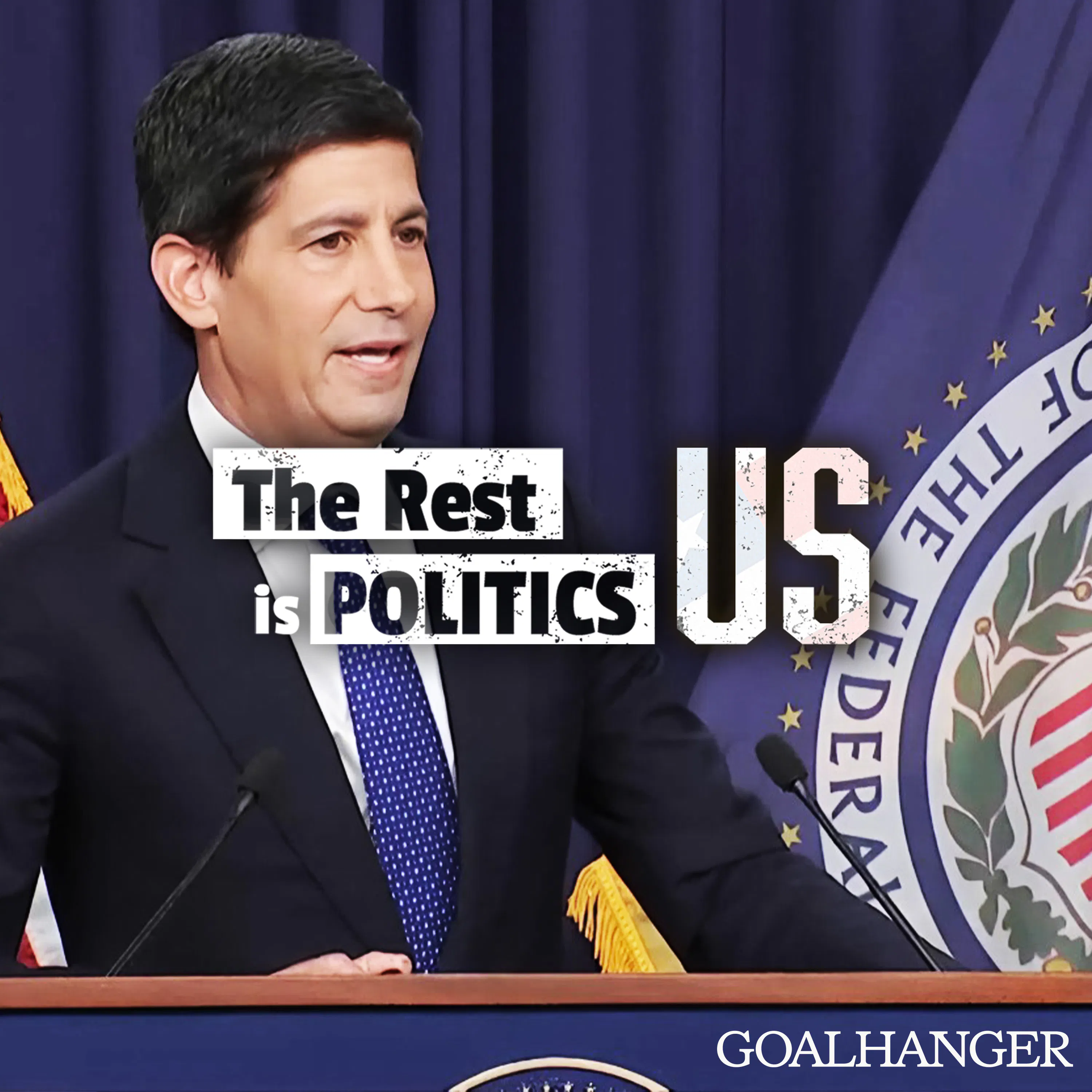
Overview of The Rest Is Politics US — Episode 222: “The Man Who Just Stood Between Trump and Economic Chaos”
This episode focuses on two connected crises: the U.S. economy and America’s foreign policy credibility. Katty Kay and Anthony Scaramucci discuss the Federal Reserve’s rate hike under Kevin Warsh, arguing it’s an attempt to rein in inflation and stabilize bond markets despite Trump’s pressure for much lower rates. They also debate why Democrats are still struggling to turn the affordability crisis into a winning economic message, before moving to the Middle East, where U.S. handling of the Houthis, Saudi Arabia, and Iran raises bigger questions about alliance reliability, energy prices, and the risk of wider instability.
Fed Independence, Inflation, and Bond-Market Anxiety
The Fed pushes back on Trump
- The hosts frame the rate hike as a rare act of independence from the White House.
- Trump wants rates around 1% or lower, but the argument is that this is incompatible with inflation still running too hot.
- Warsh is portrayed as having done the politically difficult thing early in his tenure: raising rates despite presidential pressure.
Why the move matters
- The Fed’s main goal here is signaling credibility to markets.
- Kay and Scaramucci argue that the bond market, especially the 10-year yield, is a major pressure point.
- Higher borrowing costs threaten:
- business investment
- housing affordability
- consumer spending
- the broader AI-fueled capex boom
Root causes of the affordability crisis
- The episode argues that Trump’s tariffs and war policy have worsened inflation and energy costs.
- They suggest the administration is trying to blame Biden, but voters are now feeling the effects under Trump.
- The discussion highlights how energy prices ripple through groceries, housing, transport, and utilities.
Democrats, Affordability, and the Search for a Real Economic Message
Democrats are talking about affordability — but not clearly enough
- Kay pushes back on the claim that Democrats are absent from the affordability debate.
- She cites candidates and campaigns that are explicitly centering:
- gas prices
- housing costs
- groceries
- mortgage rates
- class-based economic pressure
The core criticism
- Even if Democrats are saying the right words, the hosts argue they still lack a sharp, memorable plan.
- Their approval ratings remain weak because voters want more than slogans.
- The episode argues Democrats need to explain:
- how they will lower costs
- how they will increase housing supply
- how they will make taxes feel fairer for working families
Suggested Democratic agenda
The hosts float a few possible angles for Democrats:
- tax relief for households earning under $100,000
- stronger housing-supply policies and deregulation
- anti-corruption and anti-crony messaging
- ending foreign conflicts that drive up energy prices
- more direct, TikTok-ready messaging that sounds concrete and credible
The Middle East: Houthis, Saudi Arabia, and America’s Ally Problem
U.S. strategy is creating new dangers
- The hosts say Washington has effectively expanded the conflict by refusing to back Saudi strikes on the Houthis.
- They argue the U.S. is overstretched after engaging Iran, while also trying to manage attacks in the Red Sea region.
- A reported U.S. meeting with Houthi representatives in Oman is seen as granting the group greater legitimacy.
Why this matters for allies
- Saudi Arabia, the UAE, Kuwait, Qatar, Jordan, and others are portrayed as watching U.S. reliability collapse.
- The biggest concern is not just the war itself, but the message it sends:
- America may not defend allies consistently
- American commitments may depend on Trump’s immediate political interests
- alliance systems look weaker than direct, institutional diplomacy
Energy and escalation risks
- The episode warns of a possible major energy shock if Red Sea disruption continues.
- They argue that attacks on shipping and infrastructure could keep pushing energy prices higher worldwide.
- There’s also concern that countries in the region may conclude a nuclear deterrent is more attractive if the U.S. security umbrella is no longer dependable.
Iran, Regime Pressure, and the Limits of Economic Squeeze
Can Trump’s pressure actually force regime change?
- Scaramucci argues Trump believes Iran will collapse under economic pressure.
- The hosts discuss:
- falling oil exports
- surging inflation
- damage to Iranian supply routes
- strain on the regime and security forces
Their conclusion
- They think a ceasefire is possible, but regime change is much less likely.
- Iran may be badly hurt, but still capable of outlasting U.S. pressure.
- Even if the regime weakens, the more immediate danger is continued regional instability, not a clean political transition.
Bigger Themes and Takeaways
1. Markets need credibility, not slogans
The Fed move is framed as a signal that somebody in Washington is still taking inflation and bond markets seriously.
2. Affordability is still the dominant domestic issue
The episode repeatedly returns to the idea that housing, groceries, gas, and borrowing costs are shaping public opinion more than ideology.
3. Democrats need a clearer, sharper plan
The hosts believe Democrats are talking about the right problem but still lack a compelling, concrete solution voters can easily understand.
4. U.S. foreign policy is becoming less predictable
The Middle East discussion centers on a major warning: allies may no longer trust the United States to act reliably or consistently.
5. Long-term strategic consequences are accumulating
The episode suggests current policy choices could push more countries toward:
- hedging away from U.S. influence
- seeking independent defense capabilities
- considering nuclear options more seriously
Additional Mention: New Series Tie-In
The episode closes by promoting the founding-members miniseries “All the Wrong Moves”, adapted from Anthony Scaramucci’s book. The teaser discussion focuses on:
- China’s accession to the WTO
- the post-Cold War globalization consensus
- how U.S. policy choices helped create today’s economic and geopolitical problems
Bottom Line
This episode argues that Washington is facing a credibility crisis on two fronts:
- At home: inflation, affordability, and bond-market pressure
- Abroad: weakening trust among allies and rising regional instability
The central warning is simple: if the U.S. can’t control costs, communicate a real economic plan, and act predictably in foreign policy, it risks deepening both domestic frustration and global disorder.