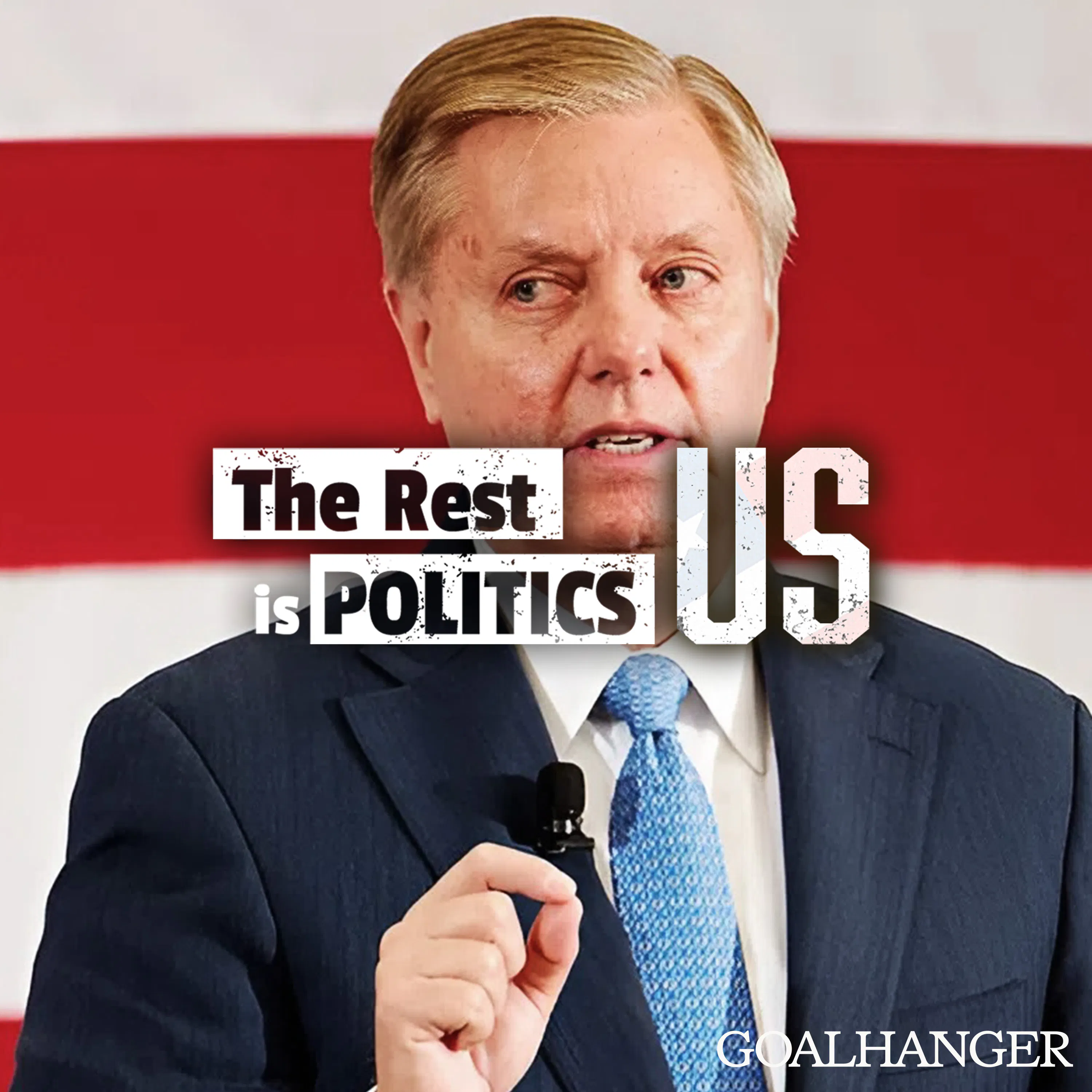
Overview of The Rest is Politics US
This episode is a two-part political analysis: first, a long discussion of Lindsey Graham’s legacy and how his career mirrors the Republican Party’s transformation under Donald Trump; second, a critique of the Trump administration’s stepped-up ICE enforcement, which the hosts argue is becoming more aggressive, less transparent, and more politically dangerous. The conversation is framed around a broader theme: what happens when proximity to power matters more than principle.
Lindsey Graham’s Political Legacy
From foreign-policy hawk to Trump ally
The hosts describe Lindsey Graham as a senator who initially stood for:
- American global leadership
- Strong support for NATO and Ukraine
- Opposition to Russia
- Cross-party dealmaking on issues like immigration and climate
Over time, especially during the Trump era, Graham shifted rightward and became one of Trump’s most visible congressional allies, despite having once publicly attacked Trump harshly.
A “shape-shifter” driven by proximity to power
The core criticism is that Graham adapted himself to Trump’s political universe because closeness to the president was the main currency in Washington. The hosts argue that:
- He likely believed cooperation was the only way to get things done
- That strategy may have helped on some policy goals, especially Ukraine
- But it came at a moral and reputational cost
Ukraine and Israel may feel his absence
The episode suggests Graham was especially valuable on:
- Ukraine aid and sanctions on Russia
- Maintaining pressure on Trump to stay engaged with Ukraine
- Supporting Israel in ways that mattered inside the Senate and with Trump
The hosts argue that, while others such as Tom Cotton, Ted Cruz, and John Thune may be pro-Israel or hawkish, Graham had a unique ability to influence Trump personally.
The final judgment on Graham
Their ultimate view is mixed but harsh:
- He was smart, funny, and deeply committed to the Senate and American power
- He helped preserve some important foreign-policy priorities
- But his willingness to accommodate Trump may define his legacy as a moral failure
ICE Enforcement and Immigration Crackdown
Quiet escalation, not headline theater
The second half of the episode focuses on a renewed ICE crackdown. The hosts say the administration has shifted from a highly visible, confrontation-heavy style to a quieter, more numbers-driven approach:
- Large-scale detentions are increasing
- The goal appears to be meeting quotas
- Enforcement is happening with less media attention
Concerns about brutality and incompetence
They criticize ICE for:
- Weak de-escalation training
- Overly aggressive tactics
- Civilian deaths and shootings during operations
- Not consistently using body cameras, despite promises
A particularly troubling case discussed involves a man in Texas who was shot during an ICE encounter and was reportedly not even the intended target.
Political fallout, especially in Texas
The hosts argue the issue could become politically explosive because:
- Video and eyewitness evidence can shift public opinion
- Democratic candidates may use ICE incidents in campaign ads
- Immigration and enforcement are becoming a liability for Republicans in competitive races, especially in Texas
They specifically note that phrases used by authorities, such as saying someone merely “resembled the target,” can be politically devastating and racially loaded.
Bigger Takeaways
Trump-era politics rewards loyalty over principle
A central theme across both topics is that in Trump’s Washington:
- Being close to Trump matters more than being right
- Politicians often compromise values to stay relevant
- That compromise can eventually damage both institutions and reputations
The episode argues that the U.S. is sliding toward dysfunction
The hosts tie Graham’s story and ICE enforcement together to argue that:
- The rule of law is weakening
- Policy is being driven by fear, loyalty, and optics
- Most Americans want stability, dignity, and competence, not extremes on either side
Notable Themes
- Foreign policy vs. populism: Graham as a last link to an older Republican internationalism
- Moral compromise: The cost of staying close to power
- Immigration enforcement: More arrests, more secrecy, more risk
- Public opinion: Video and media exposure still matter
- Institutional decline: A broader warning about what Trump’s political style does to American governance
End-of-Episode Note
The hosts close by linking both stories to a larger warning: when politicians stop resisting Trump and institutions stop enforcing standards, the result is a more chaotic and less humane America.