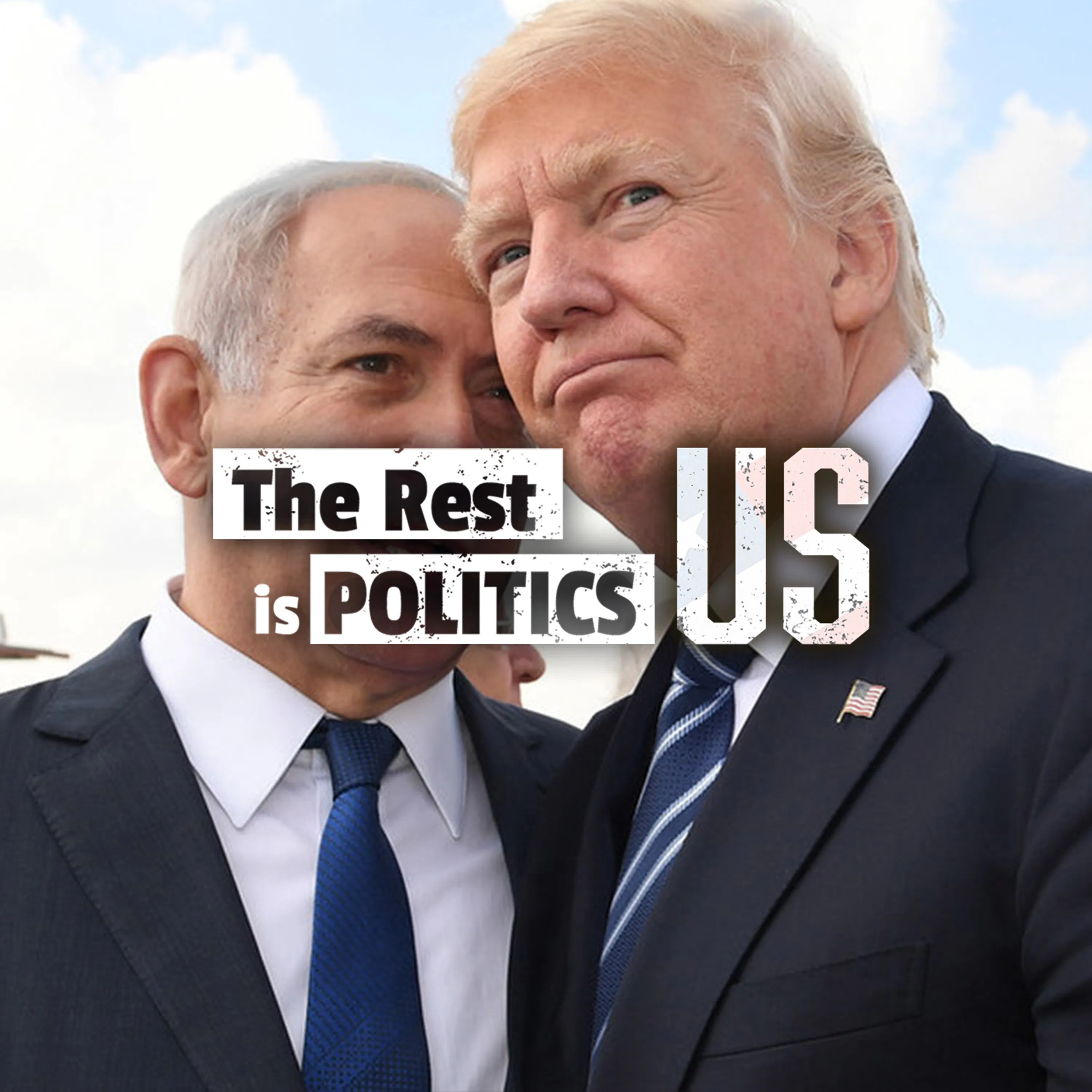
Overview of 176. Is Trump the Biggest Loser of the Iran Ceasefire?
This episode of The Rest Is Politics U.S. (Goalhanger), hosted by Anthony Scaramucci and Katty Kay, analyzes the fragile Iran ceasefire, Donald Trump’s role and posture, the influence of Israel and Netanyahu, the potential deciding role of China, and implications for U.S. allies and domestic politics. The hosts use recent reporting (notably a New York Times piece by Jonathan Swan and Maggie Haberman), on-the-ground reports from the Gulf, and recent U.S. local election results (Georgia special election and a Wisconsin Supreme Court race) to assess geopolitical and political fallout.
Key takeaways
- The ceasefire is fragile: missile strikes, Strait of Hormuz interference, and unclear Iranian interlocutors make the truce precarious.
- Trump’s behavior—publicly eager to end the confrontation and highly erratic on Truth Social and Twitter—has weakened U.S. leverage and bargaining position.
- Netanyahu’s in-person lobbying at the White House (reported in the NYT) shaped Trump’s outlook; Trump treated Netanyahu as an equal in the Situation Room, which diminished U.S. unity with other allies.
- China could be the decisive external actor: if Beijing wants the ceasefire to hold (to keep oil flowing and protect its interests), it may enforce or broker continuation.
- Domestic politics: recent local wins and vote shifts suggest anti-Trump sentiment is creating short-term openings for Democrats, but Democratic brand and enthusiasm remain weak.
- Strategic risk: failure to secure Iran’s enriched uranium or robust nuclear inspections risks encouraging proliferation across the region.
Detailed analysis — Iran ceasefire and immediate problems
- On-the-ground indicators contradict a clean ceasefire: missile warnings in Gulf countries, Iran enforcing checks on ships transiting the Strait of Hormuz, and continued strikes in Lebanon.
- A central negotiating sticking point is Iran’s enriched uranium—removal or guarantee of non-use is politically and technically difficult.
- Negotiations are indirect and messy: intermediaries (Pakistan, China) are shuttling messages; it’s unclear who speaks for Iran.
- Uncertainty about Iran’s leadership health increases the risk of decentralized or unpredictable responses from Iran’s semi-autonomous military network.
Trump’s psychology and how it affects leverage
- Hosts say Trump publicly signaled eagerness to be done, which reduced perceived U.S. resolve—analogized to playing poker and revealing cards.
- Trump reportedly listened closely to Netanyahu during a White House Situation Room meeting; some U.S. insiders (e.g., Marco Rubio, J.D. Vance) voiced skepticism but did not forcefully oppose the course.
- Excessive tweeting and erratic public messaging are portrayed as undermining coherent policy and diminishing the credibility of U.S. commitments.
- Because Trump appears intent on winding down involvement quickly (partly motivated by an incoming Xi visit), Iran may feel it can extract better terms.
Role of Israel, U.S. allies, and China
- Israel (Netanyahu) pushed for an aggressive approach and may be a destabilizing factor—Israeli strikes in Lebanon continued shortly after the ceasefire.
- Trump’s alienation of many European and Asian allies has fractured the traditional coalition: several European leaders are described as “out” of alignment.
- China is characterized as a potential “kingmaker”: if China moves to pressure Iran (or economically incentivize calm), the ceasefire may hold; conversely, Chinese involvement cedes influence away from the U.S.
- The result risks creating an alternative coalition led by China at Washington’s expense.
Domestic politics — Democrats, Republicans, and swing voters
- Local election signals: the special Georgia district election showed double-digit movement toward Democrats compared to 2024; Wisconsin’s Supreme Court race produced a 5–2 liberal majority and indicated Republican weakness in some red counties.
- The hosts argue Democrats might benefit from staying quiet and letting Republican chaos continue, though they also emphasize Democrats must offer a clearer positive message before 2026/2028.
- “Double haters” (voters who dislike both major parties) are an important group; polls show many independents but that group is heterogeneous (not necessarily centrist).
- Practical Democratic advice: focus on kitchen-table economic issues, stop defining themselves solely by opposition to Trump, rebuild brand credibility, and engage Hispanic and swing voters consistently (not just during the campaign).
Action items / recommendations offered on the show (for the president or U.S. negotiators)
- Publicly and deliberately distance U.S. negotiating posture from unilateral alignment with Israel at the table.
- Privately give Netanyahu a clear red line on Lebanon (i.e., press Israel to limit strikes that expand the conflict).
- Reframe the nuclear ask to allow Iran a face-saving off-ramp—be prepared to compromise while securing meaningful limits and inspections on enrichment.
- Use economic levers tied to the Strait of Hormuz creatively (e.g., fees, reconstruction incentives) to build leverage and incentives.
- Treat negotiations as a process, not a one-off event—embed sustained diplomatic architecture (State Department, international partners) rather than transactional public theatrics.
Notable quotes / memorable lines
- “He has abandoned his poker face and he’s laid his cards on the table.” — Katty Kay on Trump’s public posture.
- “If the Chinese want it to hold, it will hold.” — Both hosts note China’s decisive potential role.
- “You’ve got to make this a peace process, not an event.” — Anthony Scaramucci’s recommendation for handling negotiations.
- “Double haters now are breaking for Democrats, even though they hate them.” — On the current voter dynamics.
Political implications and risks
- Weak U.S. cohesion with European allies and regional partners could shift leadership of the deal-making to China, damaging Western influence.
- Israel’s declining brand in U.S. public opinion (especially among younger voters) may affect long-term U.S. support patterns and foreign aid politics.
- A perceived inability to secure Iran’s nuclear constraints risks regional proliferation pressures and long-term instability.
- Domestic U.S. political landscape: Republicans suffer from visible fractures and foreign policy missteps; Democrats have momentum in some local contests but lack enthusiasm and a clear national figure.
Bottom line
The ceasefire is fragile and hostage to unpredictable variables: Iran’s internal politics and nuclear asset negotiations, Netanyahu’s actions, Trump’s public eagerness to exit and erratic communications, and China’s willingness to step in. Short-term electoral gains for Democrats are real but fragile; both foreign policy and domestic political consequences could reshuffle influence—potentially strengthening China’s role and weakening traditional U.S.-led alliances if the situation is mishandled.