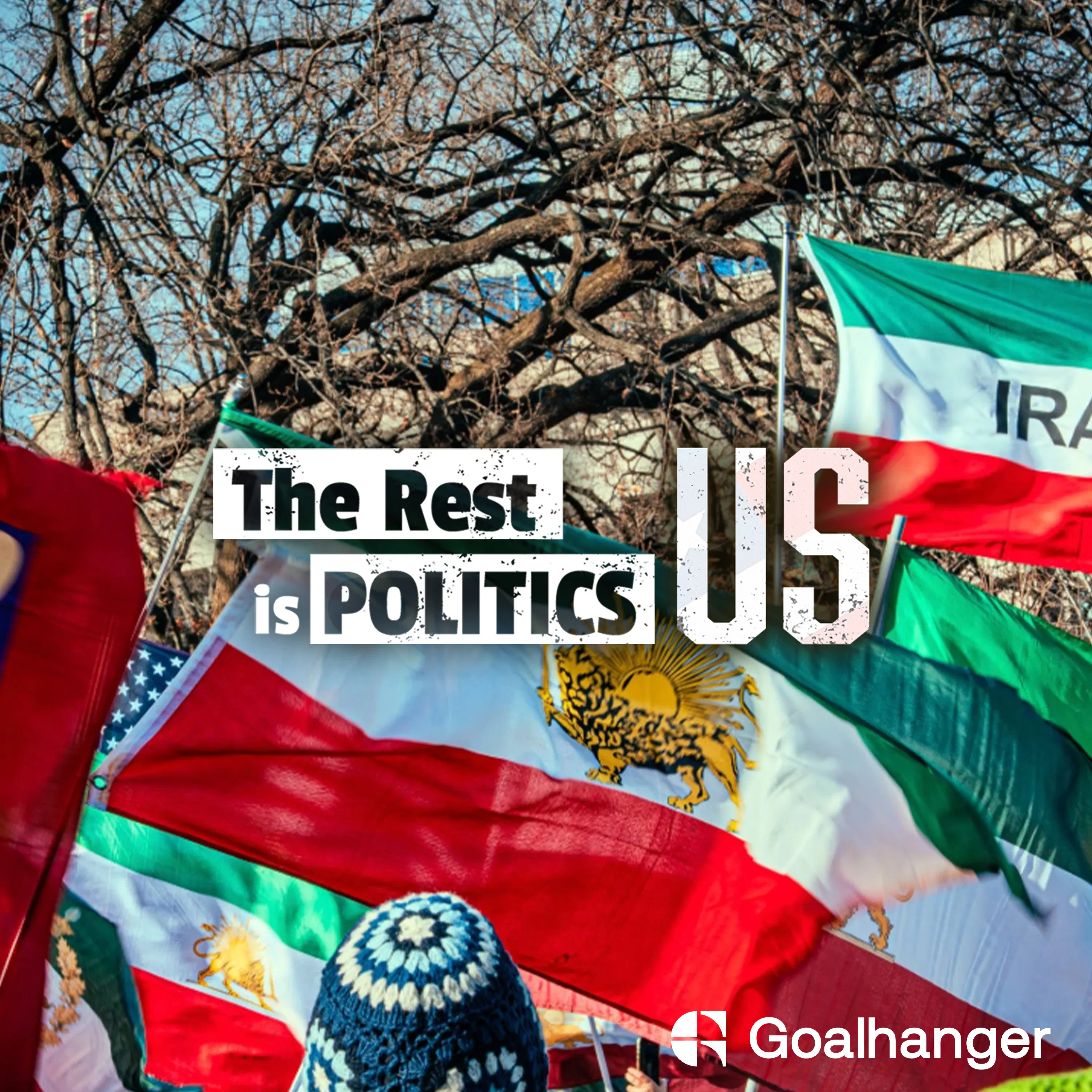
Overview of 175. TRUMP CALLS FOR IRAN CEASEFIRE – WILL IT HOLD?
Host: Goalhanger (Cathy "Katty" Kay and Anthony Scaramucci)
Format: Live-stream discussion with callers, audience polls and two expert guests (former CIA officer Mark — national security expert; Mike Froman, president of the Council on Foreign Relations). Episode focuses on the ceasefire announced after recent US–Israel strikes on Iran, reporting on a reported Iranian 10‑point proposal, and whether a fragile truce will hold.
Key takeaways
- The podcast frames a tentative ceasefire based on a reported Iranian 10‑point proposal that the US president described as “workable.” Core elements reportedly include non‑aggression, coordination of passage through the Strait of Hormuz with Iran, acceptance of continued uranium enrichment, lifting of some sanctions and withdrawal of US combat forces (disputed which parts the US actually accepted).
- Hosts and guests are deeply skeptical the ceasefire will hold beyond a short window (Trump reportedly gave a two‑week timeline). Audience polls on the stream mirror that skepticism.
- Major uncertainties remain about Iranian command-and-control (communications have been disrupted), whether decentralized IRGC or proxy units will continue attacks, and the exact terms for use of the Strait of Hormuz (access, tolls, restrictions).
- Broader geopolitical and domestic fallout: perceived hit to US prestige and NATO credibility; potential long‑term damage to US–Israel relations and the political standing of Israel’s leaders; winners named include Iran’s regime (survival/prestige), China and Russia; losers include Israel and US global standing.
Main topics discussed
- Details and implications of the reported Iranian 10‑point proposal (what was on the table, what would change if implemented).
- Whether the ceasefire is credible given damaged Iranian leadership/infrastructure and spotty communications.
- Who gains and who loses geopolitically: Iran (regime survival/control of Hormuz), China, Russia, UAE/Gulf, Israel, US.
- NATO’s standing and whether Article 5 is credible under the current US administration.
- Domestic US politics: Republican response (limited), concerns about President Trump’s rhetoric (threats of extreme violence) and fitness for office, calls for removal from some commentators.
- Market/economic effects (markets reacted; energy/shipping implications if Hormuz is controlled/coerced).
Expert guests — core viewpoints
-
Mark (ex‑CIA, national security expert)
- Emphasized Iran was heavily damaged but survived; regime gained a prestige win by enduring.
- Raised serious intelligence questions: uncertainty about Iranian leadership status, gaps in strategic intelligence and the PDB process, and whether US policymakers had full visibility of risks (e.g., closure of Hormuz).
- Viewed Israel as a major loser politically and argued Israeli leadership (Netanyahu, Mossad) had strong influence on the US decision-making, harming US perceptions of impartiality.
-
Mike Froman (Council on Foreign Relations)
- Called the agreement a necessary opening to talks; a ceasefire is better than continued bombing.
- Highlighted many unresolved technical issues: what “open” Hormuz means practically, coordination with Iranian armed forces, shipping risk and possible tolling or prioritized access.
- Predicted a likely return to a tense status quo rather than a decisive long-term settlement: periodic strikes may continue if Iran rebuilds capabilities; the Iranians have shown willingness to endure pain to preserve regime goals.
Winners and losers (as discussed)
-
Winners (short/medium term)
- Iranian regime: survived heavy strikes and can claim leverage (control of Hormuz).
- China & Russia: geopolitical advantage from perceived US retrenchment and weakened Western cohesion.
- Some Gulf states may welcome reduced immediate violence—conditional on future Iranian behavior.
-
Losers
- Israel: operationally degraded gains, politically damaged in US public opinion; Netanyahu’s influence may backfire.
- United States: reputational damage described as a “Suez moment” — questioned credibility, NATO commitment and global leadership.
- Iranian people: heavy civilian casualties and infrastructure damage despite regime survival.
Audience polls & public sentiment reported on show
- Live poll results from listeners:
- Will the conditional ceasefire hold? 78% said No, 22% Yes.
- Will Israelis try to provoke Iran to break the ceasefire? 94% said Yes.
- Pew‑style polling cited: American unfavorable views of Israel reportedly rose (example stats quoted: ~60% unfavorable up from ~42% in 2022; registered voters viewing Israel positively dropped from 47% to 32% in ~3 years).
Key unknowns / open questions to watch
- Will the Iranians fully honor the ceasefire terms and reopen the Strait of Hormuz in practice? If so, under what rules (tolls, ship selection, military coordination)?
- Are ongoing missile strikes on Israel (noted in real time during the show) individual/localized actions before centralized orders reach units, or breaches of any ceasefire?
- Will the US resume strikes if Iran or proxies act again? How long will the US remain disengaged?
- How will NATO allies, Gulf states and Israel adjust security cooperation given perceived US wavering?
- Domestic US political consequences: will Congressional support for Israel/aid shift? Will Republican criticism of presidential rhetoric increase?
Notable quotes (paraphrased)
- “A ceasefire is better than no ceasefire.” — Mike Froman
- “This is a prestige win for Iran — they survived.” — Mark (ex‑CIA)
- “We’ve had our Suez Canal moment.” — show hosts, arguing US prestige is damaged
- On Trump’s rhetoric: hosts and guests expressed alarm at threats to “end a civilization” and debated his fitness/competence as commander-in-chief.
What to monitor next (practical checklist)
- Outcome of the next two weeks of negotiations (any formalized text beyond a ceasefire).
- Shipping industry guidance on Strait of Hormuz transits and insurance/tolling behaviour.
- Intelligence/official reporting on Iranian leadership health and IRGC command/control.
- Israeli military activity and whether strikes against Iran or proxies resume.
- Congressional statements and any shift in NATO posture or allied basing/military cooperation.
- Market indicators: oil prices, shipping insurance premiums (war risk), and equity market reactions to escalation/de‑escalation.
Final assessment from the show
Hosts and guests largely agree the ceasefire is fragile and temporary, leaves major strategic issues unresolved (nuclear enrichment, sanctions, control of chokepoints), and produces significant geopolitical and domestic fallout — especially for US prestige and Israel’s political standing. The coming two weeks were framed as decisive for whether the pause becomes a durable settlement or a brief interlude before renewed violence.