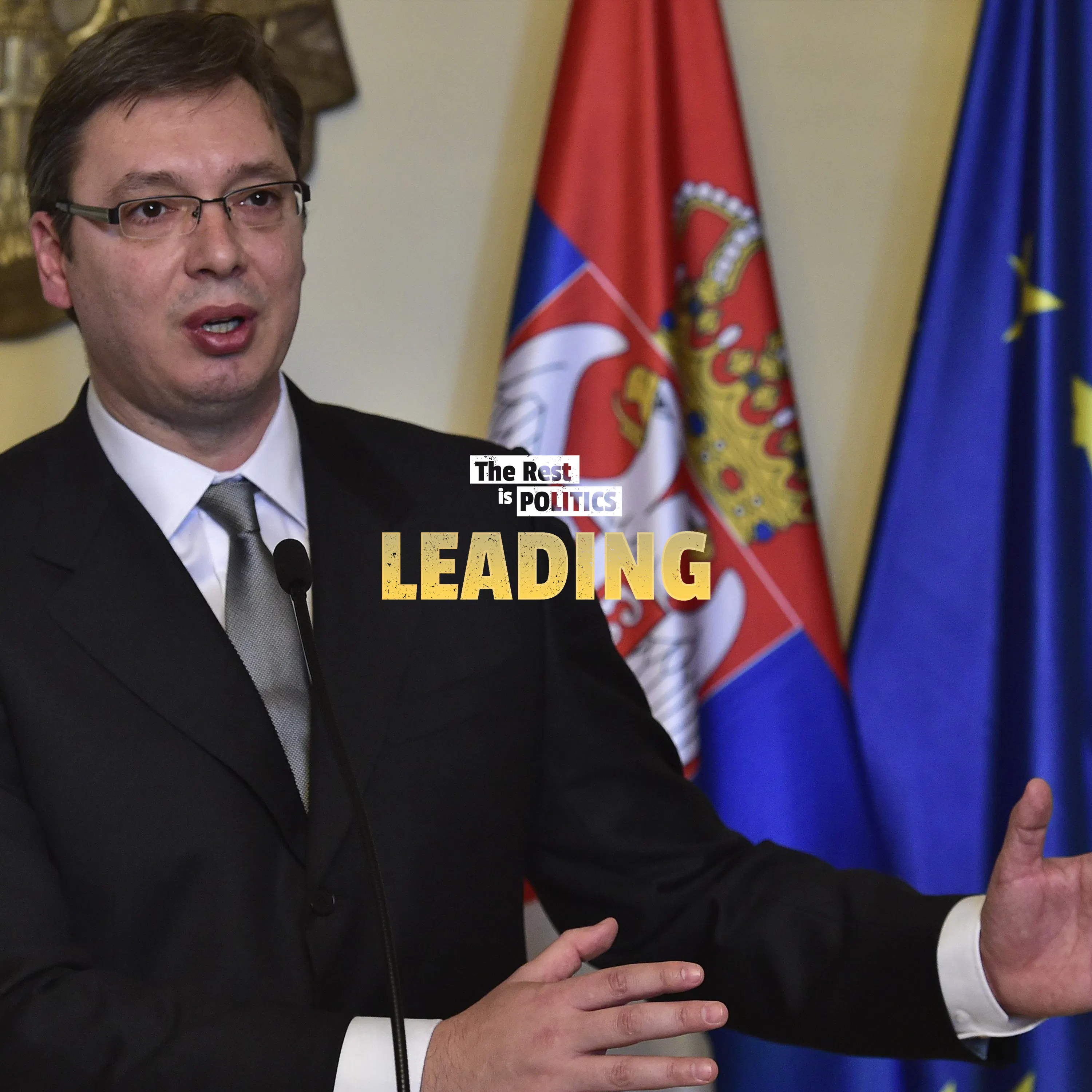
Overview of The Rest Is Politics Interview with President Aleksandar Vučić
In this episode, Alastair Campbell and Rory Stewart interview Serbian President Aleksandar Vučić in Belgrade, covering Serbia’s fraught relationship with Kosovo, its path toward the EU, and its balancing act between Russia, China, and the West. The discussion is combative but wide-ranging, with Vučić defending Serbia’s foreign policy, rejecting Western criticism over Kosovo and media freedom, and arguing for a new regional model built around a single market and freer movement in the Balkans.
Key Themes and Takeaways
Kosovo remains the central fault line
- Vučić strongly rejects the Western framing of NATO’s 1999 intervention, calling it illegal aggression against Serbia.
- He argues Kosovo’s independence was the result of a “Pandora’s box” opened by the West and says the issue still blocks Serbia’s EU future.
- The hosts repeatedly challenge this view, arguing NATO intervened to stop ethnic cleansing and protect Kosovo Albanians.
- Vučić insists Serbia will never accept Kosovo’s independence and says no resolution is possible without acknowledging Serbia’s position.
A proposal for regional integration
- Vučić promotes an “open Balkans” / single-market-style solution:
- freer movement of people
- reduced border friction
- economic integration across Serbia, Albania, Kosovo, Bosnia, Montenegro, and others
- He argues this could make sovereignty disputes less important in everyday life.
- The hosts see this as potentially similar to a “Good Friday Agreement” style normalization for the Balkans.
- He frames this as the realistic alternative to endless EU accession delays.
Serbia’s EU path, with conditions
- Vučić says Serbia wants to join the EU but believes full membership is unlikely anytime soon.
- He argues the EU should think more flexibly and stop treating accession as an all-or-nothing process.
- He suggests the more practical route is:
- entry into the single market
- Schengen-style access
- economic integration before full political membership
- He warns that if the EU does not move faster, the U.S. may build competing influence structures in Eastern Europe.
Russia: close ties, but not subordination
- Vučić rejects the label of “Russian puppet” and says Serbia is sovereign and independent.
- He says Serbia has good relations with Russia but does not accept Western moral simplifications.
- He emphasizes that Russia is now only one of Serbia’s economic partners, with Germany and China more important.
- On Ukraine, he says Serbia supports humanitarian efforts but denies selling weapons directly to warring sides.
China as Serbia’s major strategic partner
- Vučić is highly complimentary about China’s discipline, long-term planning, and industrial strength.
- He argues Europe is falling behind technologically, especially in areas like electric vehicles and hybrid systems.
- He says Chinese success is not just economic but geopolitical, and Europe is underestimating the shift.
- His view is that Serbia must align with where the future is heading, even if that makes some Western audiences uncomfortable.
The U.S., Trump, and shifting global power
- Vučić says he understands why many Serbians liked Donald Trump:
- conservative values
- hostility toward the Clinton-era legacy
- desire for a different kind of leadership in Washington
- He argues Serbia is conservative and traditional, which helps explain Trump’s popularity there.
- He also suggests the U.S. will increasingly build influence networks in Europe, especially in Eastern Europe, independent of the EU.
Domestic Politics in Serbia
Criticism over democracy and media freedom
- The hosts press Vučić on allegations of:
- backsliding in the judiciary
- lack of media pluralism
- dominance of pro-government television and influence over public discourse
- Vučić denies direct control, but argues he is subjected to relentless hostile media coverage and personal smears.
- He presents himself as unfairly targeted by powerful domestic and foreign interests.
Economic record as his main defense
Vučić repeatedly points to Serbia’s economic transformation:
- lower public debt
- higher salaries
- major highway and infrastructure construction
- stronger foreign direct investment
- improved regional trade
He presents this as the core of his legacy and argues that Serbia is now materially stronger than when he came to power.
Succession and political future
- Vučić says his constitutional term limit may prevent another presidential run.
- He is openly exploring whether he could support another candidate and remain influential, possibly as prime minister.
- He does not rule out staying in politics if he believes he still has the energy and public support.
- He frames this as a question of fitness and legacy, not simply personal ambition.
Vučić’s Alliances and Image
Viktor Orbán and Hungarian-Serbian relations
- Vučić speaks warmly about Hungarian Prime Minister Viktor Orbán.
- He credits Orbán with improving Serbian-Hungarian relations, especially in Vojvodina.
- He uses this as an example of what pragmatic leadership can achieve in historically tense ethnic relations.
Views on opponents and critics
- He is dismissive of some critics, especially Kosovo’s Albin Kurti, saying no meaningful personal relationship is possible there.
- He repeatedly returns to the idea that Western officials misunderstand Serbia’s historical trauma and current priorities.
Notable Moments
- The Kosovo exchanges are the most intense part of the interview, with both sides firmly holding their historical narratives.
- Vučić’s praise of China is unusually blunt and unapologetic.
- He is more explicit than expected in defending Orbán and explaining Trump’s appeal.
- The interview ends with a lighter note, including a discussion of football hooliganism and Serbian football rivalries.
Final Impression
The episode presents Vučić as a politician who is:
- deeply nationalistic on Kosovo
- pragmatic on economics
- cautious but skeptical about the West
- strongly interested in regional integration
- willing to defend illiberal or “non-Western” models when he thinks they work
For listeners, the key value of the interview is the rare chance to hear Serbia’s leader lay out, at length, how he sees Serbia’s place in a shifting world order — even when his account sharply clashes with the West’s interpretation of history and democracy.