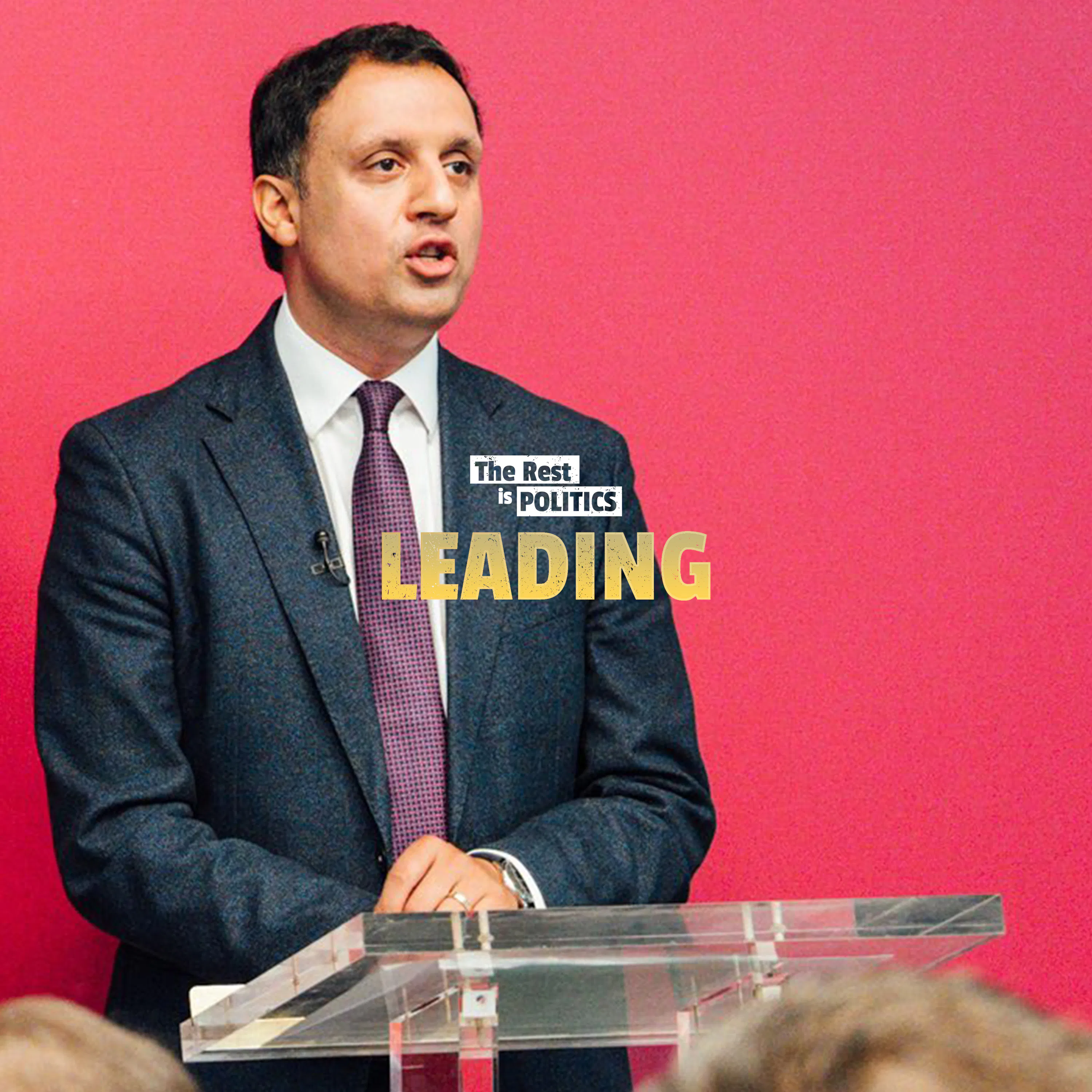
Overview of The Rest Is Politics — Episode 185: "Can Labour Win Back Scotland? (Anas Sarwar)"
This episode is an interview with Anas Sarwar, leader of Scottish Labour, conducted by Rory Stewart and Alastair Campbell ahead of the Scottish Parliament election (May 7). Sarwar — a second‑generation Pakistani Scot, former Westminster MP and MSP, and son of Mohammad Sarwar (one of Britain’s first Muslim MPs) — lays out his case for replacing 19 years of SNP government. The conversation covers his personal background, why he entered politics, the campaign strategy, policy priorities (education, economy, skills), his controversial public break with UK Labour (calling for Keir Starmer to resign), and his views on rising populism, Islamophobia, and political culture in Scotland.
Key points and main takeaways
- Sarwar is running to unseat the SNP and become First Minister by offering a positive, pro‑growth, pro‑unity alternative focused on practical government (schools, NHS, local services), not a referendum push.
- He stands by his public call for Keir Starmer to resign — framed as an assertion of his primary loyalty to Scotland and a comment on judgment about UK appointments — and says Scotland’s interests come first.
- Policy priorities: radical education reform (discipline, classroom support, address rising Additional Support Need rates), pro‑business growth agenda (lower tax burden, planning reform, scaling businesses), better targeting and efficiency in public spending, stronger regional economic structures, and smarter use of Scotland’s soft power.
- He rejects any post‑election deals with Reform, the Conservatives, or Nigel Farage and says Scottish Labour will not enter coalitions or “stitch‑ups.”
- Sarwar highlights a rising politics of fear and blame (targeting minorities), notes an increase in Islamophobia and right‑wing populism in Scotland, and frames his politics as “hope and unity” rather than division.
- Personal background: grew up in a political household, trained and worked as an NHS dentist — that frontline experience shaped his commitment to tackling structural poverty via education, skills and jobs.
- Campaign challenge: despite the Labour UK landslide in 2024, Scottish Labour’s momentum has softened and polls show a tougher race locally; Sarwar argues the SNP remain unpopular in places but still resilient, and Scottish Labour must earn trust by demonstrating competence.
Background & context
- Anas Sarwar: second‑generation Pakistani Scot, son of Mohammed Sarwar (entered Parliament 1997). Initially reluctant to become an elected politician, he trained as a dentist and worked in the NHS before entering politics (MSP, later Scottish Labour leader).
- Political moment: Scottish election days away at the time of recording. The SNP had governed for 19 years; Reform (right‑wing populist party) had been active with provocative ads; UK Labour under Keir Starmer had won Westminster previously but faced unpopularity in some polls.
Campaign specifics & policy proposals
Education
- Argues Scottish education has declined: falling literacy/numeracy, fewer ASN teachers despite rising rates of additional support needs (now ~43% of pupils).
- Promises to:
- Ban mobile phones in classrooms to reduce distraction.
- Improve discipline and restore permanent teacher contracts.
- Increase classroom assistants and targeted support to close gaps.
- Keep free tuition but rebalance investment to colleges and apprenticeships; link skills to growth sectors (AI, defence, technology).
Economy & business
- Presents himself as pro‑entrepreneurship: wants to grow the “size of the cake,” not just slice it thinner.
- Proposals and priorities:
- Cut tax burden in Scotland and reform local business rates to help high streets.
- Planning reform (national planning agency) to halve planning times and attract investment.
- Improve regional economic development and create a better scale‑up ecosystem (not just startups).
- Use Scottish soft power (brand, diaspora ties, especially North America) to boost tourism and investment.
Public services & governance
- Claims Scotland is not spending every penny efficiently — calls for better use of resources.
- Emphasises accountability and openness vs alleged SNP culture of secrecy and cover‑ups.
- Wants to devolve more power regionally across Scotland.
Immigration, community cohesion & populism
- Warns against weaponising faith and identity politics; condemns Islamophobic and xenophobic stunts (including Reform ads).
- Sees underlying economic despair and mistrust being exploited by right‑wing/populist actors (Donald Trump, Reform, others).
- Argues for confronting fear/blame with tangible solutions and a unifying story.
Constitutional stance & alliances
- Focus is on running against the SNP government, not against a UK Labour government.
- No willingness to enter coalition deals with Reform, Conservatives, or any grubby backroom arrangements; aims for minority government if necessary and will seek issue‑by‑issue consensus.
Notable quotes and insights
- On priorities: “My first priority and my first loyalty is to my country, Scotland… I don’t really care what people in Westminster think. I only care what people in Scotland think.”
- On political strategy: “We will demonstrate to the rest of the UK how you can win on the politics of hope and unity, not feed off the politics of despair.”
- On education as a route out of poverty: “The best route out of poverty is a good education, an adequate skill, and a well‑paid job.”
- On Islamophobia and identity: “Why is their belonging being questioned?... Faith has always been something that brings people together and unites people rather than finds difference.”
Electoral outlook and strategy
- Sarwar acknowledges the election is hard and polls are tough, but insists Labour can still win by focusing the campaign on 20 years of SNP record rather than short‑term UK politics.
- He believes the 2024 UK Labour victory was necessary to make Scottish Labour competitive and that his job is to reframe the choice for Scottish voters around practical government.
- Hosts note Sarwar’s personable warmth and business focus but observe he could deploy sharper, more memorable lines against opponents; Sarwar prefers a positive, constructive tone.
Personal & human elements
- Childhood threat experience: as a child, his family received a violent threatening letter tied to his father’s status — an event that initially repulsed him from politics.
- Family choices: Sarwar defends private schooling choices for his children as private family decisions while stressing his commitment to fixing state education for all.
- Light moments: kilt anecdote — Sarwar teases he’ll wear a kilt “for something majorly significant” (e.g., Scotland winning the World Cup or his son’s wedding).
What listeners should take away
- Anas Sarwar is pitching Scottish Labour as a pragmatic, pro‑growth, pro‑opportunity alternative to the SNP — focused on concrete public services and economic reform rather than constitutional fights.
- He seeks to run a campaign based on unity and competence while explicitly rejecting deals with the populist right.
- The election is tight; success depends on convincing voters that Scottish Labour can both fix daily public services and grow the economy while standing up to divisive politics.
Recommendation (for listeners short on time)
- Listen to Sarwar’s explanation of education and business policy for the clearest sense of what a Scottish Labour government would prioritise.
- Note his reasoning for breaking publicly with Keir Starmer — it’s framed as strategic and about signalling values to Scottish voters rather than a Westminster spat.