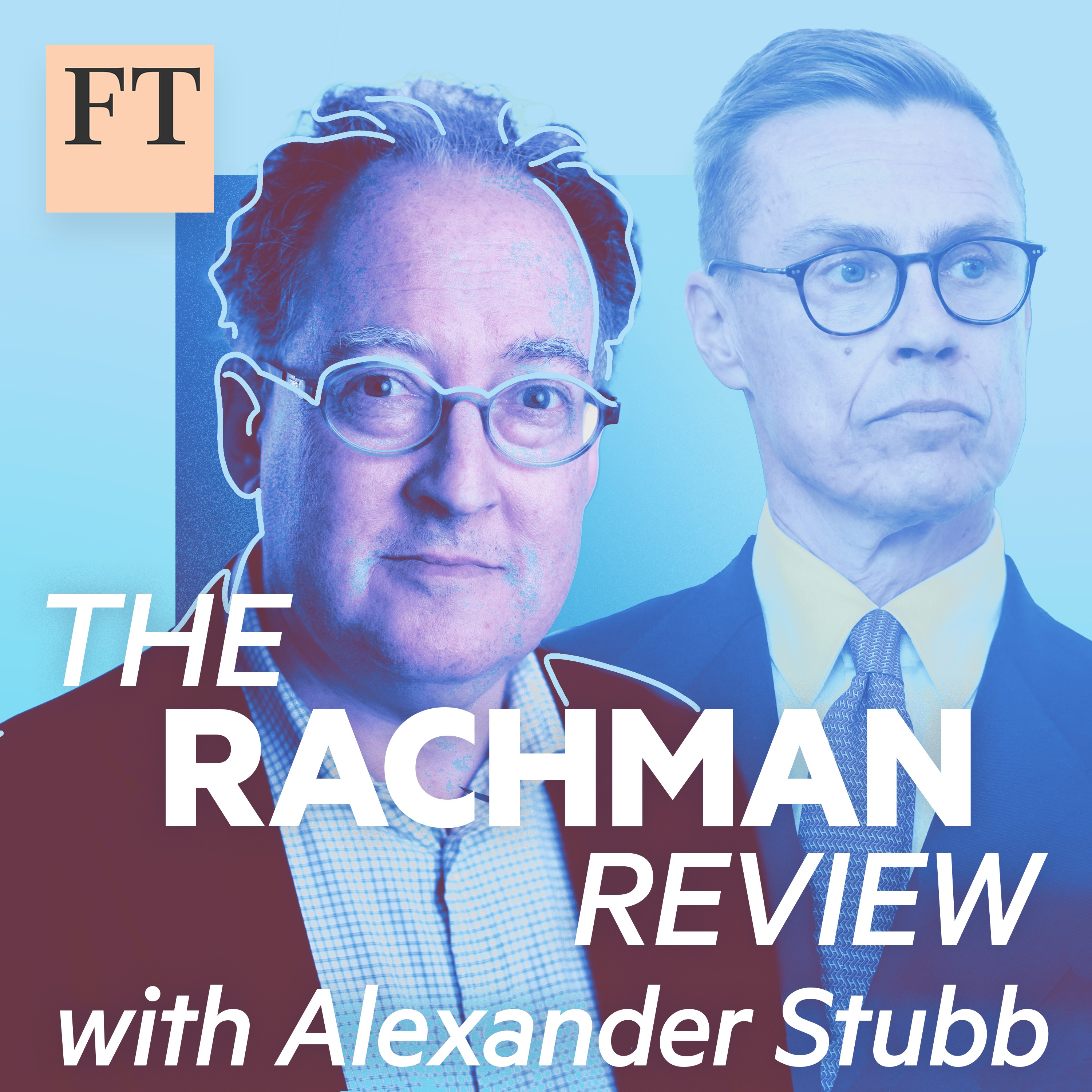
Overview of Rachman Review — "Greenland: the good, the bad or the ugly?"
This episode of the Financial Times' Rachman Review features Gideon Rachman interviewing Finland’s President Alexander Stubb at Davos. The conversation centers on three linked themes: the diplomatic crisis triggered by President Trump’s public interest in buying Greenland, the broader state of transatlantic relations, and the war in Ukraine — with Stubb offering scenarios, policy prescriptions and reflections on Finland’s defence posture and diplomatic role.
Key topics discussed
- The Greenland episode: Trump’s comments, misunderstandings about Nordic military training in Greenland, and three scenarios (good, bad, ugly).
- De‑escalation vs. retaliation: how Europe and NATO might respond (diplomacy, EU measures, tariffs).
- Finland’s role as a mediator with both Trump and Zelensky and Stubb’s personal access to both leaders.
- Ukraine: current military/diplomatic situation, security guarantees, and likely outcomes.
- Finland’s defence model: conscription, mobilization capacity, equipment and comprehensive security.
- Strategic advice for Europe: boosting defence, diversifying trade, engaging the Global South.
- Longer‑term view of the global order and why Stubb remains cautiously optimistic.
Main takeaways
- Three Greenland scenarios:
- The "good": find a diplomatic off‑ramp that strengthens NATO/Arctic security (possible announcement at the NATO summit).
- The "bad": escalation into trade/tariff conflict between the U.S. and Europe.
- The "ugly": military confrontation — Stubb thinks this is unlikely.
- Stubb stresses de‑escalation: open, behind‑the‑scenes diplomacy, coordinated EU measures to create incentives for the U.S. to step back, and engagement with the U.S. Senate.
- The recent Finnish troop activity in Greenland was a coordinated reconnaissance/training mission (Arctic Endurance) — Stubb argues this was misconstrued.
- On Ukraine, Stubb says diplomatic alignment among the U.S., EU and Ukraine has improved (security guarantees, a “prosperity package,” and a 20‑point plan), while warning momentum must not be lost.
- Militarily, Russia’s advances have been limited (he cites less than 1% territorial gain over ~1,000 days) but the war is a costly attrition battle; Russia’s economy is suffering.
- Three scenarios for Ukraine: continued attrition with Western support, a negotiated compromise (Stubb prefers pursuing this), or a U.S. withdrawal (he deems unlikely).
- Finland’s defence model combines strong military readiness (conscription, mobilizable forces, stored ammunition, new F‑35s) with a welfare state — Stubb urges Europe to “be more Finnish” about preparedness.
- Europe should both deepen defence capabilities and diversify trade relationships while engaging the Global South to sustain multilateralism. Stubb expects a new order to take shape by around 2030.
Notable quotes and insights
- On Greenland: “There’s three scenarios on Greenland. It’s the good and the bad and the ugly.”
- On diplomacy: “Diplomacy is never easy, but it’s always better to talk than not to talk.”
- On Zelensky: “He’s one of the most impressive human beings I have met.”
- On European posture: “Europe should be more Finnish” — a call for greater readiness and responsibility.
- On the changing world order: we’re in a generational shift; the new order will likely settle by about 2030.
Practical policy recommendations (Stubb’s prescriptions)
- Pursue an off‑ramp on Greenland that reframes the issue as Arctic security and NATO presence rather than sovereignty transfer.
- Use EU instruments (trade, tariffs, customs) and private diplomatic channels to incentivize U.S. de‑escalation — coordinate with the U.S. Senate.
- Keep warfare deterrence credible: increase European defence spending and develop the industrial base and logistics (ammunition, long‑range capabilities).
- Continue steady support for Ukraine (military, financial and diplomatic); push for security guarantees and a workable negotiated settlement when possible.
- Diversify trade partners and strengthen ties with the Global South—Europe should be more pragmatic and humble in global engagement.
Short contextual notes
- Interview recorded in Davos during heightened tensions after President Trump’s public remarks about Greenland.
- Stubb positions Finland as both a NATO member (joined 4 April 2023, per the interview) and a country with deep Arctic/security expertise and high public support for defence measures.
- The episode emphasizes the interplay between public media diplomacy and private, back‑channel negotiation.
Who should listen (or read) this summary
- Policymakers and analysts tracking NATO/US‑EU relations, Arctic security and the diplomatic fallout of populist rhetoric.
- Listeners interested in Finland’s defence model and small‑state diplomacy.
- Anyone following the Ukraine war and the evolving transatlantic coordination on security guarantees.
End of summary.