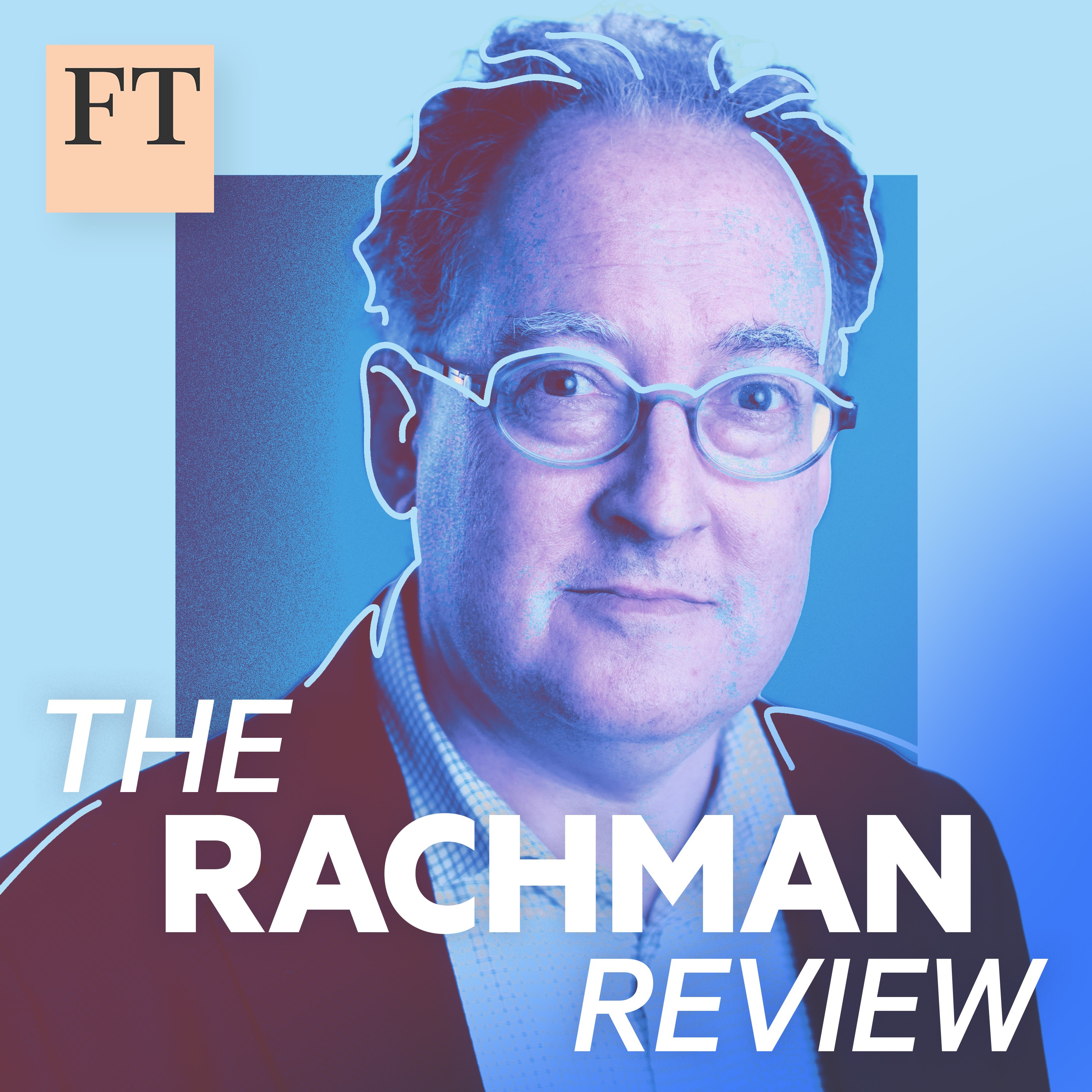
Overview of Europe’s triple shock: Putin, Trump and Xi
This episode of the Rachman Review (host Gideon Rachman) features historian and commentator Timothy Garton‑Ash discussing the future of Europe in a newly emergent era that began with Russia’s full‑scale invasion of Ukraine on 24 February 2022. Garton‑Ash frames Europe’s predicament as a “triple shock” — Putin (renewed large‑scale war), Trump (unreliable U.S. security backing) and Xi (the rise of a rival China and a Global South that will not automatically follow the West). He assesses how Europe got here, what it has done well (notably its response to Ukraine), where it faltered (energy dependence, insufficient response to Russia in 2014, domestic political fragmentation), and what it must do to avoid slow decline or disintegration.
Key takeaways
- Europe has entered a new era defined by the return of full‑scale interstate war in Europe (Russia vs Ukraine), which ends the 1989–2022 “post‑wall” period.
- The “triple shock”: Putin’s aggression, an unpredictable U.S. under Trump (or Trump‑style disruption), and China’s global influence combined with a reluctant Global South pose a profound strategic challenge.
- Europe has responded well militarily and financially to Ukraine; much of the burden of aid is now coming from Europe itself.
- But Europe remains largely a one‑dimensional power (economic/regulatory) and must become multi‑dimensional (military, security, diplomatic capacity) to protect its interests.
- The core structural problem: the policies Europe needs are European in scale, but the politics that must enact them remain national, often short‑term and election‑driven.
- The balance between integration and national diversity is fragile; the forces of integration and disintegration are finely balanced and the next 5–10 years are decisive.
- Domestic political shifts (rise of populist/right‑wing parties) and the outcome of several major elections (France 2027, Poland 2027, Italy, Spain, Germany, UK) could greatly affect the EU’s trajectory.
Major topics discussed
- Defining the new era: post‑2022 as distinct from the post‑1945 and post‑1989 periods.
- Historical arc: achievements of 1989–2007 (democratization, EU/NATO enlargement), then cascading crises since 2008 (financial crisis, Eurozone trouble, Russia’s attacks on Georgia and Crimea/Ukraine).
- Where Europe failed: insufficient decisive action after 2014 (Crimea/Donbas), overreliance on Russian energy, growing economic ties with China, tolerating democratic backsliding by members (e.g., Hungary under Orbán).
- Europe’s response to crises: mixed record — effective on some crises (end of Cold War, COVID, Ukraine) but disunited on others (migration, Gaza).
- Europe as an economic/regulatory superpower but geopolitically limited when it lacks military/security leverage.
- The need for European‑scale policies (defense, capital markets, digital policy) while politics remain national.
- Brexit as a case study: damaging national self‑harm but also a missed opportunity for a strategic UK‑EU reset around shared security concerns.
Notable quotes and paraphrases
- “We are at the beginning of a new era” — Garton‑Ash on post‑2022 Europe.
- “It was a game of two halves” — on the post‑wall period (major early achievements, then a cascade of crises from 2008).
- “The policies we need are European, but the politics are still national” — the central structural problem for European action.
- Europe is a “one‑dimensional power” if limited to economic/regulatory clout; it needs to become two‑ or three‑dimensional (military/security, diplomatic) to be effective.
- “The forces of disintegration and integration have never been more finely balanced” — a warning that the next 5–10 years will be decisive.
Analysis and implications
- Strategic: Europe must invest more credibly in defense and collective security if it wants strategic autonomy and to deter a revanchist Russia — this is both feasible (economically and industrially) and urgent.
- Political: National electoral cycles, rising populist parties, and short‑term politics are the main barriers to delivering European‑scale solutions. Building durable coalitions among major member states is essential.
- Diplomatic: Europe can be an effective geopolitical actor where it can combine EU institutions with a coalition of leading states (as seen with Ukraine). Where it lacks unity (e.g., Gaza), influence is limited.
- Global posture: Europe cannot assume automatic alignment from the Global South; many middle powers will continue relationships with Russia and China, so sanctions and economic measures face limits.
- Brexit/UK: There is scope for a deeper UK‑EU security partnership that benefits both — but political caution and domestic electoral considerations have so far limited progress.
Recommendations (implicit in the discussion)
- Accelerate and deepen European defense cooperation and procurement at scale to become a multi‑dimensional power.
- Build cross‑national political coalitions among major EU states to elevate European security and economic policy above short‑term domestic politics.
- Reduce strategic dependencies (energy, critical technologies) on hostile or rival states.
- Seize diplomatic opportunities to reset UK‑EU relations around shared security and economic interests, rather than leaving them at transactional bargaining.
- Pursue a pragmatic balance between unity and national diversity — centralize where scale matters, decentralize where diversity drives innovation.
Timeline / framing used by Garton‑Ash
- Post‑war period: post‑1945 order built after WWII.
- Post‑wall period: from fall of Berlin Wall (Nov 1989) to Russia’s 2022 invasion — an era of expansion and optimistic integration.
- New era: begins 24 Feb 2022 — characterized by renewed interstate war in Europe and the triple geopolitical shock.
Political risks to watch (next 5–10 years)
- Major elections that could empower Eurosceptic or populist governments (France, Poland, Italy, Germany, UK) — multiple such outcomes could shift or slow European integration.
- Hungary and other member states using EU membership to play multiple external powers for domestic survival, undermining EU cohesion.
- Failure to translate stated willingness to spend more on defense into sustainable budgets and integrated capability.
Conclusion
Timothy Garton‑Ash argues Europe stands at a strategic inflection point. It has shown commendable capacity — especially in supporting Ukraine — but its long‑term security and influence depend on becoming a multi‑dimensional power while solving the perennial tension between necessary European‑scale policies and national politics. The next half‑decade to decade will likely determine whether forces of integration regain the upper hand or whether fragmentation and external pressure erode what Europe has built.