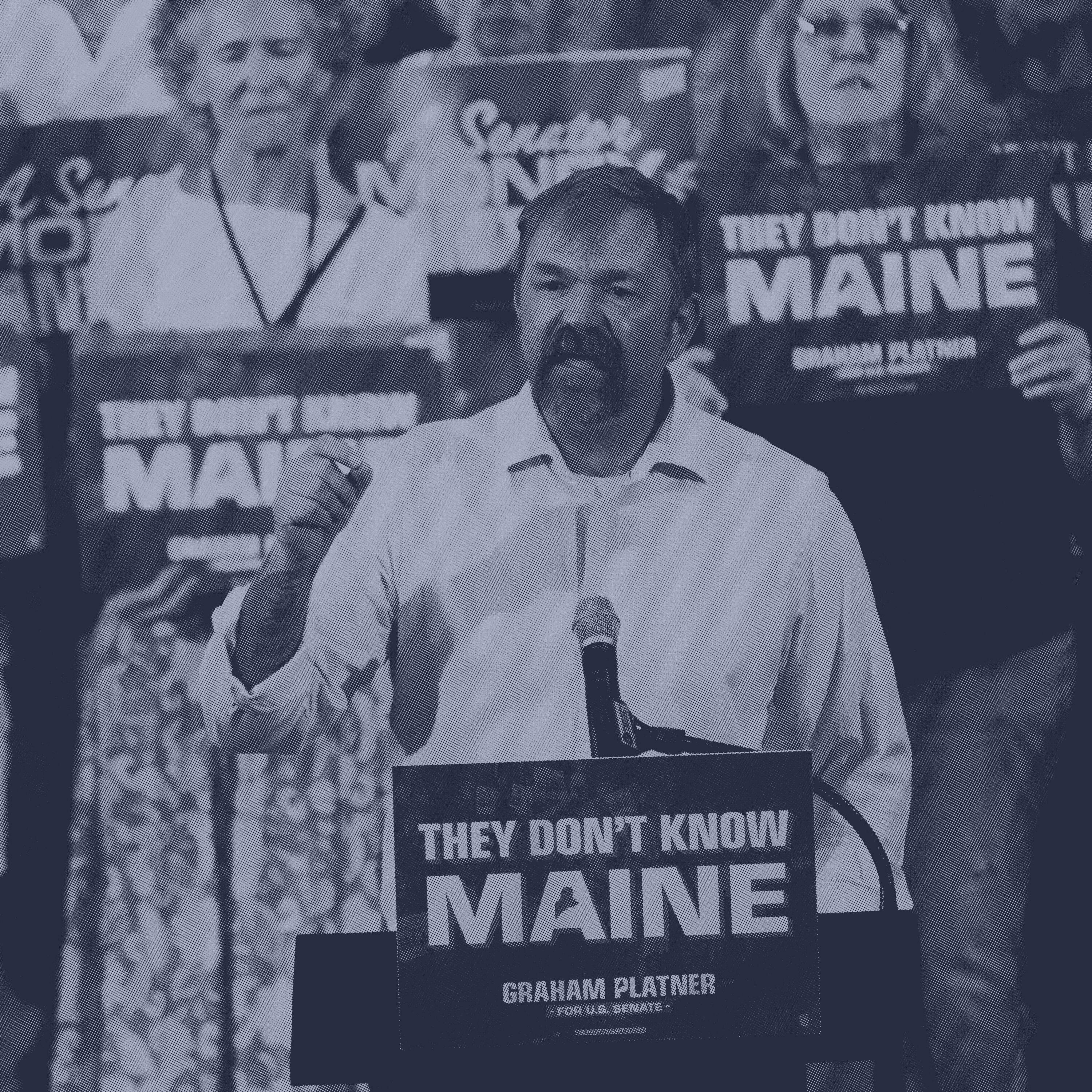
Overview of NPR Politics Podcast: What’s next after Democrat Platner exits Maine Senate race?
This NPR Politics Podcast episode breaks down the sudden collapse of Graham Plattner’s Maine U.S. Senate campaign after a rape allegation from a former partner, and what his exit means for Democrats trying to hold the seat against Republican Sen. Susan Collins. The discussion focuses on how Plattner rose so quickly, why he became vulnerable, and how Maine Democrats must now replace him on the ballot under a very tight deadline.
What happened to Graham Plattner’s campaign?
- A Politico story published Monday reported that a former partner accused Plattner of rape and sexual assault.
- Plattner denied the allegation, but his support unraveled almost immediately:
- Prominent Democratic endorsers withdrew support.
- Several state and national allies distanced themselves.
- Sen. Bernie Sanders, his earliest major backer, also pulled away.
- On Wednesday, Plattner released an emotional video announcing he was suspending his campaign.
- He framed the decision as being driven by the loss of campaign infrastructure and support, not as an admission of guilt.
Why this race mattered so much
- Maine is one of Democrats’ best pickup opportunities in the fight for Senate control.
- Sen. Susan Collins is a long-time incumbent and a difficult target, but Democrats viewed Maine as winnable.
- Because Democrats need a net gain of four Senate seats to flip the chamber, losing a strong Maine opportunity is a major setback.
Why Plattner won the primary despite red flags
The guests argued that Plattner’s appeal came from a mix of authenticity, anti-establishment energy, and a compelling personal story:
Plattner’s strengths with voters
- Combat veteran who served in Iraq and Afghanistan.
- Disabled veteran who spoke openly about PTSD and therapy.
- Framed himself as a blunt, change-oriented outsider.
- Held frequent town halls and used unusual, attention-grabbing campaign tactics.
Earlier scandals that did not end his campaign
- Old Reddit posts that included dismissive comments about sexual assault.
- A tattoo controversy that was widely interpreted as Nazi-related.
- Reports of sexting with women outside his marriage.
Despite those issues, many voters accepted his “flawed but honest” persona, and Maine’s early voting likely helped lock in his decisive primary win before later controversies fully landed.
The bigger political lesson for Democrats
The conversation suggested Plattner’s rise exposed a broader Democratic problem:
- Many voters want anti-establishment, populist, and anti-Trump candidates.
- But the party also needs candidates who can survive full scrutiny in a general election.
- Progressives in particular are wrestling with how to build a movement without becoming overly attached to one charismatic but risky leader.
A quoted takeaway from activist Cheyenne Hunt underscored the point: no race is worth asking voters to support a candidate with a deeply troubling history with women, even if they like the message.
What happens next in Maine
Maine Democrats now have to replace Plattner on the ballot quickly.
Timeline
- Plattner had to withdraw by July 13 at 5 p.m. for the party to replace him.
- Democrats then have until July 27 to select a new nominee.
Process
- Under Maine law, the party—not voters—chooses the replacement.
- Democrats are expected to use a convention-style process with roughly 500 to 600 people deciding.
- That has triggered concerns about transparency, especially since more than 200,000 people voted in the primary.
Key concern
- Many independents and unenrolled voters who supported Plattner will have no role in choosing the replacement nominee.
- That could frustrate the very voters Democrats need in the general election.
Possible replacement candidates mentioned
The episode named several Democrats who may be in the mix:
- Troy Jackson — former Maine Senate president, progressive-aligned, and endorsed by Bernie Sanders.
- Nirav Shah — former state CDC director and strong statewide performer.
- Shanna Bellows — secretary of state and former gubernatorial candidate.
- Paige Loud — congressional candidate who may be interested.
- Jordan Wood — former Katie Porter staffer who previously entered and exited other races.
- Dan Kleban — Maine Beer Company owner with ties to Gov. Janet Mills.
Main takeaways
- Plattner’s fall was swift, but not entirely surprising given the accumulation of controversies around him.
- His campaign showed how powerful anti-establishment politics can be in Maine.
- Democrats now face a difficult balancing act:
- keep Plattner’s energy and turnout coalition,
- choose a replacement quickly,
- and restore trust with voters who may feel shut out of the process.
- The episode ends by emphasizing that Democrats still have a chance in Maine, but only if the next nominee can unite progressives, independents, and mainstream Democrats without the baggage Plattner brought.