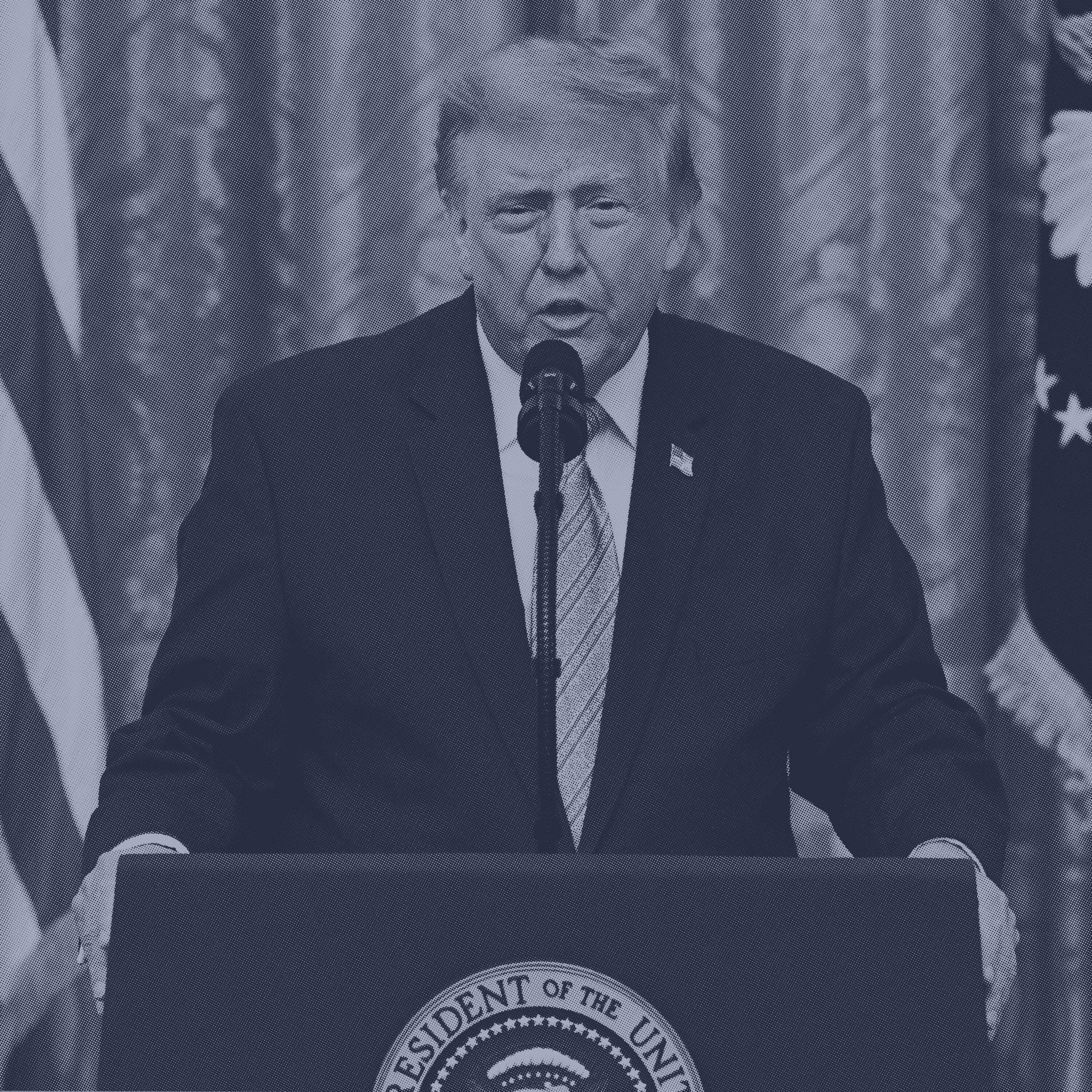
Overview of NPR Politics Podcast
This NPR Politics Podcast episode analyzes Donald Trump’s White House address in which he снова pushed election fraud claims, despite offering no new evidence of widespread fraud in the 2020 election. The hosts break down what was actually in the documents Trump cited, why election officials are skeptical, and how the speech fits into a broader strategy ahead of the midterms: creating doubt about election legitimacy, pressing Congress to pass the SAVE Act, and laying groundwork to challenge future losses.
Main Takeaways
-
No bombshell evidence emerged.
Despite major buildup, the transcript notes that Trump’s speech did not reveal new proof of a rigged election system or a single fraudulent vote that would support claims of widespread fraud in 2020. -
The material mostly rehashed known vulnerabilities.
The documents Trump referenced largely centered on:- known election system vulnerabilities,
- foreign influence efforts,
- and intelligence suggesting China had an interest in shaping outcomes.
-
Trump blurred the line between influence and interference.
The hosts emphasize that there is a real distinction between:- foreign powers trying to influence public opinion, and
- actually manipulating ballots or election machinery.
No evidence was presented showing foreign actors altered votes.
-
The non-citizen voting claims were highly suspect.
Trump claimed the administration found hundreds of thousands of non-citizens registered in several states. Election experts and state officials are skeptical because:- the data source is unclear,
- voter-roll matching is prone to false positives,
- and states dispute the findings.
-
The speech appeared aimed at pressuring states and Congress.
The discussion suggests Trump may be using these claims to push states into sharing voter data and to build support for the SAVE Act, even though that bill does not address most of the vulnerabilities he cited.
Key Topics Discussed
Claims About the 2020 Election
- Trump repeatedly returned to the idea that the 2020 election was compromised.
- The hosts note the irony that he is attacking an election held while he was president, using his own administration’s intelligence and agencies as evidence.
China, Foreign Influence, and Election Security
- The segment distinguishes between:
- foreign influence: attempts to shape public opinion,
- foreign interference: actual tampering with election operations.
- The transcript stresses that there was no proof China manipulated votes.
Non-Citizen Voting and Voter Rolls
- Trump claimed DHS systems found large numbers of non-citizens on voter rolls in states like California, Nevada, Pennsylvania, and New Jersey.
- The hosts say election professionals doubt those numbers because data-matching systems often produce errors and the administration has not provided enough detail.
The SAVE Act
- Trump used the speech to argue Congress must pass the SAVE Act.
- The podcast explains that the bill would:
- require proof of citizenship to register to vote,
- add photo ID-related restrictions,
- and impose costly administrative burdens on election officials.
- But it does not fix the specific issues Trump raised in the speech.
Presidential Power and Election Policy
- The hosts underscore that election administration is primarily a state and local responsibility.
- Trump has already had executive actions blocked by courts for overstepping state authority.
- This highlights the limits of presidential power in changing election rules.
Political Strategy and Timing
-
The timing matters.
The address came during a moment when the U.S. was also dealing with the war with Iran, yet Trump devoted almost no time to that crisis. -
It looks like a setup for the midterms.
The hosts suggest Trump is laying a narrative foundation so that if Republicans lose, he can argue the elections were unfair because “election security” reforms were not passed. -
The speech may be the beginning, not the end.
Trump allies like Steve Bannon have suggested the address would serve as a “predicate” for something bigger, such as:- a national emergency declaration,
- new election law enforcement efforts,
- or renewed attacks on voting systems.
Why Election Officials Are Worried
- Election officials are not necessarily reassured by the speech because it may be the start of a broader campaign.
- There are concerns that Trump and his allies will keep “throwing spaghetti at the wall” with fringe legal theories and aggressive claims.
- Even if the SAVE Act stalls, the continued rhetoric can still shape public doubt about election legitimacy.
What to Watch Next
- Whether Trump and allies escalate to more extreme actions or legal theories.
- Whether the SAVE Act gains any traction in the Senate, which seems unlikely.
- Whether the rhetoric depresses Republican turnout or energizes Democratic voters.
- How voters respond to continued claims that elections are rigged.
- Whether this becomes a midterm messaging strategy centered on “unless you want to cheat.”
Brief Side Notes from the Episode
The episode ends with the NPR hosts’ “Can’t Let It Go” segment, which includes:
- a strange betting scandal involving Trump’s teleprompter operator,
- a light pop-culture discussion about new Will Ferrell and Steve Carell shows,
- and a warm farewell to longtime NPR colleague Don Gagné.