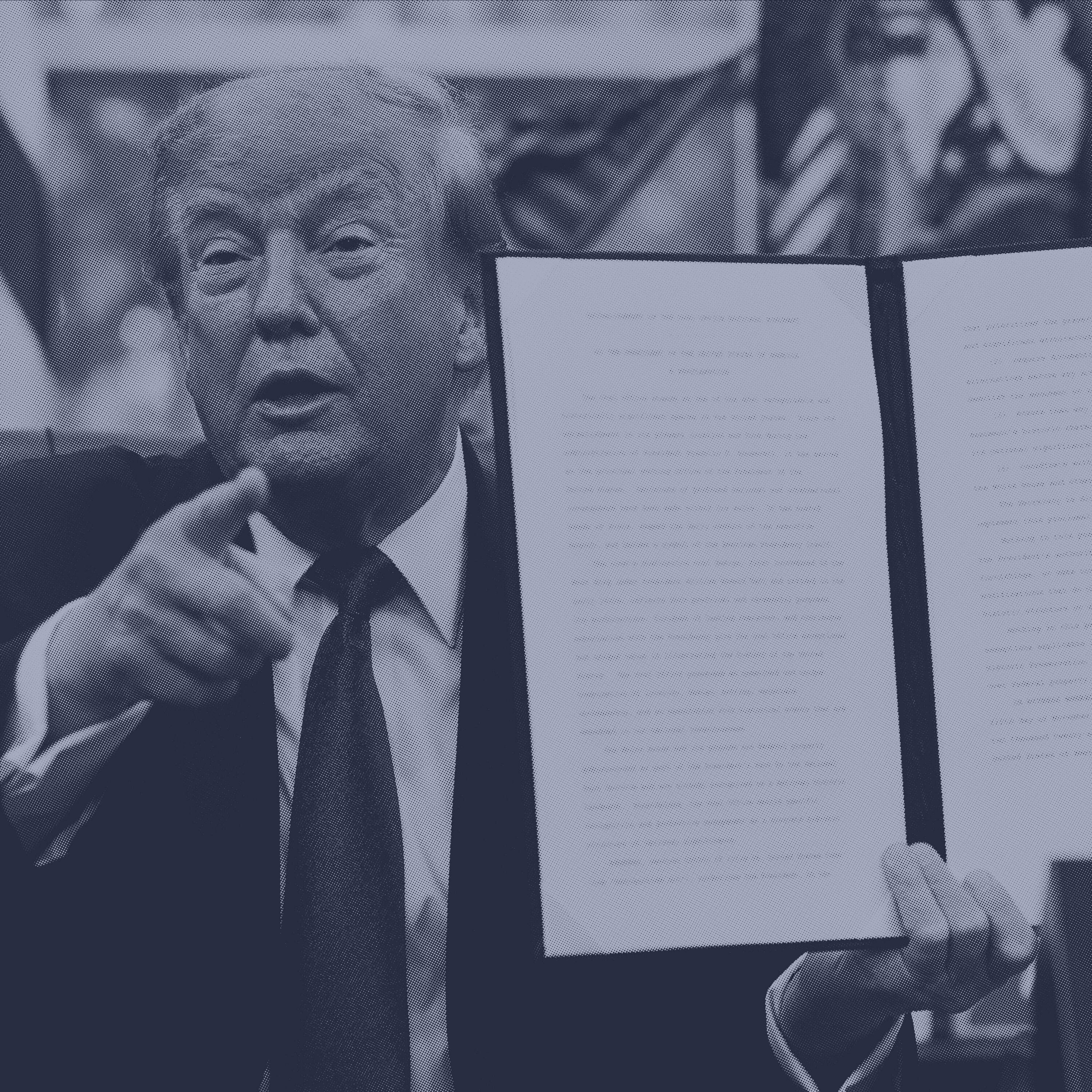
Overview of Trump confronts his lame duck era
This NPR Politics Podcast episode examines how President Trump is reacting to Democratic midterm wins and what his final two years in office could look like under divided government. The hosts argue that Trump’s messaging is inconsistent, but his actions suggest a more confrontational posture: elevating Stephen Miller, embracing executive power, and preparing for battles with Congress, the courts, and possibly even Republicans in his own party.
Key Takeaways
- Trump initially seemed to accept the midterm results, but then quickly shifted to casting doubt on the election outcome on Truth Social.
- The White House’s personnel moves and rhetoric suggest less compromise and more confrontation going forward.
- Stephen Miller is presented as a central figure in Trump’s orbit: a hardline loyalist, immigration hawk, and advocate of strong executive authority.
- With Democrats controlling at least one chamber, Congress is expected to push investigations, funding fights, and messaging bills.
- The biggest governance conflicts are likely to center on:
- immigration
- tariffs and trade powers
- executive authority
- government funding
- subpoenas and oversight investigations
Trump’s Reaction to the Midterms
The hosts note that Trump did not immediately contest the election, which was somewhat surprising given his long history of election skepticism. But he later posted that the election was dishonest and that machines, not voters, determined the result.
What this signals
- Trump appears to be giving supporters a permission structure to question the loss.
- His rhetoric is familiar: suggest fraud, sow doubt, and keep political options open.
- The hosts view the post as unlikely to change the actual balance of power, but it matters politically.
Stephen Miller’s Rising Influence
A major focus is Stephen Miller, described as one of Trump’s most loyal and ideologically consistent allies.
Why Miller matters
- He has been with Trump since the early campaign years.
- He is known for hardline immigration policies and a combative style.
- He helped plan many of the executive actions that became part of Trump’s second-term agenda.
- The hosts characterize him as a “wartime consigliere” and even “Trump’s id,” meaning he reflects Trump’s most aggressive instincts.
Political significance
- Miller is seen as a sign that Trump is not preparing to moderate.
- His influence suggests the White House is gearing up for combat, not compromise.
- He is also viewed as a key defender of the “unitary executive” theory, or the idea of expansive presidential power.
What Divided Government Could Look Like
With Democrats empowered in Congress, the episode predicts an intensifying struggle between the White House and lawmakers.
Congress’s likely approach
- Democrats will try to use hearings, oversight, and legislation to challenge Trump.
- They may pass bills intended to make a policy and political case, even if they cannot override vetoes.
- Congressional Democrats want to frame Trump as corrupt and tie that to economic concerns like higher prices.
Trump’s likely response
- Heavy use of executive orders
- Frequent veto threats or actual vetoes
- Resistance to congressional oversight
- Legal battles over the scope of presidential power
Big Flashpoints to Watch
Immigration
The hosts expect immigration to remain a top conflict zone, especially given Miller’s role in shaping enforcement policy and deportation strategy.
Tariffs and trade
A listener question raised the possibility of Trump imposing steep tariffs on Canadian goods. The response: Congress could try to limit the president’s authority by law, but Trump could veto it, likely forcing the issue into the courts.
Government funding
The episode notes that government funding runs out on December 11, creating a likely shutdown fight.
Investigations and subpoenas
Democrats are expected to investigate Trump, his businesses, and his family. The hosts expect resistance to subpoenas, citing prior standoffs involving figures like Steve Bannon and Peter Navarro.
Bottom Line
The episode’s core argument is that Trump’s post-midterm era is shaping up to be more combative than cooperative. Even as he becomes a lame duck, he still has significant power through vetoes, executive action, and influence over Republicans. But Congress, Democrats, and the courts are likely to push back hard, setting up two years of political conflict rather than legislative productivity.