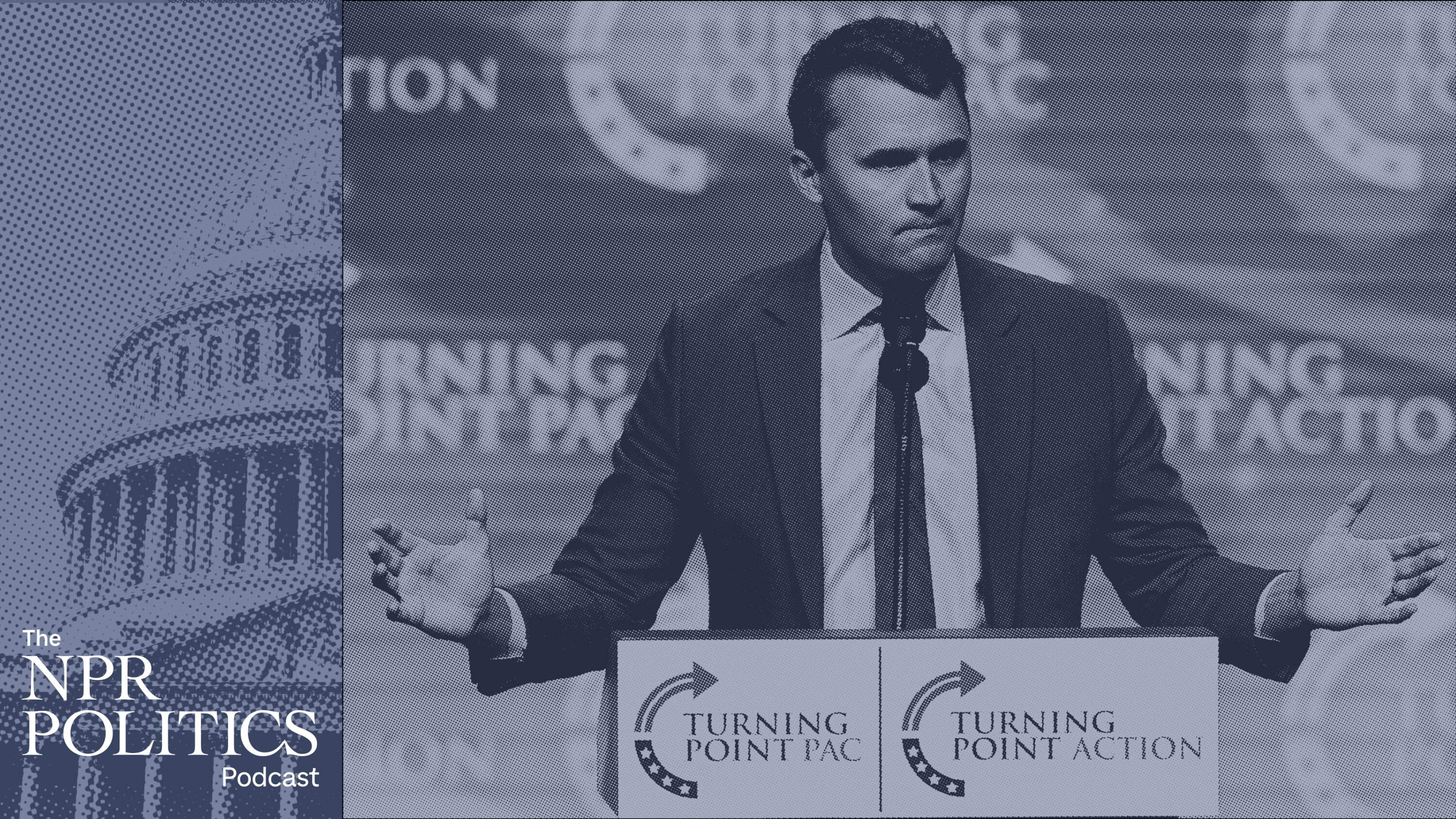
Overview of The NPR Politics Podcast: The young conservative movement post-Charlie Kirk
This episode examines how young conservatives are responding to the aftermath of Charlie Kirk’s killing, what Kirk’s legacy means for the Republican youth movement, and whether Donald Trump’s coalition with younger voters can hold. The hosts also open with Trump’s new midterm-era campaign promise: a proposed $5,000 dividend for every adult if Republicans win Congress, which they use as a case study in how Republicans are trying to appeal to voter concerns about affordability.
Trump’s $5,000 “dividend” pitch
What Trump proposed
- At a GOP convention, Trump said that if Republicans win control of the House and Senate, he would issue a $5,000 dividend to every adult citizen in the United States.
- The hosts note that this would total roughly $1.3 trillion, making it a massive and uncertain promise.
Political significance
- The panel frames it as a campaign promise, not an immediate policy action.
- It signals that Republicans know affordability is a top voter concern, even when Trump downplays it publicly.
- The hosts compare it to other tangible promises that have resonated with voters in the past, such as student loan relief, tax cuts, or “no tax on tips.”
Charlie Kirk’s legacy and the state of the youth conservative movement
Memorial and symbolic moment
- The episode is timed around the one-year anniversary of Charlie Kirk’s killing in Utah.
- A memorial is taking place on the same campus where he was shot, underscoring his continuing influence on young conservatives.
Kirk’s role in shaping young voters
- Kirk is described as a major cultural and political force in bringing younger voters, especially young men, closer to the Republican Party.
- The hosts emphasize that while Kirk helped with Trump’s 2024 youth gains, Trump’s gains among young voters cannot be attributed to Kirk alone.
Young conservatives are now more conflicted
- Many young conservatives who felt energized by Trump’s campaign now feel disappointed or less enthusiastic.
- The episode highlights major fault lines within the youth right, including:
- U.S. policy toward Iran
- Relations with Israel
- Rising prices
- The administration’s handling of the Epstein files
- A Reuters poll cited in the discussion found support for Trump among men ages 18–29 had fallen 11 points since February.
Generational distrust, political fatigue, and the search for leadership
A broader generational pattern
- Elena Moore argues that today’s young voters have grown up in a world shaped by:
- 9/11 and its aftermath
- Political turmoil
- Economic uncertainty
- Institutional distrust
- The hosts suggest this makes younger voters more skeptical, more willing to criticize their own side, and less attached to parties than older generations.
What young people want
- Young voters are portrayed as wanting leaders who feel authentic, responsive, and effective.
- But they are also repeatedly disappointed when politicians fail to deliver on promises.
- The discussion links this dynamic to both parties:
- Young voters who backed Biden later felt let down by affordability issues and Gaza policy.
- Young conservatives now feel similarly disappointed by Trump.
Free speech, cancel culture, and Kirk’s complicated legacy
Kirk as a free speech figure
- The hosts note that Kirk built much of his political identity around:
- Free speech
- Free markets
- Limited government
- His campus debates and “Prove Me Wrong” style made him a symbol of conservative defiance in liberal spaces.
The tension after his death
- Supporters view his killing as a direct attack on free speech.
- At the same time, the episode points out a contradiction:
- People were reportedly punished or fired for criticizing Kirk after his death.
- That creates a “free speech for me, but not for thee” tension within the movement.
Where the Republican youth movement goes from here
Can Republicans keep young voters?
- The hosts think Republicans can likely continue to do well with young white men, but only to a point.
- They argue that economic concerns will matter more than culture-war branding over time.
- The bigger question is whether the GOP can replace Trump/Kirk-style charisma with a new leader who can animate the same audience.
Who could fill the gap?
- J.D. Vance is mentioned as a possible successor figure, but the hosts are skeptical that he currently has the kind of cult-like appeal Trump or Kirk had.
- The conversation ends with a larger strategic question:
- What is the movement without the man?
- That question applies not just to the post-Kirk conservative youth ecosystem, but to the broader Republican Party after Trump.
Key takeaways
- Trump’s $5,000 payout promise is a message about affordability, even if its practicality is unclear.
- Charlie Kirk remains a major symbol and organizing force for young conservatives, even after his death.
- Young Republican voters are less stable and more issue-driven than older voters, and many are now feeling let down.
- The future of the GOP youth movement depends less on rhetoric alone and more on whether Republicans can deliver on the economy and everyday costs of living.