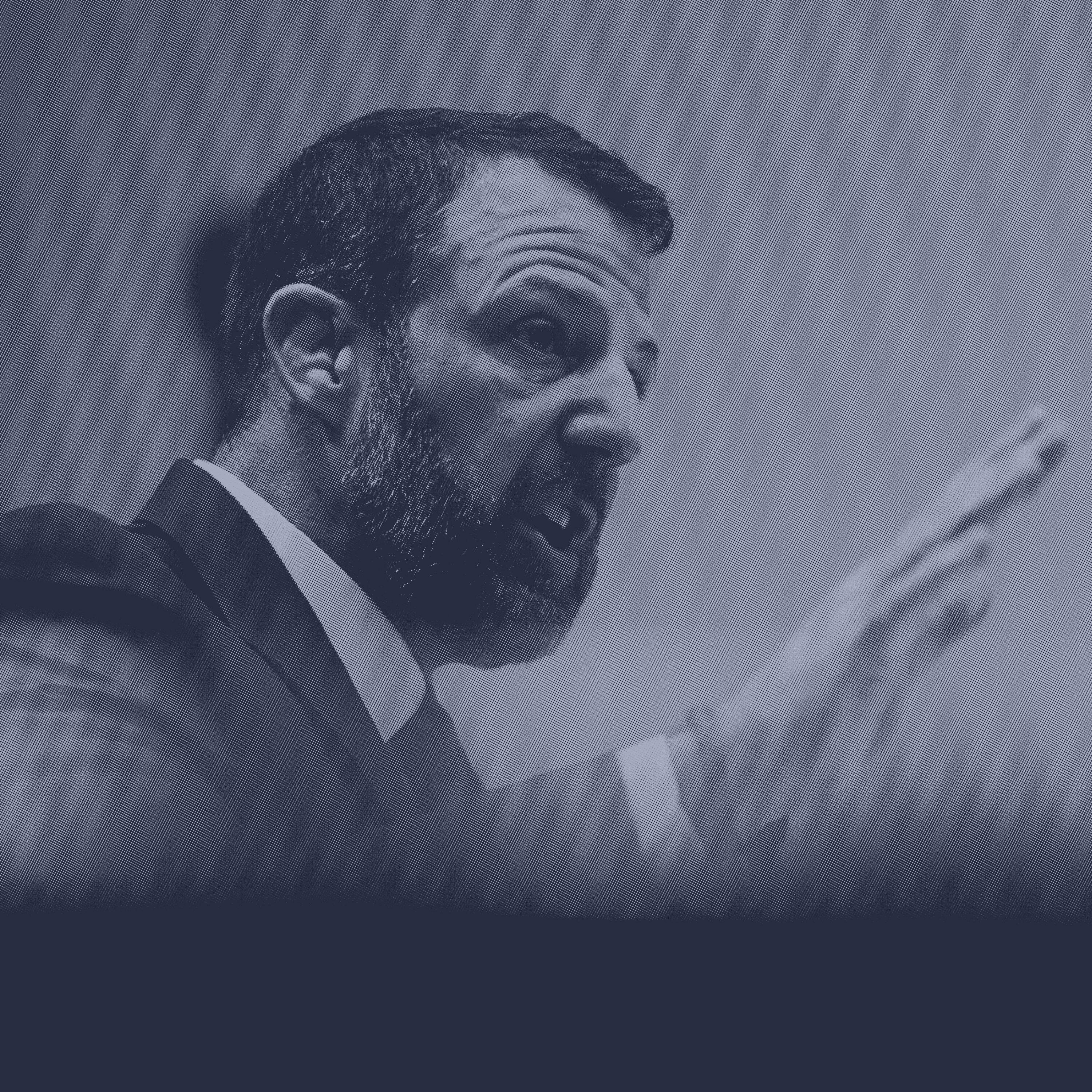
Overview of NPR Politics Podcast — "Sparks fly at DHS confirmation hearing, but Trump’s pick clears committee"
This episode covers the heated Senate Homeland Security Committee confirmation hearing for President Trump’s nominee to lead the Department of Homeland Security, Senator Markwayne Mullin (R-OK), and what his likely confirmation would mean for immigration enforcement and FEMA. Hosts Tamara Keith, Ximena Bustillo, and Mara Liasson discuss the personal clashes at the hearing, questions about Mullin’s temperament and judgment, limited policy commitments he offered, and the broader political implications for DHS operations and congressional negotiations.
Key points and takeaways
- Senator Markwayne Mullin was narrowly approved (advanced) by the Senate Homeland Security Committee after a contentious hearing.
- Personal animus between Mullin and Sen. Rand Paul dominated parts of the hearing; Paul criticized Mullin’s past comments that appeared to justify a violent 2017 attack on him.
- Mullin signaled some openness to changes in enforcement tactics (e.g., judicial warrants vs. administrative warrants) but offered few firm policy commitments.
- Democrats remain skeptical and want immigration-use-of-force reforms codified into law (judicial warrants, no masks, body cameras) rather than depending on promises from a secretary.
- DHS detention remains high (~70,000 people in immigration detention, roughly double last year at the same period) and ICE appears to be expanding detention capacity via large warehouses.
- Mullin differentiates himself from previous DHS leadership in tone on some issues, but core policy direction likely would remain aligned with Trump administration priorities.
The hearing — personal feud and temperament
- The hearing was marked by a highly personal exchange: Sen. Rand Paul recounted being assaulted in 2017 and criticized Mullin for past comments that seemed to justify or downplay that assault.
- Paul used the moment to question whether someone who has applauded political violence should lead an agency entrusted with use-of-force decisions.
- Although Paul could have blocked the process, the nomination advanced after Sen. John Fetterman (D-PA) voted with Republicans to approve Mullin out of committee.
- Concerns about Mullin’s quick temper and past rhetoric were central to senators’ scrutiny.
Policy implications for immigration enforcement
- Use of force: Mullin faced questions about ICE and CBP tactics after high-profile incidents (including two fatal shootings mentioned during the episode). Senators linked his past comments to broader worries about DHS use-of-force policies.
- Warrants: Mullin expressed willingness to discuss increasing use of judicial warrants to enter homes rather than relying solely on administrative warrants — a notable, if not definitive, policy hint connecting to use-of-force debates.
- Strategy vs. policy: Hosts emphasize the difference between existing law/policy and operational strategy (surges, city-targeting, surge enforcement). Mullin’s appointment could affect enforcement strategy even if underlying policy stays the same.
- Detention and infrastructure: DHS detention levels remain elevated (~70,000), and reporting shows ICE purchasing or contracting for large warehouse-style detention facilities (capable of housing thousands), indicating continued capacity expansion.
FEMA and broader DHS management
- Mullin said he would not abolish FEMA and views it as important to national security; he spoke about wanting to reform and restructure FEMA rather than dismantle it.
- He pledged to appoint a permanent FEMA administrator with relevant experience and to address timeliness and responsiveness in disaster funding and approvals.
- The hosts note FEMA’s political sensitivity: effective federal response is low-visibility; failures draw intense criticism. Morale and staffing have been issues.
Mullin’s background, temperament, and role in Trump’s orbit
- Mullin projects a "tough-guy" persona (former mixed martial arts fighter background is part of his public image).
- The hosts suggest President Trump chooses loyal, media-ready defenders; Mullin has been a visible TV defender of Trump policies in the Senate.
- Mullin differed from his predecessor in at least one notable way: he publicly retracted a quick description of a shooting victim as “deranged,” saying he spoke too quickly without facts — signaling awareness that speed of public comments matters. But he also stood by other prior remarks, including one defending a separate fatal shooting as “absolutely justified.”
- Overall, he may be more disciplined in messaging than some recent DHS leaders but is broadly aligned with administration approaches.
Political implications and outlook
- The hearing didn’t produce a deal to reopen DHS funding; Mullin’s testimony didn’t move Democrats toward a funding compromise.
- Short term: Democrats benefit politically from public outrage about ICE shootings and aggressive enforcement practices; that favors continued scrutiny.
- Long term: If enforcement incidents decline and headlines fade, public focus may shift and political pressure could ease — the hosts note many months remain before the next major electoral tests.
- Congress remains the place Democrats insist reforms should be codified, not just promised by an incoming secretary.
Notable quotes from the episode
- Sen. Rand Paul (as quoted in the transcript excerpt): “Tell me to my face why you think I deserved it. And while you're at it, explain to the American public why they should trust a man with anger issues to set the proper example for ICE and Border Patrol agents.”
- Mullin (as paraphrased by hosts): He wants DHS to “not be in the news headlines” so frequently, aiming to improve the agency’s public perception within months.
What to watch next
- Full Senate confirmation vote timing and final outcome for Mullin’s nomination.
- Whether DHS/ICE adopt any immediate procedural changes (e.g., wider use of judicial warrants, body cameras, masking policies) and whether reforms are negotiated into law.
- DHS data releases on deportations and enforcement activity; current detention levels and details on new detention facilities and contracts.
- Any operational decisions that change enforcement strategy (city surges, targeting priorities) under Mullin’s leadership if confirmed.
Note: The original transcript contained some name variations and minor factual conflations; this summary corrects the nominee’s name to Senator Markwayne Mullin and references former DHS Secretary Kirstjen Nielsen where relevant.